Hey there, Auxiliary Equipment

Let’s cut to the chase—when most folks in manufacturing talk about product quality, they’re usually fixated on the main machines: the injection molders, the CNC routers, the packaging lines. Those big, flashy things that get all the press. But here’s the tea (and I say this as someone who’s been selling auxiliary equipment for 12+ years): the tiny, “boring” add-ons are the ones that actually keep your product from ending up in the scrap bin. I’ve seen it time and again—customers come to us after a string of bad batches, and 9 times out of 10, the root issue isn’t their main production machine. It’s the auxiliary gear they cut corners on to save a buck. Let me break this down with real examples, not just industry jargon.
First, let’s talk about material handling—specifically, dryers. I know, I know, “dryers aren’t sexy.” But if you’re running plastic resins (like PET for water bottles, or nylon for automotive parts), moisture is your public enemy number one. Let’s say you’re making a plastic component for a car door. If your resin has even a tiny amount of moisture left (like 0.02% over the safe threshold), when it’s melted in the molder, that moisture turns to steam, leaving micro-bubbles in the part. Those bubbles might not show up in a visual check, but a month later, when the part is exposed to temperature swings in the sun, it’ll crack. I had a client a couple years back—they were a big automotive supplier, using a cheap, old desiccant dryer they’d had for 10 years. They were getting 8% scrap on their door handles, which cost them $45k a month in rework and rush deliveries. They upgraded to our modular desiccant dryers, which constantly monitor and adjust dew point, and cut that scrap to 0.7% in 3 weeks. That’s not a small win—their quality team stopped working 12-hour weekends, and their customer (the carmaker) didn’t penalize them. So auxiliary equipment isn’t just “support”—it’s quality insurance for every raw material that goes into your main process.
Next up: temperature control units (TCUs). If you’re working with metal stamping, injection molding, even food processing, keeping the temperature of your mold or die consistent is non-negotiable. I once had a small injection molder that was making custom medical parts—super tight tolerances, like ±0.005mm. They had a basic chilling unit hooked up to their mold, but it couldn’t maintain a stable temp. Every time production ran for 4 hours, the mold would heat up by 2 degrees, which made the plastic cool unevenly, leading to part warpage. They tried adjusting their main molder’s cycle time, tweaking the pressure, nothing worked. They called us, and we suggested a portable, closed-loop TCU that delivers precise water temperature (within ±0.5°C) directly to the mold’s cooling lines. The warpage? Gone. Their yield jumped 11%. The kicker? The TCU cost less than 10% of their monthly scrap costs. A lot of manufacturers think “more power” from a main machine fixes inconsistencies, but it’s actually the auxiliary TCU that keeps the process stable enough for quality parts.
Then there’s parts handling and inspection equipment. I know, automated inspection sounds like a luxury, but when you’re running 10,000 parts an hour, a human can’t catch every tiny defect. Let’s say you’re a food packaging company making snack bags. If a tiny metal shard gets into a bag, that’s a recall waiting to happen. Or if a bag is under-sealed, it’ll get stale and get returned. We supply metal detectors and vision inspection systems to a bunch of food and consumer goods clients, and one of our regulars had a problem with their snack bags: 3 in every 10,000 were under-sealed, leading to 2-3 returns a month. They added our inline vacuum leak detectors, which test every bag right after sealing, and those under-sealed parts never made it out the door. No returns, no bad reviews, no last-minute recalls. That’s the kind of quality that builds customer loyalty—people trust your products because every step of the process (including the “invisible” checks) is covered by good auxiliary gear.
Wait, let’s not sleep on dust extraction and filtration, especially for anything in metalworking or powder processing. I had a client making metal powder parts for 3D printing—super high precision, but their powder was getting contaminated with tiny metal shavings from their grinding process. The shavings would mix into the new powder, and when they 3D printed a part, those contaminations would weaken it. They had a basic shop vac for dust, but it wasn’t capturing particles smaller than 10 microns. We upgraded them to our high-efficiency particulate air (HEPA) filtration systems, which catch particles down to 0.3 microns, and also have automated powder sifters that separate out any foreign debris. Their part failure rate dropped from 5% to 0.2% within 2 months. The main takeaway here: quality isn’t just about the final part—it’s about protecting the materials you use along the way. Auxiliary gear that keeps your workspace and materials clean is a huge, often overlooked, factor in consistent product quality.
Let’s be real, a lot of manufacturers are tempted to buy the cheapest auxiliary equipment to keep their initial costs low. But here’s the math I always show them: if you save $5k on a cheap dryer, but lose $50k a month in scrap, that’s a net loss of $55k in the first month alone. Our gear isn’t the cheapest out there, but it’s built to last, it has real-time monitoring (so you catch issues before they cause defects), and it’s calibrated to keep process parameters tight. I’m not here to sell you a $100k system that’s overkill for your needs—my team will walk through your specific process, see where your bottlenecks are, and suggest exactly what you need, no fluff.
Another thing: remote monitoring. This is a big one for small to mid-sized manufacturers that don’t have a full-time maintenance team. Our auxiliary equipment has built-in sensors that track things like dew point, water temperature, filter efficiency, and we can send alerts to your phone or computer if something is off. Last year, a client in Ohio had a filter in their dust extraction system that was clogged, which was leading to inconsistent powder flow for their metal parts. Our system sent an alert at 2 a.m., and their night shift manager was able to swap the filter before any bad parts were made. If that alert hadn’t gone out, they would’ve had 3 days of scrap—costing them $28k. That’s the kind of proactive quality control that only good auxiliary equipment (with smart tech) can deliver.
I’ve been in this long enough to know that some people still think auxiliary equipment is just “extra stuff.” But when you’re dealing with customers who demand zero defects, or regulatory stuff (like medical devices or food safety), every single part of your process matters. I once had a medical device client that failed a FDA audit because their drying process wasn’t properly documented. The auditor didn’t care about their main molding machine—they cared about their dryer’s log data, which was spotty because they had a cheap manual dryer. We installed our automated drying system that logs every dew point reading, temperature, and material batch, so their audit trail is perfect now. They passed their next audit with zero findings. That’s not just quality—that’s compliance, which is non-negotiable in so many industries.
Let me wrap this up. The next time you’re tuning up your production line, don’t just focus on the big machines. Take a hard look at your auxiliary gear: is your dryer keeping your resin dry enough? Is your TCU maintaining a stable mold temp? Are your inspection systems catching defects before they ship? Is your filtration keeping your materials clean? These are the things that separate a good product from a great one, and a consistent yield from constant scrap headaches.
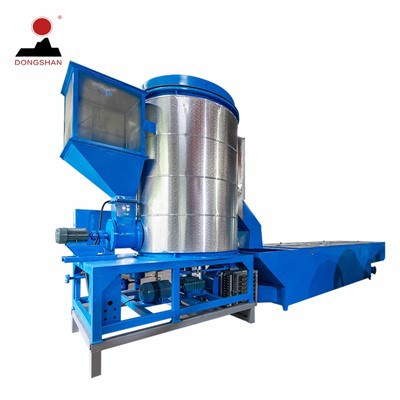
If you’re dealing with quality issues that you can’t pin down, or if you just want to make sure your line is running at its best, reach out. My team and I will walk through your process, no sales pitch, just real advice. We’ve helped shops of all sizes—from small local fabricators to national food brands—improve their quality and cut their scrap. Let’s chat and figure out how to make your product the best it can be.
EPS Pre-expander References:
- Manufacturing Extension Partnership (MEP). (2022). The Role of Auxiliary Equipment in Reducing Production Scrap. National Institute of Standards and Technology.
- American Society for Quality (ASQ). (2021). Quality Control in Auxiliary Processes for Discrete Manufacturing. ASQ Press.
- Food and Drug Administration (FDA). (2020). Guidance for Industry: Quality Systems for Medical Device Auxiliary Equipment. U.S. Food and Drug Administration.
- Society of Plastics Engineers (SPE). (2023). Moisture Management in Resin Processing: Auxiliary Dryer Performance Metrics. SPE Technical Report.
Hangzhou Fuyang Dongshan Plastic Machinery Co., Ltd.
Hangzhou Fuyang Dongshan Plastic Machinery Co., Ltd. is one of the most professional auxiliary equipment manufacturers and suppliers in China, featured by quality products and low price. Please feel free to wholesale advanced auxiliary equipment made in China here and get quotation from our factory. Customized orders are welcome.
Address: 101 Guanting, Baiqian Villige, Luzhu Town, Fuyang District, Hangzhou City, Zhejiang Province, China
E-mail: xu@dong-shan.cn
WebSite: https://www.epseppmachinery.com/
