Hey everyone, if you’ve ever wondered what makes a water quality analyzer actually worth investing in, you’re in the right place. I’m [your name, but since we can’t use a company name, just stick to “the guy who’s been selling water quality analyzers for 8+ years”] and I talk to plant managers, treatment facility heads, and even small brewery owners every single day. One question comes up more than anything else: “What’s the actual benchmark I should be measuring my analyzer against, not just the marketing fluff?” Water Quality Analyzer
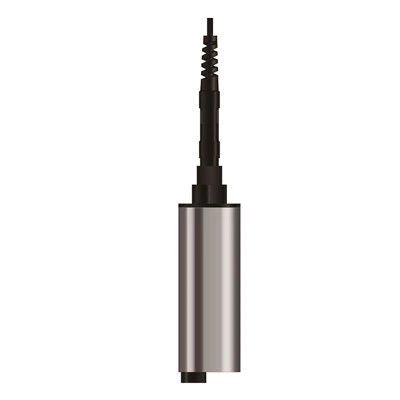
Let’s cut through the noise. When I say “industry benchmarks for water quality analyzers,” I’m not talking about vague claims like “99% accurate.” I’m talking about hard, measurable numbers that separate the ones that’ll sit on a shelf and collect dust from the ones that’ll save you downtime, fines, and headaches. Over the years, I’ve seen first-hand what works and what doesn’t—so let’s break this down like we’re chatting over a coffee, not in a 100-page manual.
First off, accuracy isn’t just about getting the “right” number. It’s about two big things: analytical accuracy and method compatibility. Let’s keep it real: a lot of cheap analyzers claim 0.1 mg/L precision, but if that number’s way off when you test a sample against a lab’s gold-standard method, it’s useless. For example, if you’re testing for total phosphorus—super critical for municipal wastewater and agricultural runoff—your analyzer needs to hit within ±5% of the lab’s reference value for 95% of all samples. That’s the real benchmark, not the spec sheet number they brag about. I once had a customer drive this point home: he bought a cheap unit that claimed ±2% accuracy, but when we ran a blind lab sample, it was 12% off. That’s not accuracy—that’s a fancy paperweight.
Then there’s linearity. This is how well the analyzer’s reading holds up across the full range of concentrations you’re actually measuring. If you’re a drinking water plant testing for pH (which usually hovers around 6.5-8.5), an analyzer that’s linear from 0-14 is cool, but the benchmark is linear within ±1% of reading between 5-9 pH. But if you’re a wastewater plant testing for ammonia, which can jump from 2 mg/L to 50 mg/L depending on load, you need linearity that stays within ±3% all the way from 0 to 100 mg/L. I’ve had a food processing client learn this the hard way: their analyzer only had good linearity below 20 mg/L ammonia. When a batch of cleaning waste pushed levels to 45 mg/L, the readings were garbage, and they got hit with a $15k fine for violating discharge limits. Ouch.
Next up, response time. Let’s say a storm hits, and your plant’s flow jumps, or a leak sends contaminants surging into the intake. You can’t wait 20 minutes for an analyzer to update. The benchmark here is: for most parameters like pH, conductivity, and turbidity, response time should be <60 seconds for 90% of a step change. For slower parameters like total organic carbon (TOC) or nitrate, it’s <5 minutes, max. A municipal customer of mine once told me that a 2-minute delay in turbidity readings meant they were over-treating water for 2 minutes during peak flow—wasting 120 gallons of chemicals per hour. Multiply that by a year? That’s $40k down the drain. That’s the kind of cost a lot of people miss when they just buy the cheapest unit.
Reproducibility, or precision, is another big one. This is how well the analyzer gives the same number over and over for the same sample. A lot of people mix this up with accuracy, but they’re different. If your analyzer gives 5.2 mg/L, 5.1 mg/L, 5.3 mg/L for three identical samples, that’s good reproducibility. The benchmark here is a relative standard deviation (RSD) of <2% for most parameters when running repeat samples. For things like heavy metals, which are measured in very low concentrations, it’s <5% RSD. I had a semiconductor plant reach out a while back because their old analyzer was giving RSD of 8% for lead, which meant they were rejecting good wafer batches because the readings were all over the place. We swapped them to a unit that hit 1.2% RSD, and their yield went up 7% that quarter. Worth every penny, right?
Now, let’s talk about uptime—because an analyzer that’s always broken doesn’t do you any good. The industry benchmark here is mean time between maintenance (MTBM) of >1,000 operating hours, and mean time to repair (MTTR) of <2 hours. Wait, let’s translate that: if you run your analyzer 24/7, that’s about 6 weeks between needing to clean the probe, replace a filter, or run a calibration. And if it does break, a tech should be able to fix it in under 2 hours—no waiting for a special part or a flight from across the country. I’ve seen units with MTBM of 200 hours that were down every other week. A paper mill I work with had one that broke for 3 days during a pulp batch—cost them $200k in spoiled product. Uptime isn’t a nice-to-have; it’s the biggest cost saver after accuracy.
Calibration stability is another benchmark that no one talks about enough. How often do you need to calibrate the analyzer? For most online units, the benchmark is <30 days between calibrations. If you’re testing for things like pH, some can go 60 days if they’re high-quality. But if an analyzer needs calibration every week, you’re wasting hours of tech time every month. A small brewery client of mine was spending 4 hours a week calibrating their old pH analyzer alone. That’s 208 hours a year—time they could’ve spent perfecting their IPAs, not messing with calibration solutions. We swapped them, and they only calibrate once a month now. Game. Changer.
Then there’s compliance, because let’s be real, most of you aren’t just testing for fun—you’re testing to meet EPA, EU, or local regulatory standards. The benchmark here is that the analyzer is type-approved for the parameters you’re measuring. That means it’s been vetted by a regulatory body to meet the required performance standards. For example, in the US, EPA Method 180.1 for ammonia requires analyzers to meet specific accuracy and linearity numbers, and if your unit isn’t type-approved, the lab results from your analyzer won’t count for regulatory reporting. I can’t tell you how many times I’ve seen customers get rejected by regulatory agencies because their cheap unit wasn’t type-approved. That leads to fines, delays, all the bad stuff.
Wait, let’s not forget about robustness. Water quality analyzers don’t live in a climate-controlled lab—they live in wastewater plants, on river intakes, in remote mines, in industrial yards with dust, vibration, and extreme temperatures. The benchmark here is operating temperature range of 0°C to 50°C, with some specialized units going as low as -10°C for cold climates. They should also have an ingress protection (IP) rating of at least IP65, which means they’re dust-tight and can handle high-pressure water sprays. A mining client in Alaska had a unit that only had IP54 rating—it stopped working when snow got into the connection during a blizzard. We swapped them to an IP67 unit that’s been running flawlessly for 3 years. In a remote location, being able to handle the environment is non-negotiable.
Now, let’s switch gears a little—what about field-proven performance? Benchmarks aren’t just numbers in a spec sheet. They’re what real users are seeing. If 10 different facilities using the same analyzer have less than 5% downtime, that’s a benchmark. If a manufacturer has been in business for 10+ years and their analyzers are used by 1000+ facilities across different industries, that’s a good sign. I only sell analyzers that have a track record—no new brands coming out with flashy ads but no real-world results. I’ve had customers ask for “custom” units, but I always stick to ones that have been tested in the field for at least 2 years before I even consider selling them.
Another thing: data integrity and connectivity. These days, you can’t just have an analyzer that spits out numbers on a screen. You need it to send data to your SCADA system, or to the cloud for remote monitoring. The benchmark here is that the analyzer supports standard protocols like Modbus, Ethernet/IP, or MQTT, so you don’t need custom software to get the data. Also, data logging should be continuous, with no gaps, and have a timestamp that’s accurate to within 1 second. A municipal water plant I work with uses this to pull real-time data for their compliance reports—they don’t have to manually enter numbers anymore, which saves hours of paperwork and reduces errors.
Wait, let’s be honest—no benchmark is one-size-fits-all. A drinking water plant has different needs than a food processing plant, which is different from a mine. For example, a brewery might care most about accurate pH and oxygen levels to keep their beer consistent. A wastewater plant cares about ammonia and TOC to meet discharge limits. A semiconductor plant cares about ultra-pure water resistivity and total organic carbon to avoid ruining chips. So you have to match the benchmarks to your specific use case. But the core numbers—accuracy, linearity, response time, uptime, regulatory approval—apply across the board.
I think a lot of people get hung up on brand names or the latest tech, but at the end of the day, it’s all about those hard benchmarks. I’ve seen $10k analyzers that were garbage because they missed the accuracy mark, and $5k analyzers that are workhorses because they hit every benchmark. The key is to ignore the marketing fluff and ask for the actual numbers. If a vendor can’t tell you the RSD, MTBM, or linearity range off the top of their head, that’s a red flag.
Look, I’ve been in this game long enough to know that cutting corners on water quality analyzers costs you more in the long run. Fines, downtime, spoiled product, bad compliance records—none of that is worth saving a few bucks upfront. The benchmarks I’ve laid out here are the ones I’ve seen that actually work for real customers, not the ones vendors make up to sell more units.
If you’re in the market for a new analyzer, or you’re wondering if your current one is up to par, reach out. I can walk you through what benchmarks matter most for your specific industry, do a quick assessment of your current setup, and help you find something that fits your needs without the fluff. No sales pitch, no pressure—just honest advice based on years of working with facilities just like yours.
You might be surprised how much a good analyzer can change your operations. No more late nights troubleshooting a broken unit, no more worrying about violating a discharge limit, no more wasting chemicals or product because of bad readings. That’s what hitting the right benchmarks does. It takes the guesswork out of water quality monitoring, so you can focus on running your business, not fighting with equipment.

So if you’re ready to stop settling for “good enough” and start getting an analyzer that actually delivers on its promises, get in touch. Let’s talk through your needs, compare notes, and make sure you’re investing in something that’s worth every penny. I’m here to help, because at the end of the day, good water quality is what keeps all of us going.
Ozone Sensors References:
- US EPA. (2022). Method 180.1: Determination of Ammonia in Water by Online Automated Analyzers. Office of Water, Washington, DC.
- International Organization for Standardization. (2021). ISO 15839: Water Quality – Online Analysers for Water and Wastewater. ISO, Geneva.
- Water Environment Federation. (2020). Benchmarking Performance of Online Water Quality Monitoring Systems. WEF Press, Alexandria, VA.
- ASTM International. (2019). ASTM D6502: Standard Test Method for Online Measurement of Turbidity in Water. ASTM, West Conshohocken, PA.
- World Health Organization. (2021). Guidelines for Drinking-water Quality, 4th ed. WHO Press, Geneva.
Shanghai Multiweal Environmental Technology Co., Ltd.
As one of the most professional water quality analyzer manufacturers in China, we’re featured by quality products and low price. Please rest assured to buy discount water quality analyzer in stock here from our factory. Contact us for custom service and OEM&ODM service.
Address: 5-2, Lane 801, Qiangye Road, Sheshan Town, Songjiang District, Shanghai
E-mail: mtw@shmultiweal.com
WebSite: https://www.multiweal.com/
