If you’re reading this, odds are you’re either dealing with a membrane filtration equipment delivery gone wrong, or you’re prepping for your first big shipment of MF gear to your site and you’re low-key panicking about dents, tears, or a whole membrane module turning to sludge mid-transit. As a membrane filtration equipment supplier that’s been in this game for over a decade, I’ve seen it all: a 3-meter flat sheet membrane bundle with a cracked outer frame that made the whole batch useless, a RO (reverse osmosis) element that arrived with a punctured inner lining, and even a skid-mounted unit that got tilted sideways for 3 days because the driver “needed the space for a pallet of plastic pipes.” Spoiler: none of those messes were necessary. Membrane Filtration Equipment
Today I’m breaking down how to transport membrane filtration equipment like the pros, no stuffy industry jargon, no confusing checklists that miss the tiny (but critical) details. Let’s start with the core: membrane filtration gear isn’t just another pallet of boxes. It’s fragile, it’s specialized, and every part—from the tiny ultrafiltration (UF) module to the big skid-mounted system—has a “don’t mess with that” threshold. Skip this, and you’re looking at replacement costs that could eat half your project budget, plus weeks of downtime waiting for new parts to show up.
First off, let’s categorize what you’re shipping, because each type of membrane gear has its own rules. I can’t tell you how many times I’ve gotten a call from a client who shipped UF modules the same way they’d ship a stack of 5-gallon buckets, and wondered why the modules leaked. Let’s keep it simple: we split our products into three main buckets, and that’s how I’ll frame this whole guide.
- Discrete membrane modules (UF, MF, RO elements): These are the individual cartridges or bundles you drop into your skid later—think long, tube-shaped RO elements or flat sheet UF modules packed in cardboard boxes.
- Small components: Valves, pressure gauges, spare membrane sheets, wiring harnesses, all the tiny stuff that’s easy to lose or break.
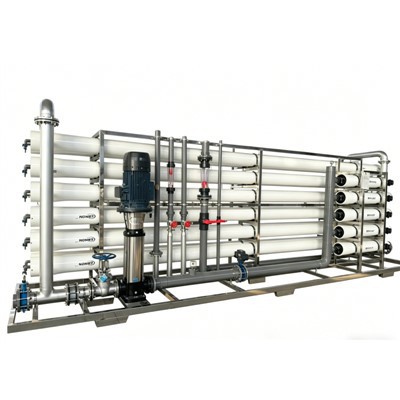
- Skid-mounted systems: The big, pre-assembled unit that has all the piping, pumps, and modules mounted to a steel frame, ready to hook up on site.
Let’s start with the smallest, most delicate part first: discrete membrane modules. These aren’t just plastic tubes—inside that outer casing is a dense mat of polymer fibers (for UF) or a thin reverse osmosis layer that’s thinner than a human hair. Even a tiny scratch on that fiber mat, or a drop from 2 feet, can render a module useless. I’ve had clients tell me they “just slid the pallet off the truck with a forklift” and half their modules stopped working because of micro-tears no one could see at first glance.
So how do you ship these the right way? First, never, ever stack heavy stuff on top of module pallets. I don’t care if it’s “just a few boxes of fittings”—those modules can only handle a max of 1,000 pounds per square foot on top. At our facility, we strap our module pallets to wooden skids with 2-inch wide poly straps, not thin plastic wrap, because thin wrap breaks during transit and leaves the modules loose. Also, label every single module with “THIS SIDE UP” and “FRAGILE: MEMBRANE INSIDE” in big, red letters—no tiny text that a driver can miss. Wait, one more non-negotiable: when you’re loading them, keep them upright. Laying a module on its side for more than an hour can cause the internal fibers to shift, and that’s a permanent problem. I once had a 20-module shipment that got loaded sideways because the driver said it was “easier” to fit in the truck—when we tested them on site, 12 had flow rates 30% lower than spec. Never again.
Next up, the small components. Valves, gauges, wiring—these are the easy ones to mess up because people treat them like afterthoughts. Last year, a client shipped a $500 pressure gauge in the same box as a bag of nuts and bolts, and it arrived with a cracked glass face. We’ve switched to using individual bubble pouches for every small part, and we pack them in hard plastic cases (not cardboard) if they’re going on a long trip. Also, tape every valve port closed with a plastic cap and a layer of shrink wrap—dust or moisture can get in there, and when you go to hook up the system, that valve won’t open at all. Pro tip: label every component with its exact part number, not just “valve” — we’ve had clients mix up a 2-inch inlet valve with a 1-inch outlet valve because no one labeled them, and that cost them a whole day of installation.
Now the big one: skid-mounted membrane systems. This is the behemoth that has all the piping, pumps, and modules bolted to a steel frame, and it’s also the part people mess up the most. I’ve seen skids get dragged across a truck bed, tilted at a 45-degree angle for the whole trip, and even left out in the rain for 2 days because the driver couldn’t find a covered spot. Let’s set the rules here, because this is where most of the costly mistakes happen.
First, before you even load the skid, prep it properly. Drain all the water out of it. I don’t care if you’re shipping it empty—any standing water can freeze in cold weather and crack pipes, or sit there and grow bacteria that will contaminate the membrane when you unbox it. We always flush our skids with a mild biocide (safe for membranes, don’t worry) before shipping, then drain them completely, and blow out all the lines with compressed air so there’s zero moisture left. If you’re shipping in freezing temps, add a little propylene glycol (non-toxic, for us) to the lines to prevent freezing—this is a small step that saves thousands in repairs.
Next, lifting it. Never use just one forklift fork to lift a skid. That’ll bend the frame and crack the piping. We use two forks, spaced evenly across the skid’s lifting points—check our manual, every skid has marked lifting spots for a reason. Also, don’t hook a crane to the piping or the pump housing—always use the built-in lifting eyes on the steel frame. I saw a skid get totaled last year because a rigger hooked the crane to a pump, and it ripped the whole pump off the frame. That’s a $10,000 mistake that could have been avoided with a $50 lifting eye.
Then, securing it on the truck. This isn’t just throwing a few straps around it. We use at least 4 heavy-duty straps, crisscrossed around the skid’s frame (not the pipes or valves), and we put foam blocks under the skid where it touches the truck bed to absorb vibration. If you’re shipping it on a flatbed, add a weatherproof canopy—even a little rain can get inside through unbolted valves, and that’s a nightmare. Also, never stack anything on top of the skid—even a small toolbox can dent the frame or crush a pipe. Last thing: tilt. Skid-mounted membrane systems have sensitive pumps and flow meters inside, so they can’t be tilted more than 10 degrees from vertical for any length of time. If a driver needs to move it for loading, that’s fine, but 10 minutes is max—anything longer and you risk damaging the internal components.
Wait, let’s talk about road conditions. No, seriously. If you’re shipping a skid on a bumpy dirt road instead of a paved highway, you need to add extra foam padding and maybe even crate the whole thing. Vibration from rough roads can loosen bolts inside the skid, or damage the membrane modules that are mounted on the frame. We had a client who skipped crating for a rural delivery, and when they unbolted the skid, the membrane modules were rattling so bad they had to replace half of them. Crating is more expensive, but for long trips or rough roads, it’s worth every penny.
Also, a little tip for when you’re coordinating with the driver. Give them your direct number, not just a general delivery line. I’ve had drivers call me at 2 a.m. because they missed a turn and need to know where to park, and being available means you can catch small issues before they turn into big ones. Also, ask for a delivery confirmation that says the skid was unloaded upright, with no visible damage to the frame or piping. If they can’t do that, ask them to take photos when they drop it off—those photos will be your proof if something goes wrong.
Let me throw in a few real horror stories from my own time in this industry to drive this home. A few years back, a customer shipped a set of NF (nanofiltration) modules from our facility to their plant 8 hours away. They didn’t stack anything on the pallet, but they forgot to label “THIS SIDE UP” — when the driver loaded it, he turned it sideways to fit next to another pallet, and by the time it arrived, 15 modules were useless. They ended up paying twice for shipping, plus replacement modules, and missed their production deadline. Another one: a skid system shipped in July, no weather canopy, and a rainstorm hit halfway. The standing water got into the pump, and by the time they hooked it up, the pump was corroded beyond repair. That cost them $12,000, and all because they skipped a $200 tarp.
Now, what about if you’re shipping internationally? Wait, you mentioned you’re a membrane filtration equipment supplier, so maybe you’re exporting too. Let’s cover that quick. International shipping adds another layer: customs, longer transit times, and extreme weather changes. For international shipments, we always crate every skid and module pallet, add desiccant bags inside the crates to absorb moisture, and label every package with customs-friendly terms (no fancy industry code names). Also, make sure all the drainage plugs are removed from the skid before shipping, so any moisture can escape—trapped moisture in a crate for 2 weeks is a breeding ground for mold and bacteria, which will ruin membranes.
Wait, let’s wrap this up with a quick pre-shipment checklist I give every client, because no one wants to forget the small stuff. Before anything leaves our facility, or yours if you’re shipping yourself, go through this:
✅ All modules are upright, no stacking on pallets, properly strapped.
✅ Small components are bubble-wrapped, labeled, in hard cases.
✅ Skid is completely drained of water, no standing moisture, lines are blown out.
✅ Lifting points are marked, no lifting by piping or pumps.
✅ Skid is secured to the truck with 4+ straps, foam blocks under the frame.
✅ “THIS SIDE UP,” “FRAGILE: MEMBRANE INSIDE,” and “NO STACK” labels are on every package, big and visible.
✅ If long trip or rough roads: add extra padding, crate if needed.
✅ For local deliveries: coordinate with driver to call before dropping off, get delivery photos.
At the end of the day, transporting membrane filtration equipment isn’t rocket science, but it’s all about paying attention to the tiny details. Skip the “it’s just another shipment” mindset, and you’ll avoid the headaches that come with replacing gear, missing deadlines, or burning through extra budget.
If you’re gearing up for a shipment, or you have questions about how to handle your specific membrane gear, hit us up to chat through your needs. We’ve shipped everything from small lab-scale membrane units to full-scale industrial systems across the country and abroad, and we can walk you through every step—no stuffy presentations, no confusing contracts, just straight talk about getting your equipment to site in one piece.
Reverse Osmosis Water System References:
- Membrane Filtration Transport Guidelines, American Water Works Association, 2021
- Industrial Skid Equipment Shipping Best Practices, National Association of Water Equipment Manufacturers, 2022
- Membrane Module Transit Care and Handling, Water Technology Magazine, 2020
Shandong Yanuo Environmental Protection Equipment Co., Ltd.
We’re well-known as one of the leading membrane filtration equipment manufacturers and suppliers in China, featured by quality products and good price. Please rest assured to buy bulk membrane filtration equipment made in China here from our factory. Customized orders are welcome.
Address: North Side of the Road, 1,000 Meters West of the Intersection of Fenghuangshan West Road and Provincial Highway S102, Wangfu Subdistrict, Qingzhou City, Weifang City, Shandong Province.
E-mail: ynhb.499973983@gmail.com
WebSite: https://www.zkyaruo.com/
