If you’ve ever stood next to a ball mill running 24/7 in a mining, cement, or mineral processing plant, you’ll notice the quiet hum that never stops—even when maintenance crews swap out liners or add new grinding media. As someone who’s supplied grinding media to plants across three continents for the past 12 years, I’ve learned that that hum isn’t just a machine’s background noise. It’s a direct measure of how much energy your operation wastes—or saves. The relationship between grinding media and energy consumption isn’t a trivial one; it’s the difference between a plant hitting its production targets and falling thousands of dollars short every month. Grinding Media
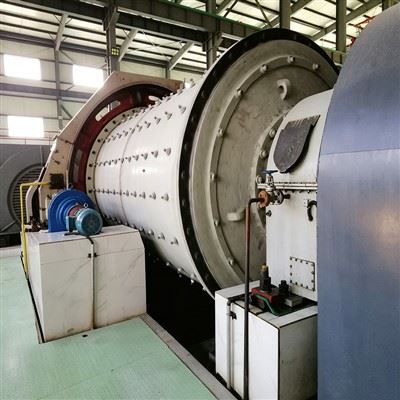
Let’s start with a basic truth: grinding is one of the most energy-intensive steps in any material processing workflow. Industry data usually pegs it at 30 to 50% of a plant’s total energy use, depending on the materials you’re handling. That’s a huge number, and the single biggest variable in that equation isn’t the mill itself—it’s what you’re grinding inside it. Too many plant operators think that all grinding media is the same, that a steel ball is a steel ball, and swapping one brand for another won’t change their energy bills. I’ve seen that myth play out dozens of times, too: a plant will buy a low-cost media, run it for a few months, and wonder why their power costs spiked by 18% and their throughput dropped. The problem isn’t the mill—it’s the media they chose.
First, let’s break down why grinding media uses energy. Every time a ball (or rod, or cylpeb) lifts up and cascades down inside a mill, it does work. That work is designed to break apart ore, clinker, or whatever you’re processing, but a lot of it is wasted. If the ball is too heavy, it uses more energy to lift, and when it hits the charge at the bottom, it doesn’t contribute to size reduction—it just creates unnecessary shock that wears down liners faster, which means you shut down the mill more often and waste energy waiting for repairs. If the ball is too light, it won’t have enough impact or attrition force to break the material, so the mill has to spin longer to get the same particle size, running up your energy bills even as throughput drops. It’s a balancing act, and that’s where a lot of operations go wrong by buying generic media without considering their specific grind requirements.
Over the years, I’ve had dozens of plant engineers tell me they thought size was the only factor, but it’s not—hardness and density matter just as much. Let’s talk about density first. A 100mm forged steel ball has a higher density than a 100mm cast steel ball, right? That means it has more mass, so when it lifts inside the mill, it has more kinetic energy when it impacts. But if your mill is sized for a certain load, adding higher density media means you can fit fewer balls in the same space. Wait, that sounds like a trade-off, but here’s the twist: the impact per ball is higher, so you can use fewer balls total, which reduces the mass you have to lift. I worked with a gold processing plant in Nevada a few years back that was using standard cast steel balls, and their energy use was 22 kWh per ton of ore ground. We switched them to higher density forged media, adjusted their charge volume, and they dropped to 17 kWh per ton— that’s a 23% reduction, almost entirely from the media change. They didn’t have to upgrade their mill, didn’t add power, just swapped the balls and tweaked the load. That’s the kind of win that makes my job worth it.
Hardness is another big one. Harder media wears slower, so it doesn’t need to be replaced as often. But the link to energy use isn’t just about replacement— it’s about consistent media size. As media wears, its diameter gets smaller. A 100mm ball that’s worn down to 80mm has less impact energy, so over time, you have to add more smaller balls to the charge to keep the grind working, which adds more total mass. More mass means the mill has to work harder to lift and spin the charge, so energy consumption goes up. I’ve seen plants where media wear rates were 0.5 kg per ton of ore, and their energy use was 20% higher than a plant with a 0.1 kg per ton wear rate, even when both used the same mill. It’s a cycle that’s easy to miss because it happens over months—you don’t notice the gradual shrinkage of balls, so you don’t connect it to your rising power bills. The right media, with the correct hardness for your application, maintains its size longer, keeps the charge mass steady, and keeps energy use low.
Another factor is media shape. A lot of people don’t think about this, but spheres aren’t the only option—rods and cylpebs are used in some mills, and their shape changes how energy is used. Rod mills, for example, use long cylindrical rods instead of balls. The shape means they grind along a line, which is better for producing a uniform particle size, but the weight of a rod means you have to balance length and diameter to avoid bending. If a rod is too thin, it bends, breaks, and has to be removed, which again changes the charge mass and increases energy use. If it’s too thick, it’s too heavy to lift, so it doesn’t tumble properly, wasting energy. Cylpebs, which are short cylinders, are a middle ground—they have the impact of balls and the attrition of rods, and they’re more resistant to breaking, so they keep their shape longer. We supply cylpebs to a cement plant in Texas that had been using balls, and they reduced their energy use by 12% because the cylpebs ground the clinker more efficiently, so the mill ran less time to hit the same product fineness.
Now, let’s talk about a common mistake: buying the cheapest media to cut upfront costs. I’ve had a plant manager come to me last year, upset because he’d saved $0.10 per kg on media, and his energy bill was $15,000 higher every month. When you dig into it, cheap media is usually made from lower quality steel, so it wears faster. He was replacing media twice as often, so he was buying more, and his worn balls added excess mass to the charge, making the mill work harder. That $0.10 per kg savings ended up costing him over $180,000 a year in extra energy. It’s a classic case of looking at only one cost instead of the total cost of ownership. The right media might cost more upfront, but the energy savings, longer life, and fewer shutdowns add up to a lot more over time.
There’s also the variable of how you load your mill. I know this isn’t directly the media’s fault, but it’s tied to how the media works. Too many plants load their mill to 40% or higher, because they think more media means more grinding. But excess media means more mass to lift, so the mill’s motor has to use more energy. The sweet spot is usually between 28 and 35% charge volume, depending on the mill size and the material you’re grinding. Working with your media supplier to find that sweet spot can cut energy use by another 10 to 15%, on top of what you save from the media itself. It’s a collaborative effort, not just a product sale.
Let’s get into the numbers to make this concrete. A typical 10 MW ball mill processes about 1,000 tons of ore per hour, right? If you can cut energy use by 5% from better media, that’s 500 kW less power. At $0.08 per kWh, that’s $0.04 per ton, which for 8,000 hours of operation a year is $320,000 in savings. Multiply that by a few mills, and it’s millions of dollars. That’s not a small change—it’s a line item that can make a difference between a profitable quarter and a tight one. The media is the lever to pull to get that kind of savings, and it’s a lever a lot of operations aren’t using.
I’ve also seen people argue that new mill technology is the answer, and don’t get me wrong—new mills are more efficient. But upgrading a mill can cost millions, while switching grinding media costs a fraction of that. It’s a low-hanging fruit that most plants overlook. You don’t have to shut down for a week to install new equipment; you just test a different media, adjust the load, and see the results in a matter of weeks. That’s why my business is built on this: I’ve seen too many operations waste money on expensive upgrades when a media change would fix their energy issues.
Now, let’s talk about maintenance, because that’s another hidden link. When media wears, it creates more dust, and the shock from mismatched media wears down liners and mill components faster. That means more frequent liner replacements, which require shutting down the mill, so you lose production time, and you have to spend money on parts. Every shutdown not only loses production but also requires restarting the mill, which uses a lot of extra energy—startup current can be 2 to 3 times the running current, so a 4-hour shutdown a month adds up to a lot of wasted energy. Good media reduces liner wear, so less downtime, less startup energy, and lower energy use overall.
I want to be clear, this isn’t a one-size-fits-all. What works for a gold ore in Nevada won’t work for a cement clinker in Texas, and won’t work for a copper ore in Chile. That’s why as a supplier, I don’t just sell media—I work with plants to test their specific application. We’ll run a test mill with their ore, test different media sizes, hardness, and density, and give them data on energy use, wear rate, and throughput. That’s the only way to get the right fit, and it’s the reason so many of my clients have been with me for 5, 10, even 15 years. They don’t just buy media from me; they partner with me to optimize their energy use.
Let me share a recent example: a copper mine in Peru that was struggling with high energy costs and low throughput. They’d been using generic balls, and their energy use was 24 kWh per ton of copper ore. We worked with their maintenance and process teams to run a test: we supplied forged steel balls with a hardness of 58 HRC (higher than their standard 52 HRC) and adjusted their charge volume to 32%. After 3 months, their energy use dropped to 19 kWh per ton, throughput increased by 11%, and their media wear rate went down by 20%. That’s a win across the board, and none of it required new equipment—just a smarter choice of grinding media.
I’ve heard the skepticism before: “All media is the same, the mill is the main factor.” But every year, I see proof that’s not true. The relationship between grinding media and energy consumption is direct, measurable, and one of the biggest untapped opportunities for processing plants to cut costs. It’s not just about what’s inside the mill—it’s about choosing the right component that turns energy into useful grinding, not wasted heat and shock.
If you’re looking to cut your energy bills, increase throughput, and reduce downtime, the first step isn’t a big capital investment. It’s re-evaluating your grinding media. I’ve spent 12 years learning this trade, and I’ve helped dozens of plants turn their energy efficiency around. I’d be happy to talk through your operation, run a test, and show you how grinding media can make a real difference for your bottom line. Contact me to discuss your grinding needs.
Grinding Media References
- AusIMM. (2020). Energy Efficiency in Mineral Processing: A Global Review. The Australasian Institute of Mining and Metallurgy.
- Wills, B. A., & Napier-Munn, T. J. (2015). Wills’ Mineral Processing Technology (8th ed.). Elsevier.
- International Energy Agency (IEA). (2022). Industry Energy Efficiency: Opportunities for Cost Reduction. IEA Publications.
- Cement Industry Energy Efficiency Center. (2021). Grinding Media Performance and Energy Use in Cement Production. Portland Cement Association.
- Mular, A. L., & Bhappu, R. B. (2019). Mineral Processing Plant Design (5th ed.). SME.
Shenyang Muren Machinery Co., Ltd.
As one of the most professional grinding media manufacturers and suppliers in China, we’re featured by quality products and good price. Please rest assured to wholesale durable grinding media from our factory. We also accept customized orders.
Address: No.16 Nansan Road, Shenyang Jinhai Economic Zone, Liaoning Province, China
E-mail: mulunjixie@163.com
WebSite: https://www.symurens.com/
