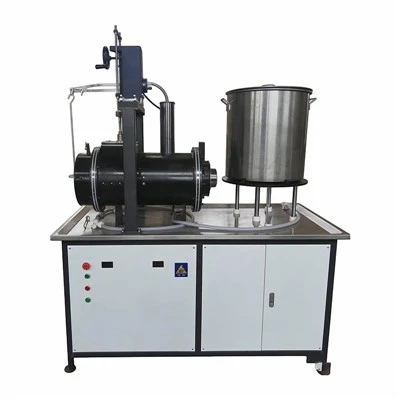
In the modern world, testing instruments play a crucial role in various industries, from electronics and telecommunications to automotive and aerospace. These instruments are essential for ensuring the quality, performance, and safety of products and systems. One of the key aspects of testing instruments is their communication interfaces, which allow them to interact with other devices, such as computers, data loggers, and control systems. In this blog post, I will share my insights as a testing instrument supplier on the different communication interfaces available in testing instruments. Testing Instrument
Serial Interfaces
Serial interfaces are some of the oldest and most widely used communication interfaces in testing instruments. They transmit data one bit at a time, making them suitable for long – distance communication and relatively simple to implement.
RS – 232
RS – 232 is perhaps the most well – known serial interface. It has been around for decades and is commonly used for connecting testing instruments to computers. RS – 232 uses a voltage – based signaling scheme to represent binary data. The standard supports a maximum data rate of about 115,200 baud, which is sufficient for many basic testing applications. One of the advantages of RS – 232 is its simplicity and widespread availability. Virtually all computers used to come with RS – 232 ports, although in recent years, these ports have become less common due to the rise of more modern interfaces.
RS – 485
RS – 485 is another popular serial interface, especially in industrial testing applications. It is a differential signaling interface, which means it uses two wires to transmit data, and the difference in voltage between the two wires represents the binary value. This makes RS – 485 more resistant to noise and interference compared to RS – 232. RS – 485 can support much longer cable lengths, up to several thousand feet, and can also support multiple devices on the same bus. This makes it ideal for applications where multiple testing instruments need to be connected together in an industrial environment.
USB Interfaces
Universal Serial Bus (USB) has become one of the most popular communication interfaces in recent years, and testing instruments are no exception. USB offers several advantages over serial interfaces.
USB 2.0
USB 2.0 is a high – speed communication interface that can transfer data at speeds of up to 480 Mbps. It is widely used in testing instruments because of its high data transfer rate, ease of use, and plug – and – play functionality. Most modern computers come with multiple USB ports, making it very convenient to connect a testing instrument. USB 2.0 is suitable for applications that require fast data transfer, such as high – speed data acquisition and real – time monitoring.
USB 3.0
USB 3.0, also known as SuperSpeed USB, offers even higher data transfer rates than USB 2.0, with a maximum speed of up to 5 Gbps. This makes it ideal for applications where large amounts of data need to be transferred quickly, such as in high – resolution imaging or high – speed electronic device testing. USB 3.0 ports are also backward – compatible with USB 2.0 devices, ensuring compatibility with older testing instruments.
Ethernet Interfaces
Ethernet is a widely used network communication technology, and many testing instruments now come with Ethernet interfaces.
10/100/1000 Base – T
These Ethernet standards support data transfer rates of 10 Mbps, 100 Mbps, and 1 Gbps respectively. Ethernet interfaces allow testing instruments to be easily integrated into local area networks (LANs) or wide area networks (WANs). This enables remote access and control of the testing instruments, which is very useful in applications where the testing needs to be monitored and controlled from a different location. For example, in a large – scale manufacturing plant, multiple testing instruments can be connected to the network, and technicians can monitor and manage the testing process from a central control room.
GPIB Interface
The General – Purpose Interface Bus (GPIB), also known as IEEE 488, is a parallel communication interface specifically designed for use with test and measurement equipment.
GPIB can support data transfer rates of up to 1 Mbyte/s. It allows multiple instruments to be connected to a single bus, with a maximum of 15 devices supported on a single bus. GPIB is widely used in laboratory settings, where multiple testing instruments need to be controlled and coordinated. It is a well – established standard, and many legacy testing instruments still use GPIB interfaces. However, compared to some of the more modern interfaces, GPIB is relatively slow and has limited cable length.
Wireless Interfaces
With the advancement of wireless technology, many testing instruments now come with wireless communication interfaces.
Wi – Fi
Wi – Fi is a popular wireless networking technology that allows testing instruments to connect to local networks wirelessly. This provides greater flexibility in terms of device placement and mobility. For example, a technician can carry a handheld testing instrument around a factory floor and connect to the network to transmit data or receive control commands. Wi – Fi networks can support high – speed data transfer, and most modern Wi – Fi standards are compatible with the latest testing requirements.
Bluetooth
Bluetooth is another wireless interface commonly used in testing instruments. It is a short – range wireless technology that is suitable for connecting a testing instrument to a nearby device, such as a smartphone or a tablet. Bluetooth is low – power, which is an advantage for battery – powered testing instruments. It is also easy to pair devices, making it convenient for quick and simple connections.
Considerations when Choosing a Communication Interface
When choosing a communication interface for a testing instrument, several factors need to be considered.
First, the data transfer rate is a critical factor. If the application requires high – speed data acquisition and transfer, interfaces such as USB 3.0 or Ethernet (1000 Base – T) may be more suitable.
Second, the distance between the testing instrument and the controlling device is also important. For long – distance communication, interfaces like RS – 485 or Ethernet are better choices.
Third, compatibility with existing systems is essential. If you already have a network infrastructure in place, choosing an interface that can integrate seamlessly with the existing system will save time and cost.
Finally, power consumption is a consideration, especially for portable testing instruments. Wireless interfaces like Bluetooth may be more suitable for low – power applications.
Conclusion
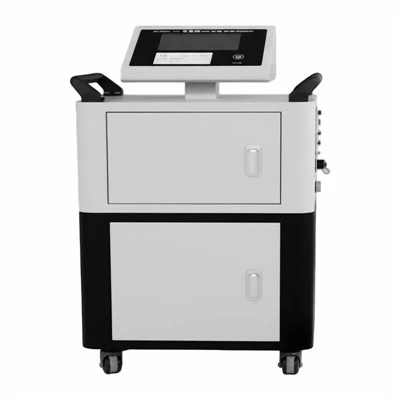
As a testing instrument supplier, I understand the importance of choosing the right communication interface for different applications. Each communication interface has its own advantages and disadvantages, and the choice depends on various factors such as data transfer rate, distance, compatibility, and power consumption. By carefully considering these factors, customers can ensure that they select the testing instruments with the most suitable communication interfaces for their specific needs.
Testing Instrument If you are in the market for testing instruments and need expert advice on the best communication interfaces for your applications, or if you have any other questions about our products, please reach out to our sales team. We are more than happy to discuss your requirements and provide you with the most suitable solutions. Our team has extensive experience in the testing instrument industry and can offer you the best guidance to meet your testing needs.
References
- "Data Communication and Networking" by Behrouz A. Forouzan
- "Test and Measurement Basics" by Agilent Technologies
- "IEEE Standards for Communication Interfaces" published by the Institute of Electrical and Electronics Engineers (IEEE)
Hebei Wanluda Testing Instrument Equipment Co., Ltd.
As one of the most professional testing instrument manufacturers and suppliers in China, we have world-leading production equipment and strong manufacturing capabilities. Please rest assured to buy advanced testing instrument made in China here from our factory.
Address: Zhouguantun Village, Xian County, Cangzhou City, Hebei Province, P.R.China
E-mail: wldinstrument@163.com
WebSite: https://www.wldinstrument.com/
