Hey there! I’m a supplier of warehouse equipment, and today I wanna chat about a super important topic: Can warehouse equipment be integrated with warehouse management systems (WMS)? WarehouseEquipments

Let’s start by getting a clear idea of what we’re talking about. Warehouse equipment includes all sorts of stuff like forklifts, conveyor belts, pallet racks, automated storage and retrieval systems (AS/RS), and barcode scanners. On the other hand, a WMS is like the brain of the warehouse. It helps manage inventory, track orders, and optimize warehouse layout.
Now, the big question is, can these two work together? The short answer is yes, and they absolutely should! Integrating warehouse equipment with a WMS can bring a whole bunch of benefits to the table.
First off, it boosts efficiency. When your equipment is connected to the WMS, it can receive real – time instructions. For example, a forklift operator can get the most efficient route to pick up a pallet directly from the WMS. This cuts down on the time wasted in searching for items and moving around the warehouse. Instead of relying on paper lists or memory, the equipment knows exactly what to do and where to go.
Take conveyor belts as an example. With integration, the conveyor system can be synchronized with the WMS. It can start and stop based on the flow of inventory, ensuring that products move smoothly through the warehouse. This reduces bottlenecks and speeds up the overall process of getting goods in and out of the facility.
Another major benefit is accuracy. Manual processes are prone to errors. Workers might misread a label or enter the wrong information into a system. But when warehouse equipment is integrated with the WMS, data is transferred automatically. Barcode scanners can read product information and send it straight to the WMS, updating inventory levels in real – time. This means fewer mistakes in inventory counts, order picking, and shipping.
Let’s say you have an AS/RS. When an order comes in, the WMS can communicate with the AS/RS to retrieve the right items from storage. The system knows the exact location of each item, and it can quickly and accurately pick them. This reduces the chances of shipping the wrong product to a customer.
Cost – savings are also a huge advantage. By improving efficiency and accuracy, you can reduce labor costs. You need fewer workers to manage the warehouse because the integrated system takes care of a lot of the repetitive tasks. Additionally, you can minimize inventory holding costs. With real – time inventory data from the integrated system, you can better manage your stock levels. You won’t overstock items that aren’t selling well, and you’ll always have enough of the popular products on hand.
But how does this integration actually work? Well, there are a few different ways. One common method is through application programming interfaces (APIs). APIs act as bridges between different software systems. The WMS can use APIs to communicate with the software that controls the warehouse equipment. This allows the two systems to share data and send instructions back and forth.
For example, if you have a forklift with a built – in computer system, the WMS can use an API to send it a list of pick – up locations and the sequence in which to visit them. The forklift’s system can then send back data about the tasks completed, like the time it took to pick up a pallet or if there were any issues.
Another way is through middleware. Middleware is software that sits between the WMS and the equipment’s control systems. It can translate data from one format to another, making it easier for the two systems to communicate. This is especially useful when you have different types of equipment from various manufacturers, each with their own data formats.
However, integrating warehouse equipment with a WMS isn’t without its challenges. One of the main issues is compatibility. Not all equipment and WMS are designed to work together. You might have an older piece of equipment that doesn’t have the necessary technology to connect to a modern WMS. In these cases, you might need to upgrade the equipment or find a way to retrofit it.
There’s also the matter of data security. When you’re sharing data between systems, you need to make sure that it’s protected. Hackers could potentially try to access the data and disrupt your warehouse operations. So, you need to have proper security measures in place, like firewalls and encrypted connections.
Training is another important factor. Your employees need to know how to use the integrated system effectively. They’ll have to learn how to operate the equipment in conjunction with the WMS. This might require additional training sessions, which can take time and resources.
Despite these challenges, the benefits of integration far outweigh the drawbacks. More and more warehouses are realizing the potential of integrating their equipment with a WMS. It’s becoming a standard practice in the industry.
If you’re running a warehouse and you’re still relying on manual processes or have equipment that’s not connected to your WMS, you’re missing out. You could be losing money due to inefficiencies and errors.
As a warehouse equipment supplier, I’ve seen firsthand the positive impact of integration. I’ve worked with many customers who’ve made the switch, and they’ve all been happy with the results. Their warehouses are running smoother, they’re saving money, and they’re providing better service to their customers.
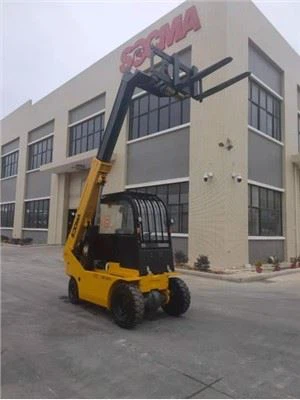
So, if you’re interested in integrating your warehouse equipment with a WMS, I’d love to have a chat with you. We can discuss your specific needs, the type of equipment you have, and the best way to make the integration happen. You can reach out to me to start the conversation about how we can take your warehouse operations to the next level.
Electric Heavy Duty Forklift References
- "Warehouse Management Systems: A Comprehensive Guide" by some industry expert
- "The Future of Warehouse Automation" from a well – known logistics magazine
Fujian SOCMA Machinery Manufacture Co., Ltd.
Fujian SOCMA Machinery Manufacture Co., Ltd. is one of the most professional warehouseequipments manufacturers and suppliers in China. We warmly welcome you to buy customized warehouseequipments made in China here from our factory. If you have any enquiry about cooperation, please feel free to email us.
Address: Taiwanese Investment Area, Quanzhou, Fujian, China
E-mail: marketing@socmamarketing.com
WebSite: https://www.socma-forklift.com/
