Ambient temperature plays a crucial role in the performance, lifespan, and overall efficiency of dry type transformers. As a supplier of high – quality dry type transformers, I have witnessed firsthand how different ambient temperature conditions can impact these essential electrical devices. Dry Type Transformer

1. Impact on Insulation Materials
The insulation system of a dry type transformer is one of its most critical components. It is designed to prevent electrical leakage and ensure the safe and reliable operation of the transformer. Ambient temperature has a direct influence on the aging rate of insulation materials.
Most dry type transformers use Class F or Class H insulation, which can withstand relatively high temperatures. However, as the ambient temperature rises, the thermal stress on the insulation increases. For every 8 – 10°C increase in temperature above the rated temperature of the insulation, the aging rate of the insulation approximately doubles. This accelerated aging can lead to a reduction in the insulation’s dielectric strength, making it more prone to electrical breakdown.
In high – temperature environments, the insulation materials can also become brittle and more susceptible to mechanical damage. For example, during normal operation, the transformer may experience vibrations, and if the insulation is already weakened due to high – temperature aging, it can crack or break. This not only compromises the safety of the transformer but can also lead to short – circuits and other electrical failures.
Conversely, in extremely cold ambient temperatures, the insulation materials can become rigid. This rigidity can cause problems during the expansion and contraction cycles that occur when the transformer is energized and de – energized. The insulation may not be able to flex properly, leading to internal stresses and potential damage to the insulation structure.
2. Effect on Transformer Efficiency
The efficiency of a dry type transformer is closely related to its temperature rise. The temperature rise of a transformer is the difference between its operating temperature and the ambient temperature. As the ambient temperature increases, the temperature rise of the transformer also becomes more challenging to manage.
A higher ambient temperature means that the transformer has less "headroom" for temperature increase during operation. The losses in a transformer, mainly copper losses (due to the resistance of the windings) and iron losses (due to magnetic hysteresis and eddy currents in the core), generate heat. In a high – ambient – temperature environment, this additional heat has a more significant impact on the overall temperature of the transformer.
When the temperature of a transformer increases, its copper losses also increase because the resistance of the copper windings is temperature – dependent. According to the formula (R = R_0(1+\alpha\Delta T)), where (R) is the resistance at temperature (T), (R_0) is the resistance at a reference temperature, (\alpha) is the temperature coefficient of resistance, and (\Delta T) is the temperature change. As the temperature rises, the resistance of the windings increases, leading to higher copper losses and lower efficiency.
In terms of iron losses, although they are less temperature – sensitive compared to copper losses, high temperatures can still affect the magnetic properties of the core material. This can result in a slight increase in iron losses, further reducing the transformer’s efficiency.
On the other hand, in cold ambient temperatures, the resistance of the copper windings is lower, which reduces copper losses. However, the overall performance of the transformer may still be affected by other factors such as the viscosity of the cooling air and the performance of any auxiliary components.
3. Influence on Cooling Performance
Dry type transformers rely on natural convection or forced – air cooling to dissipate heat. The ambient temperature has a significant impact on the effectiveness of these cooling methods.
In natural – convection cooling, the hot air around the transformer rises, and cooler air is drawn in to replace it. When the ambient temperature is high, the temperature difference between the transformer and the surrounding air is reduced. This smaller temperature difference means that the natural – convection process is less efficient, as there is less driving force for the air to circulate. As a result, the heat dissipation rate of the transformer decreases, and the temperature of the transformer can rise more rapidly.
For forced – air – cooled dry type transformers, the fans are used to increase the air circulation around the transformer. However, in high – temperature environments, the air that is being blown over the transformer is already warm. This warm air is less effective at absorbing and carrying away the heat generated by the transformer. Additionally, the fans themselves may experience reduced efficiency at high temperatures, as the motor windings may overheat, leading to a decrease in the fan’s rotational speed and airflow.
In cold environments, the density of the air is higher, which can potentially enhance the cooling effect. However, low temperatures can also cause problems such as the freezing of any moisture in the air or on the transformer surface. This can lead to the formation of ice, which can block the air passages and reduce the cooling efficiency.
4. Impact on Load Capacity
The load capacity of a dry type transformer is determined by its ability to dissipate heat. As mentioned earlier, ambient temperature affects the heat – dissipation performance of the transformer. Therefore, it also has a significant impact on the transformer’s load capacity.
In high – ambient – temperature conditions, the transformer’s load capacity is reduced. This is because the transformer cannot dissipate heat as effectively as it would in a lower – temperature environment. To prevent overheating and damage to the insulation and other components, the transformer must be operated at a lower load. For example, a transformer that is rated for a certain load at a standard ambient temperature of 40°C may need to be derated by 10% – 20% when the ambient temperature reaches 50°C.
In cold ambient temperatures, the transformer can generally handle a higher load. The lower ambient temperature allows for more efficient heat dissipation, and the transformer can operate with a higher temperature rise without exceeding the maximum allowable temperature of the insulation. However, it is still important to consider other factors such as the mechanical stress on the components during cold – start and the performance of the control and protection systems.
5. Considerations for Different Applications
Different applications of dry type transformers require different considerations regarding ambient temperature.
In industrial applications, where transformers are often located in large factories or manufacturing plants, the ambient temperature can vary significantly depending on the type of industrial processes. For example, in a steel – making plant, the ambient temperature near the furnaces can be extremely high. In such cases, special high – temperature – resistant dry type transformers may be required. These transformers are designed with enhanced insulation materials and more efficient cooling systems to withstand the harsh temperature conditions.
In commercial buildings, such as office buildings and shopping malls, the ambient temperature is usually more regulated. However, during peak summer months, the ambient temperature in the electrical rooms where the transformers are located can still rise. In these situations, proper ventilation and air – conditioning systems should be installed to maintain a suitable ambient temperature for the transformers.
In outdoor applications, the transformers are exposed to the full range of ambient temperatures, from extremely cold winters to hot summers. Outdoor – rated dry type transformers are designed to be more robust and weather – resistant. They often have additional protective coatings on the insulation and enclosures to prevent moisture ingress and damage from temperature variations.
6. Our Solutions as a Supplier
As a dry type transformer supplier, we understand the challenges posed by different ambient temperatures. We offer a range of transformers that are designed to perform optimally under various temperature conditions.
For high – temperature environments, we use advanced insulation materials with high thermal ratings. These materials can withstand higher temperatures without significant aging, ensuring the long – term reliability of the transformer. We also design our transformers with enhanced cooling systems, such as larger cooling fins and more powerful fans, to improve heat dissipation.
In cold – climate applications, we take measures to prevent moisture from freezing inside the transformer. Our transformers are equipped with heaters and moisture – control systems to maintain a suitable internal temperature and prevent ice formation.
We also provide comprehensive technical support to our customers. Our team of experts can help customers select the right transformer based on their specific ambient temperature conditions and application requirements. We can also offer advice on installation, maintenance, and operation to ensure that the transformers operate safely and efficiently throughout their lifespan.
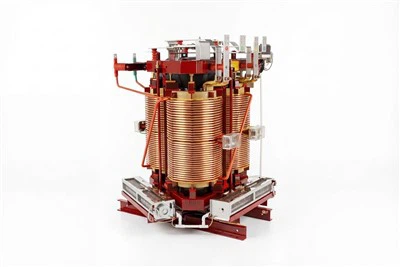
If you are in the market for a high – quality dry type transformer that can withstand the challenges of different ambient temperatures, we invite you to contact us. Our experienced sales team is ready to discuss your needs and provide you with a customized solution. Let’s work together to ensure that your electrical system operates smoothly and effectively, regardless of the ambient temperature.
References
Pole Mounted Transformer Barbosa, E.A., & Hensley, G. (2007). Transformer Aging and Life – Expectancy Calculation. IEEE Transactions on Power Delivery.
Liao, R. – J., & Lin, Y. – C. (2011). Thermal Analysis of Dry – Type Transformers Based on Computational Fluid Dynamics. IEEE Transactions on Power Delivery.
McGranaghan, M.F., & Mueller, A.C. (2003). Transformer Loading and Loss – Evaluation Guide. IEEE Press.
Jiangsu Yuantong Electric Co., Ltd.
As one of the most experienced dry type transformer manufacturers and suppliers in China, we also support customized service. Please rest assured to wholesale bulk high quality dry type transformer in stock here from our factory. Contact us for more details.
Address: No. 202, Qiaogang Road, Xicheng Subdistrict, Hai’an City
E-mail: jsytdq@jsytelectric.com
WebSite: https://www.jsytelectric.com/
