What is the torsional strength of bulletproof glass for Stanag 4569 standard?
As a supplier of bulletproof glass that adheres to the Stanag 4569 standard, I often encounter inquiries about the various technical aspects of our products. One question that has been coming up more frequently lately is about the torsional strength of our bulletproof glass. In this blog post, I aim to provide a comprehensive and scientific explanation of what torsional strength means in the context of Stanag 4569 standard bulletproof glass. Bulletproof Glass for Stanag 4569 Standard
Understanding the Stanag 4569 Standard
Before delving into torsional strength, it’s essential to understand the Stanag 4569 standard. Stanag, which stands for Standardization Agreement, is a set of NATO – established standards for ballistic protection. The Stanag 4569 standard specifically focuses on the protection of vehicles and equipment against various ballistic threats, including small arms fire, artillery fragments, and mines.
Bulletproof glass designed to meet the Stanag 4569 standard must undergo rigorous testing to ensure it can withstand specific levels of ballistic impact. These tests are categorized into different levels, ranging from Level 1 (the lowest protection) to Level 7 (the highest protection). Each level has defined requirements for the type of ammunition the glass must resist, the velocity of the projectiles, and the distance from which the shots are fired.
Defining Torsional Strength
Torsional strength refers to a material’s ability to resist twisting forces. In the case of bulletproof glass, torsional strength becomes crucial in real – world scenarios where the glass may be subjected to forces that cause it to twist. For example, in a military vehicle during high – speed maneuvers, off – road driving on uneven terrain, or due to external impacts, the bulletproof glass installed in the vehicle may experience torsional forces.
These forces can potentially compromise the integrity of the glass, leading to cracks or even complete failure. Therefore, ensuring that the bulletproof glass has sufficient torsional strength is essential for maintaining its ballistic protection capabilities and the safety of the occupants inside the vehicle.
Testing Torsional Strength of Stanag 4569 Bulletproof Glass
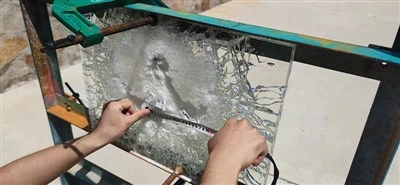
To measure the torsional strength of our bulletproof glass, we follow a series of well – defined testing procedures. First, we create test specimens of the bulletproof glass according to specific dimensions. These specimens are then placed in a specialized testing apparatus designed to apply controlled twisting forces.
The testing process involves gradually increasing the torsional force until the glass either fails or reaches a pre – determined limit. During the test, we closely monitor the behavior of the glass, including the onset of cracks, the propagation of damage, and the overall structural integrity. The results of these tests are recorded and analyzed to determine the torsional strength of the glass.
It’s important to note that the torsional strength of our bulletproof glass can vary depending on several factors. These include the composition of the glass, the thickness of the different layers (most bulletproof glass consists of multiple layers of glass and polycarbonate), and the manufacturing process.
Factors Affecting Torsional Strength
- Material Composition
The materials used in the construction of bulletproof glass play a significant role in determining its torsional strength. For example, the type of glass and the quality of the polycarbonate used can affect how well the material withstands twisting forces. High – quality glass with a uniform structure and proper annealing processes will generally have better torsional strength.
Polycarbonate layers, which are known for their impact resistance, also contribute to the overall torsional strength. A well – bonded polycarbonate layer can help distribute the torsional forces more evenly across the glass structure, reducing the risk of localized failure. - Layer Thickness and Configuration
The thickness and arrangement of the different layers in bulletproof glass also impact its torsional strength. A thicker glass layer may provide more resistance to torsional forces, but it can also increase the weight of the glass. Therefore, a balance needs to be struck between the thickness of the layers and the overall weight and performance requirements of the vehicle.
Additionally, the order in which the layers are stacked can affect how the glass responds to torsional forces. An optimized layer configuration can enhance the glass’s ability to distribute the forces and prevent the propagation of cracks. - Manufacturing Process
The manufacturing process is another critical factor. Precise control of the bonding process between the glass and polycarbonate layers is essential. Any defects in the bonding, such as air bubbles or uneven adhesion, can significantly reduce the torsional strength of the glass.
Our manufacturing facilities use state – of – the – art technology and strict quality control measures to ensure that each batch of bulletproof glass meets the highest standards of torsional strength and overall performance.
Importance of Torsional Strength in Real – World Applications
In military and high – security applications, the torsional strength of bulletproof glass can have a direct impact on the safety and effectiveness of the vehicle or equipment. A glass with insufficient torsional strength may crack or break under normal operating conditions, leaving the occupants vulnerable to ballistic threats.
For example, in a military vehicle engaged in combat, sudden turns, bumps, or impacts from nearby explosions can subject the bulletproof glass to significant torsional forces. If the glass fails due to these forces, it can compromise the vehicle’s protection and put the lives of the soldiers at risk.
Our Commitment to Quality and Performance

As a supplier of Stanag 4569 standard bulletproof glass, we are committed to providing our customers with products that not only meet but exceed the required standards. Our research and development team continuously works on improving the torsional strength and other properties of our bulletproof glass.
We conduct regular internal testing and also participate in independent third – party testing to ensure the reliability and performance of our products. By using the latest materials and manufacturing techniques, we strive to offer bulletproof glass that provides the best possible protection in the most demanding environments.
Contact for Procurement
Bulletproof Glass for NIJ Standard If you are in the market for bulletproof glass that meets the Stanag 4569 standard and are interested in learning more about our products, including their torsional strength and other technical specifications, we encourage you to contact us for a procurement discussion. Our experienced sales team is ready to assist you with any questions you may have and provide you with detailed information about our product range.
References
- NATO Standardization Agreement (Stanag) 4569.
- Ballistic Glass Testing Standards and Procedures – A Review of Current Practices. Journal of Advanced Material Science (2020).
- The Role of Material Composition in Determining the Torsional Strength of Composite Materials. International Journal of Materials Engineering (2019).
Shaoxing Transparent Armoring Materials Co., Ltd.
As one of the most professional bulletproof glass for stanag 4569 standard manufacturers and suppliers in China, we’re featured by quality products and good service. Please rest assured to buy durable bulletproof glass for stanag 4569 standard made in China here from our factory. We also accept customized orders.
Address: No.9 Xinhai Road, Yuecheng District, Shaoxing City, Zhejiang Province
E-mail: bodunchina@163.com
WebSite: https://www.king-armor.com/
