If you’ve ever held a custom metal bike frame, a precision medical implant, or the intricate part inside a gaming controller that fits perfectly every time, odds are it was made with CNC machining. As someone who runs a CNC machining supply business, I field questions about this process every single day—most of them from small business owners, hobbyists, and even engineers who’ve only heard the acronym but don’t fully grasp how it works. I’m writing this to demystify it, no jargon, no overly technical lectures, just the real process I see play out in my shop every week. CNC Machining
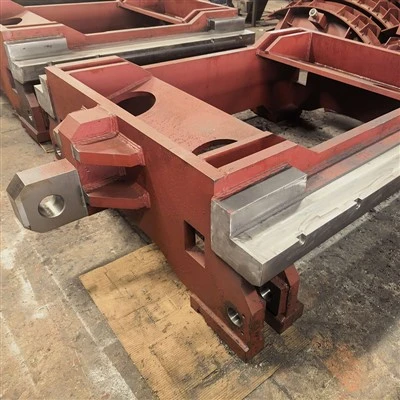
Let’s start with the basics: CNC stands for Computer Numerical Control. At its core, it’s a process that uses pre-programmed computer software to dictate the movement of factory tools and machinery. Unlike manual machining, where a machinist has to move tools by hand, twist dials, and adjust cuts based on what they see, CNC machines follow exact digital instructions. That’s why they can make identical parts, over and over, with tiny tolerances—we’re talking thousandths of an inch—something that’s impossible for a human to do consistently.
I’ll walk you through the step-by-step process, because that’s where most people get lost. First, before anything touches metal or plastic, there’s design work. A customer comes to us with a part: maybe it’s a replacement gear for their industrial machine, or a custom housing for a piece of electronics. We start with creating a 3D model of that part using CAD, or Computer-Aided Design software. This is where every detail is drawn: the length, the width, the depth of holes, the angle of cut edges, even the type of material it needs to hold up. I always tell new customers that the more specific the CAD model is, the smoother the rest of the process goes. Last month, a local furniture maker sent us a CAD file for custom aluminum drawer pulls that was missing a 0.2mm radius on the edges—small detail, but it meant we had to redo the program and add an extra day to lead time. It’s a small example, but it shows how critical that first step is.
Once the CAD model is done, the next step is CAM, or Computer-Aided Manufacturing. This is where we take that 3D design and turn it into a set of instructions the CNC machine can understand. Our CAM software doesn’t just translate lines of code—it figures out every move the machine will make: where the tool will start cutting, how deep each cut will be, how fast the tool will spin, how the part will be secured, and even where coolant will spray to keep the tool from overheating. It also simulates the entire process, so we can catch mistakes before we ever start cutting. Last quarter, we had a simulation flag that a tool would collide with a part fixture if we ran the original program. That saved us thousands of dollars in scrap material and a week of downtime waiting for a replacement tool. CAM is where all the planning happens, and it’s why our parts come out right the first time almost every time.
After the program is ready, it’s time to set up the machine and the material. This is one of the parts that new customers are always curious about. We pick the right material for the job: aluminum for most automotive and aerospace parts, stainless steel for medical equipment that needs to be sterilized, brass for decorative hardware, even hard plastics like PEEK for parts that need to withstand high temperatures. Then we secure that material—usually a block or a bar—into a fixture inside the CNC machine. The fixture is rigid, so the material doesn’t shift while the tool is cutting; even a tiny shift can throw off the entire part. We also load the cutting tool at this step. Depending on the part, we might use a end mill for cutting and shaping, a drill for making holes, a tap for threading, or even a lathe for turning round parts. Our machines have tool changers, so they can swap out 10, 20, even 30 different tools automatically during a job, which cuts down on setup time a lot.
Now comes the part everyone thinks is the “magic”: the machine running the program. Once we hit run, the CNC machine takes over. It reads each line of the CAM code, and moves its tools along three axes (X, Y, Z) to shape the material. The X axis moves left and right, Y moves forward and backward, Z moves up and down—most CNC machines we use for our work also add a fourth or fifth axis, which lets us rotate the part and cut at angles, no need to reposition it manually. What I love most about watching a well-set CNC machine run is how precise it is. You don’t have to hover over it; it’ll make hundreds of cuts over the course of hours, and each one is exactly where it needs to be. That consistency is why CNC machining is such a staple for so many industries. Manual machining can work for one or two parts, but if you need 100 identical parts, CNC is the only way to go.
But the process doesn’t stop when the machine finishes cutting. The next step is post-processing. The parts come off the machine with tiny burrs—sharp, rough edges left from the cutting tool—so we have to deburr them, usually with sandpaper, a wire brush, or a tumbler that uses small media to smooth the edges. Sometimes we do surface treatments too: anodizing aluminum to make it corrosion-resistant, powder coating for color, or polishing for a shiny finish. We also do quality checks at every stage, but the final inspection is non-negotiable. We use calipers, micrometers, and even CMM (Coordinate Measuring Machine) scans to make sure every part matches the original CAD file within the tolerance the customer needs. A few months back, a customer sent a part to their assembly team that was 0.001 inch off—too small to see with the naked eye, but enough that it wouldn’t fit their machine. Since then, we’ve added an extra CMM scan for every high-precision job, and that mistake never happens again.
Now, let’s get real about what CNC machining can and can’t do, because I get a lot of customers who ask if it’s right for their project. It’s perfect for custom parts, low to medium production runs, high-precision components, and parts that need a wide range of materials. It’s not always the best for super simple parts—like a 1-inch solid block—where manual machining might be faster, or for mass production of millions of identical parts, where injection molding is usually more cost-effective. But for most small to medium businesses, startups, and even large corporations that need custom, high-quality parts, CNC machining is the go-to.
Over the years, I’ve seen CNC machining change a lot. The software is more intuitive, the tools are more durable, and the machines are faster and more energy efficient. But the core of it is still the same: turning a digital design into a physical part with precision and consistency. As a supplier, my job isn’t just to run machines and cut metal. It’s to walk customers through every step—from CAD design to final inspection—to make sure they get the part they need, on time and on budget.
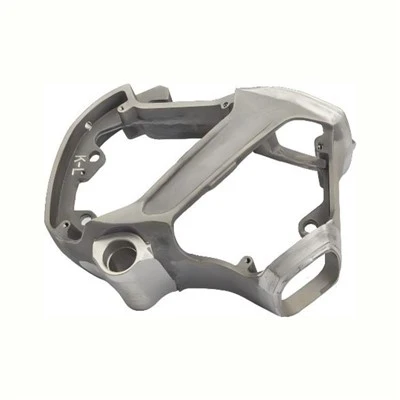
If you have a project, whether it’s a single prototype or a production run of 1000 parts, and you’re wondering if CNC machining is the right fit for you, I’m here to help. We can walk through your design, talk about materials, lead times, and pricing, and answer any questions you have—no jargon, no sales pitch, just honest advice. Connect with our team to discuss your requirements and get a custom quote tailored to your project.
CNC Machining References
- Groover, M.P. (2020). Fundamentals of Modern Manufacturing: Materials, Processes, and Systems. John Wiley & Sons.
- American Machinist. (2022). “CNC Machining Basics: A Guide for New Machinists and Engineers.” Society of Manufacturing Engineers.
- Trosset, M.W. (2019). Computer-Aided Design (CAD) and Computer-Aided Manufacturing (CAM) for Engineers. CRC Press.
Sanming Hongfeng Machinery Manufacturing Co., Ltd.
As one of the most professional CNC machining manufacturers and suppliers in China, we’re featured by quality products and good service. Please rest assured to wholesale customized CNC machining made in China here from our factory. Welcome to contact us for quotation.
Address: No.2 Gaoyuan Industrial Zone, Chenda Town, Sanyuan District, Sanming City, Fujian Province, China
E-mail: smhfjxzsq@163.com
WebSite: https://www.smhfmachinery.com/
