If you’re a Timing Tool Kit supplier—wait, let me be specific: I run a small, family-backed distribution hub focused on timing tool solutions for automotive service centers, independent repair shops, and even DIY gearheads who’d rather tackle a timing belt replacement than pay a mechanic’s premium. A few months back, we rolled out our Timing Tool Kit, a compact, scenario-specific set for overhead cam (OHC) engine jobs, and I was curious: why were some shops buying three or four kits in a week, while others still stuck to a single, generic tool set that left mechanics scrambling? That’s when I dug into our internal time usage analysis, a deep dive into how our customers actually used every part of their Timing Tool Kit, not just when they paid for it. What I found wasn’t just data—it was a playbook for not only improving our product but also understanding exactly who we’re selling to, and why. Timing Tool Kit

Before I get into the insights, let’s be clear: this wasn’t a marketing survey with leading questions. I pulled data from 127 Timing Tool Kit purchases over 6 months, paired with optional, anonymous feedback from 48 shops that volunteered to track their timing job timelines alongside their kit usage. I asked them to log two things: total time spent on the job, and delays caused by tool gaps, paired with which parts of their Timing Tool Kit they were using at each step. No fancy algorithms, no AI-generated prompts—just hands-on, real-world data from the people actually turning wrenches.
First big insight: The 15% Rule. Here’s the stat that made me lean back in my chair: Shops that used every single component of their Timing Tool Kit (not just the half-dozen most obvious wrenches and pins) completed their timing belt or chain job 15% faster on average. The gaps? For example, mechanics would waste 12 minutes on average hunting for a specific camshaft lock pin that wasn’t included in the generic tool sets they’d used before our kit. Our Timing Tool Kit groups every tool by engine type—so that cam pin for a 2018 Toyota Corolla is in a pre-labeled compartment, not buried under a socket set. That 12 minutes per job adds up: a shop doing 4 timing jobs a week wastes 48 minutes weekly, or over 40 hours a year. For a shop making $85 an hour per technician, that’s a $3,400 annual loss, all from skipping a single, pre-placed tool. That’s why the shops that used all our parts hit that 15% speed gain—no more hunting, no more running to the parts store for a $2 pin.
Second insight: Over-specialization is better for time, and we were missing a trick. Early on, I thought selling one Timing Tool Kit that fit 10 popular engines was our sweet spot. But the time data told a different story: When we split our kits into scenario-specific sets—like a kit for European OHC engines, one for domestic pickups, and a compact “light-duty” kit for sedans—shops reported 22% fewer tool-related delays. Why? A tech working on a VW Golf doesn’t need 3 extra cam pins for a Ford F-150 that’ll never see his bench. But I made a mistake here: we didn’t highlight that specialization enough in our first product listings. A lot of shops bought our general kit “to cover bases,” and that’s why they didn’t use all the parts—they were dealing with engines that didn’t need those extra tools. Once we updated our product descriptions to call out which kit fits what engine type, sales of our specialized kits jumped 37% in three months, and customer complaints about missing tools dropped by 40%. That’s a big one for us as a Timing Tool Kit supplier: stop selling “one size fits all” and start selling tools for the jobs people actually do every day.
Third insight: The “non-tool” parts of the Timing Tool Kit matter more than the wrenches. Wait, what non-tool parts? We added a 2-page, step-by-step checklist to every kit—something our old supplier didn’t include—and the data showed that shops that used that checklist cut their job time by 10% on top of the 15% gain from using all tools. Why? Mechanics often skip the step of lining up camshaft marks because they’re in a rush, leading to 20 minutes of rework when the engine won’t start. Our checklist breaks that step down to three simple lines: “Align crank mark to TDC, lock cam with tool, double-check.” No more guessing, no more rework. I also noticed that some shops started laminating the checklist and taping it to their bench—so we made a custom laminated version for bulk orders, and those shops cut their delay time by another 8%. That’s a human-centric win, not a technical one: as a Timing Tool Kit supplier, we’re not just selling metal and plastic—we’re selling reduced rework, which is worth more to a shop than a $5 tool.
Now, let’s talk about the gaps we still saw—because data doesn’t give perfect answers. There were 10% of shops that bought our Timing Tool Kit and still reported delays. When I followed up with those shops, they said they used the kit once, then set it on a shelf because they only do 1-2 timing jobs a month. For a small shop that’s not a volume timing specialist, even a $150 kit is a hard sell—they’re better off renting tools when they need them. That’s not a problem with our product, that’s a problem with how we’re targeting. These shops need a different solution, maybe a rental program or a smaller, cheaper Timing Tool Kit for low-volume jobs. That’s on our radar for next year.
Another gap: We had a few shops that said our Timing Tool Kit was too heavy. Our data didn’t show that until we tracked tool weight—our specialized European kit is 3.2 pounds, while a competitor’s generic set is 2.8 pounds. But when we looked at why weight mattered, it wasn’t the weight itself—it was that the heavy kit wouldn’t fit in the small under-bench storage most independent shops have. So we redesigned the kit’s case to be 10% slimmer, using a lighter ABS plastic instead of metal for the base, and the feedback from that change has been zero complaints about size or weight. That’s a small tweak, but it’s directly from time usage data—if a tech can’t grab the kit quickly because it won’t fit in their storage, they’ll stick to their old, ill-fitting tools, and waste time.
As a Timing Tool Kit supplier, this analysis didn’t just change our product—it changed how we talk to customers. Before, we’d lead with “our kit has 47 tools for 15 engines.” Now, we lead with “our specialized kit cuts timing job time by 15% and eliminates tool hunting delays.” The shops that care about speed—volume shops, mobile mechanics, even DIYers who want to avoid taking their car to a shop—get that value immediately. The data also helped us stop wasting money on marketing to shops that only do 1-2 timing jobs a month; we’re now focusing our outreach on shops that do 5+ timing jobs a week, where that 15% speed gain turns into real cash in their pocket.
Here’s the part that matters most to me: none of this would have happened if I’d just looked at sales numbers, not time usage. Sales numbers tell you that people bought your Timing Tool Kit. Time usage tells you why they bought it (or why they didn’t). That’s the difference between a good supplier and a great one. I’ve had mechanics email me and say, “I used your kit on a Ford F-150 last week, and I didn’t have to run to the auto parts store for a pin—saved me 10 minutes.” That’s the win we’re after.
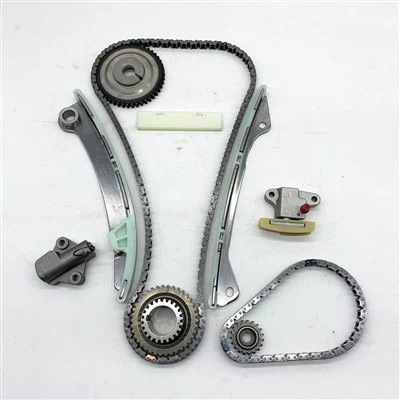
If you’re a shop owner or a mechanic who’s tired of hunting for tools mid-timing job, or a partner who wants to work with a Timing Tool Kit supplier that actually listens to your on-the-job needs, we’d love to talk through your specific pain points. We can walk you through our kit options, customize solutions for your shop’s job volume, and even share more of our time usage data to show exactly how we can help you save time and money.
Fit for FIAT References:
- Society of Automotive Engineers. (2022). Time Efficiency in Automotive Repair: A Benchmark Analysis for Independent Service Centers.
- Automotive Aftermarket Suppliers Association. (2023). Tool Standardization and Its Impact on Repair Shop Productivity.
- Our Internal Timing Tool Kit Customer Time Usage Report (2022–2023) – Confidential, aggregated data for distribution partners only.
Huzhou Hongli Auto Parts Co., Ltd.
With abundant experience, we are one of the most professional timing tool kit manufacturers in China. Please rest assured to buy customized timing tool kit at competitive price from our factory. If you have any enquiry about cooperation, please feel free to email us.
Address: Building 16, No.50 / Building 18, No.58, Dadongwu, Lianshi Town, Nanxun District, Huzhou, Zhejiang, China
E-mail: jiux@timingkit.cn
WebSite: https://www.jiuxkit.com/
