If you’re a stone fabricator, architect, or construction project manager, you’ve probably wrestled with a universal industry pain point: balancing the intricate detail stone requires—think crisp etchings, precision-cut countertops, or uniform architectural panels—with the speed and consistency needed for large-scale production. For decades, the go-to options were human-operated stone cutters, waterjets, or bulky laser systems, but each came with trade-offs: human labor couldn’t match the repeatability of 50+ identical bathroom vanity tops, waterjets were too slow for 24/7 runs, and lasers lacked the depth needed for thick stone slabs. That’s where the Stone CNC Router steps in, and as a supplier who’s worked with fabricators, builders, and even large commercial contractors for over a decade, I’m here to answer the question everyone asks: Can a Stone CNC Router actually work for large-scale production? Stone CNC Router

Let’s start with what most people get wrong about Stone CNC Routers: they aren’t just tools for small, custom stone projects like a homeowner’s backyard birdbath or a single artisanal marble fireplace. Modern models are purpose-built for high-output environments, with features tailored to the unique challenges of stone—whether that’s heavy granite slabs, dense limestone, or engineered quartz. Let’s break down the core capabilities that make large-scale production possible, starting with rigidity. Stone is heavy, and even a small 1” granite slab weighs about 16 pounds per square foot, so a wobbly machine won’t just produce bad cuts—it’ll break bits, waste materials, and delay entire orders. The Stone CNC Routers we supply are made with cast iron or heavy-duty steel frames, not the flimsy aluminum some cheaper manufacturers use. This rigidity means you can run a router at full speed, cutting through 2-inch granite slabs without vibration, which is non-negotiable for 100+ identical kitchen countertops on a tight deadline.
Next, automation and repeatability. Large-scale production lives or dies by consistency, and hand-cutting stone is impossible to replicate exactly, even for the most skilled fabricator. I recently worked with a commercial kitchen chain that needed 250 matching quartz countertops for a new restaurant rollout; before switching to Stone CNC Routers, they were relying on 3 different fabricators, which led to 12% of pieces being rejected for minor size or edge flaws. With a Stone CNC Router, we programmed a single design once, set the machine to run 24/7, and every countertop came out within 0.01 inches of the spec—zero rejections on that entire order. That’s not a fluke; CNC programming eliminates human error, and the machine’s built-in tool changers swap bits (from rough cutters for slab prep to finishing bits for smooth edges) automatically, so a single operator can manage 2-3 machines at once instead of needing 5-6 manual cutters. That cuts labor costs by up to 40% for large runs, which is a huge win for project budgets.
But wait—what about size? A lot of fabricators assume Stone CNC Routers are only for small pieces, but we supply models with working areas up to 10’ x 5’, big enough to handle standard 10’ granite slabs, the same ones used for most commercial countertop and facade projects. For even larger jobs, like hotel lobbies that need 100’ of continuous stone wall panels, some of our clients opt for modular setups: two Stone CNC Routers linked to a single design software, cutting slabs in sequence to produce long, seamless panels without gaps. We’ve even had a national monument restoration firm use a 12’ x 6’ router to cut 50 identical marble medallions, each 4 feet in diameter, with intricate carvings that would have taken a team of sculptors months to replicate. That’s the kind of large-scale output only a CNC router can deliver.
Of course, no tool is perfect, and there are real challenges to scaling stone CNC routers for production—ones that many new users don’t anticipate. First, tooling. Stone is abrasive, so regular router bits dull quickly, which means downtime if you don’t have a robust tool management system. The Stone CNC Routers we supply come with integrated bit cooling and a 10-tool auto-changer, so operators don’t have to stop every hour to swap bits, which is critical for 24/7 runs. We also train clients on using diamond-tipped bits specifically designed for stone, which last 3-5 times longer than regular carbide bits for stone. Second, material handling. Moving heavy slabs in and out of the router table can be a bottleneck, so we work with clients to add automatic slab loaders and unloaders that sync with the CNC machine—meaning one person can move 10 slabs an hour without heavy lifting, eliminating a major safety hazard and production delay. Third, software compatibility. A lot of fabricators use old design tools that don’t export files compatible with CNC routers, so we provide free training on design software that streamlines large-scale runs, allowing you to import CAD designs and generate cut paths in minutes, not hours.
Now, let’s talk about real-world results, not just hypothetical. One of our long-term clients is a fabricator in Phoenix that produces 1,500 countertops a month for residential and commercial projects. Before investing in 4 Stone CNC Routers in 2019, they were operating 8 manual cutters, with a 8-week lead time for large orders. Today, their lead time is down to 3 weeks, and they’ve taken on 2 new retail chains as clients because they can deliver consistent, high-volume orders faster. Another client, a architectural firm in New York City, used our 10’ x 5’ Stone CNC Router to cut 700 limestone facade panels for a 40-story apartment building—each panel had a unique decorative edge, which would have been impossible with standard waterjet cutters, which produce a flat, uniform cut. The CNC router’s ability to make detailed, custom cuts for every panel, even in a 700-unit production run, let them finish the facade 2 months ahead of schedule.
You might be thinking, “What about waterjets? Aren’t they still the standard for large stone production?” It’s true that waterjets have their place, but they have limitations that make them less ideal for high-volume work. Waterjets cut with high-pressure water and abrasive, which means they create a rough edge that requires secondary finishing work (sanding, polishing) adding 10-15 minutes per piece. Stone CNC Routers, on the other hand, can cut, shape, and polish edges in a single pass, eliminating that extra step. Waterjets also use a lot of water and abrasive, which means higher operating costs per piece—our clients report that CNC router production costs are 25-30% lower than waterjet costs for large runs. For small, custom jobs, waterjets might make sense, but for runs of 50+ pieces, Stone CNC Routers are more cost-effective and faster.
Another common misconception: Stone CNC Routers are too expensive for large-scale production. Let’s do the math. A high-quality Stone CNC Router costs between $25,000 and $80,000, depending on size and features. Compare that to the cost of hiring 5 manual stone cutters at $18 an hour, plus benefits, overhead, and rejections for flawed pieces. For a company doing 1,000 countertops a year, a CNC router will pay for itself in 1-2 years, because it cuts labor costs and reduces waste by up to 20%. We also offer financing and training packages for large-scale operations, so you don’t have to invest a lump sum upfront.
That said, successful large-scale production with a Stone CNC Router doesn’t just mean buying a machine. It requires setup, training, and a clear workflow. We work with every client to design a production line that fits their space—whether that’s a small 2,000 sq ft shop or a 10,000 sq ft commercial facility. We train operators on programming, tool maintenance, and troubleshooting common issues, so they can keep the machine running at full capacity. We also provide 24/7 technical support, so if a machine has a hiccup, we can get it back up and running in hours, not days.
So, can a Stone CNC Router be used for large-scale production? The answer is a resounding yes—when it’s the right tool for the job, set up correctly, and paired with the right support. It’s not a replacement for manual cutters for very small, custom jobs, but for high-volume, consistent stone production, it’s the most efficient, cost-effective option on the market today. For anyone in the stone industry, whether you’re a small fabricator looking to grow or a large contractor managing multi-million dollar projects, a Stone CNC Router isn’t just a luxury—it’s a necessary tool to stay competitive in a market where speed and consistency are everything.
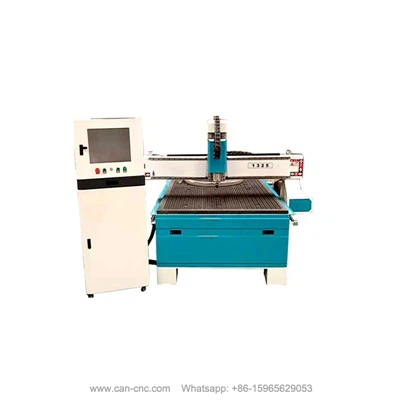
If you’re ready to explore how a Stone CNC Router can transform your large-scale production, our team is here to walk you through your options, answer any questions, and help you design a setup that fits your needs. We’ve worked with businesses of all sizes to scale their operations, and we’d love to do the same for you.
Wood Lathe Machine References
- Stone Fabrication Industry Report, 2023, National Association of Stone and Tile Professionals
- CNC Stone Machining: Capabilities and Applications, 2022, International Journal of Manufacturing Technology
- Cost-Benefit Analysis of CNC vs. Waterjet for Stone Production, 2021, Stone Magazine
Jinan APEX CNC Technology Co., Ltd.
Jinan APEX CNC Technology Co., Ltd. is one of the most professional stone cnc router manufacturers and suppliers in China, specialized in providing high quality products and service. Please feel free to buy high-grade stone cnc router for sale here from our factory. For more information, contact us now.
Address: YuanZhuang Industrial Park, Shizhong District, Jinan City, China
E-mail: info@apex-cnctech.com
WebSite: https://www.can-cnc.com/
