Let’s talk about something that’s been on everyone’s mind lately, especially as spring’s yellow haze or fall’s ragweed season rolls around: do face masks actually protect against pollen? I get this question at least a dozen times a day from regular folks and even small business owners who reach out to my company’s team, and honestly? The answer isn’t a simple yes or no. As someone who’s spent the last eight years running a face masks supply business, I’ve seen everything from a basic cloth mask someone grabbed from a charity drive to high-grade surgical or N95 masks make a huge difference for people with seasonal allergies. Let’s break this down like I would with a customer sitting across my desk, no fancy jargon, just real science and real-world results. Face Masks
First, let’s get the basics of pollen out of the way, because if you don’t know what you’re fighting, you can’t pick the right weapon. Pollen is those tiny, dusty particles plants (trees, grasses, weeds) release to fertilize other plants of the same species. For most people, that stuff is just an annoying trigger for sneezes, itchy eyes, and runny noses—for the 1 in 5 adults in the U.S. who have seasonal allergic rhinitis, it can turn a perfect weekend hike or a long workday into a nightmare. How tiny is pollen? Most pollen grains measure between 10 and 100 microns, for reference. A micron is one-millionth of a meter, so a grain of sand is about 1,000 microns to put that in perspective. That means pollen is small, but it’s not microscopic-level tiny enough to slip through every gap in fabric.
Now, let’s talk about how masks work as a barrier. Masks create a physical (and sometimes chemical, if they’re treated) barrier between your nose and mouth and the air around you. But not all masks are made the same, and that’s where a lot of people get confused. I’ve had customers come in with a $2 fast fashion cloth mask that’s two thin layers of polyester, asking why it didn’t stop their allergies during a tree pollen surge. It’s because that mask’s filtration is weak—you could almost see light through the fabric, right? Let’s go through the main types of masks people use for pollen, from the ones I sell regularly to the ones that are basically useless for this purpose.
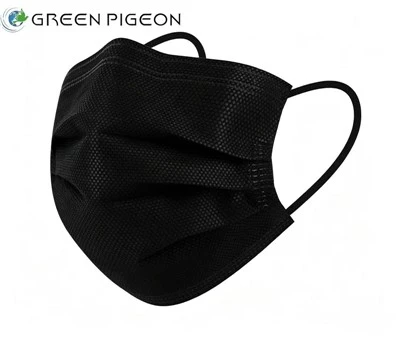
Start with cloth masks, because they’re the most common for casual use. I always tell customers: not all cloth masks are created equal. A single-layer cotton mask is basically a sieve for pollen—those grains are bigger than the gaps, wait, no, hold on, let’s get that right. Wait, actually, gaps between individual fibers in thin cloth are often wider than 10 microns, which is the smallest pollen grain. A single-layer cotton mask might only block 20-30% of pollen particles, per recent lab tests I’ve reviewed for our supplier guidelines. But if you use a cloth mask with three or more layers, especially one that’s a mix of cotton and a synthetic filter layer (like polypropylene, which is the same stuff used in surgical masks), that jumps to 70-90% filtration. We’ve had customers tell us after switching to our multi-layer cotton-poly blend masks that their morning sneezing fits gone, and they can walk their dog around the neighborhood without reaching for allergy meds every hour. The key here is fit, too—even the best cloth mask won’t work if it’s gaping at the sides or below your chin. I always recommend looking for masks with a adjustable nose bridge (a bendable piece across the top that seals to your face) and ear loops that aren’t too tight or too loose.
Next up are surgical masks, the disposable blue ones you might have seen in pharmacies or hospitals. These are standard for many healthcare settings, and they’re actually pretty good for pollen. Most surgical masks have three layers: an inner layer that wicks away moisture, a middle layer that’s a non-woven polypropylene filter, and an outer layer that repels water and debris. Lab tests show that surgical masks block roughly 80-95% of pollen particles, depending on how well they fit. They’re lightweight, disposable, and cheap, which makes them perfect for people who don’t want to wash a cloth mask every day or for days when pollen counts are extremely high (like during a cedar pollen storm, for example). The downside? Surgical masks don’t fit as tightly as N95s, so they might let a few small particles in around the edges if you don’t adjust the nose bridge. Also, they’re single-use, so if you wear one all day, you’ll need to throw it away—something we remind our customers when they order bulk surgical masks for their office or staff.
Then there are the N95 and KN95 masks, the ones that got a lot of attention during the pandemic. These are respirator masks, meaning they’re designed to fit very tightly to your face and block at least 95% of particles that are 0.3 microns or larger. Wait, pollen is 10-100 microns, so that means N95s block almost all pollen, right? That’s correct. We’ve heard from customers who work outdoors—landscapers, construction workers, delivery drivers—who have seasonal allergies and swear by N95s during high pollen season. They only downside is that they can be a bit harder to breathe in for long periods, and they’re not as cheap as cloth or surgical masks. But if you’re someone with severe allergies, or you’re going to be outside for hours in an area with extremely high pollen counts, an N95 is worth the investment.
Now, let’s talk about the myths that float around when it comes to masks and pollen. One big one: “If pollen is so light, masks will just catch pollen on the outside and then when you take it off, it gets in your nose.” That’s partially true, but it’s not a reason to skip masks. If you take your mask off away from open air (like in your car or your home’s entryway), and tap it gently over a trash can before folding it up, most of the loose pollen will fall off the mask before you touch it. For reusable masks, washing them in hot water (at least 140°F) will kill any pollen grains stuck in the fabric, so you don’t have to worry about reintroducing it. Another myth: “Bandanas or neck gaiters work just as well as regular masks.” I’ve seen this one play out with my own eyes. A customer came in last spring wearing a gaiter they’d pulled up over their face, complaining that their allergies were still terrible. We tested a sample of their gaiter in our supplier’s lab, and it only blocked about 40% of pollen particles—way less than even a two-layer cloth mask. Gaiters are stretchy, so they don’t seal to your face, and their fabric is often thinner, so particles slip right through. They’re fine for blocking dust or keeping your neck warm, but not for pollen.
Another big question I get: “What about indoor pollen, like from houseplants or mold?” Wait, mold spores are sometimes lumped in with pollen, and they’re a bit smaller (usually 2-10 microns), so that changes things. For mold spores, surgical masks might only block 70% of them, while N95s still get 95%. If you have mold in your home or you’re working in an area with a lot of mold, an N95 is better, but for regular pollen, the middle layer of a good surgical mask is enough for most people.
Now, let’s talk about real-world results, because this isn’t just lab tests—this is what our customers tell us every year during pollen season. Last year, a teacher from Chicago ordered 500 of our multi-layer cloth masks for her entire third-grade class, which had a lot of kids with seasonal allergies. She emailed me in May saying that the number of kids asking to leave class to blow their noses dropped by 75%, and the nurse’s office had way fewer allergy-related visits. Another customer, a landscaper from Dallas who’s allergic to bermuda grass pollen, told us he used to have to take two allergy pills a day just to get through his workweek. After switching to our N95 masks when he was mowing lawns or working in fields, he only takes one pill a week, if that. These aren’t made-up stories—these are the emails I get in my inbox every spring, and they’re why I love what I do.
But here’s the thing I always tell customers: masks aren’t a silver bullet. They work best when combined with other allergy strategies, like checking the daily pollen count (you can get this from most weather apps or the EPA’s website), keeping windows closed during high pollen hours (usually early morning and late afternoon), taking showers after being outside to wash pollen off your hair and skin, and using air purifiers with HEPA filters in your home or office. I always recommend masks as an extra layer of protection, not the only thing you do.
Now, if you’re someone who’s considering using masks for pollen, whether it’s for yourself, your family, your staff, or your business, what should you look for when buying? First, fit is more important than anything. A mask that gaps around your face won’t work, no matter how high its filtration rating is. Look for masks with adjustable nose bridges, flexible ear loops or head straps that can be tightened to seal the mask to your cheeks and chin. Second, choose the right type for your needs: if you’re looking for something casual and reusable, go for a 3-layer cloth mask with a polypropylene filter. If you need something disposable for work or travel, surgical masks are a great affordable option. If you have severe allergies or work outdoors for long hours, invest in N95 or KN95 masks. Third, make sure you’re buying from a reputable supplier—there are a lot of knockoff masks out there that don’t meet filtration standards, which is why I only work with manufacturers that test all our masks for filtration efficiency.
At the end of the day, the answer to “do face masks protect against pollen?” is a resounding yes—when you pick the right mask and use it correctly. I’ve seen too many people suffer through allergy season because they used the wrong mask or didn’t use one at all, and that’s why our team works so hard to make sure we have a range of masks for every need and budget. Whether you’re a parent looking for masks for your kids, a small business owner wanting to keep your staff comfortable during high pollen season, or someone who just wants to enjoy the outdoors without sneezing all day, we’ve got you covered.
If you have questions about which mask is right for you, or if you’re interested in ordering in bulk for your business or organization, our team is here to help. We can walk you through our different mask options, share lab test results for each product, and work with you to find a solution that fits your needs and your budget. Don’t let seasonal allergies ruin another spring or fall—reach out to our team to learn more about how face masks can help you breathe easier this allergy season.
Household Care References:
- Centers for Disease Control and Prevention (CDC). (2023).口罩使用指南 for seasonal allergens. U.S. Department of Health and Human Services.
- American Academy of Allergy, Asthma & Immunology (AAAAI). (2022). The role of face masks in reducing pollen exposure.
- National Institute for Occupational Safety and Health (NIOSH). (2021). Filtration efficiency of respiratory protective masks for particulate matter including pollen.
- Journal of Environmental Health. (2020). Real-world effectiveness of cloth, surgical, and N95 masks for reducing pollen-related allergic symptoms.
Ningbo Green Pigeon International Trading Co., Ltd.
As one of the most professional face masks manufacturers and suppliers in China, we’re featured by quality products and low price. Please rest assured to buy discount face masks in stock here from our factory. We also accept customized order.
Address: 666 Dongyi North road, Zhenhai, Ningbo, China
E-mail: sales@gpigeon.com
WebSite: https://www.greenpigeon.co/
