If you’ve ever walked past a manufacturing floor where busbar packing machines are humming along, you know those big, metal workhorses aren’t just about cranking out boxes—safety is non-negotiable. As a busbar packing machine supplier, I’ve spent hundreds of hours troubleshooting machines, fielding panic calls from shop floor leads, and learning exactly which safety guards make the difference between a safe shift and a trip to the ER. Let’s cut the jargon and break down the guards that actually keep your team intact. Busbar Packing Machine
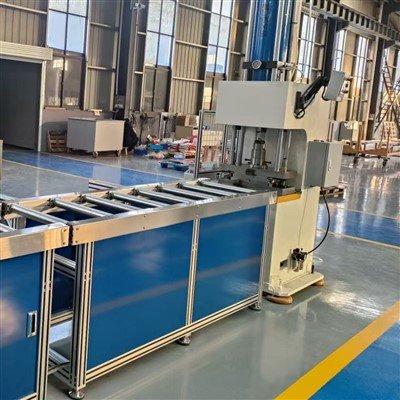
First off, let’s ground this: busbar packing machines handle rigid, often sharp metal busbars (those thin, conductive bars used in electrical panels) that move at high speeds during cutting, wrapping, and strapping steps. Most accidents happen when workers reach into moving parts out of habit, or when a guard was removed “for a quick fix” and forgotten. I’ve seen it a hundred times—someone yanks a cover off to unjam a roll of stretch wrap, then forgets to put it back, and suddenly there’s a laceration or a crushed finger. The good guards are there to eliminate that risk before it even starts, and I specify every single one on my machines for that reason.
Let’s start with the most basic, but most often skipped: fixed perimeter guards. These are solid metal covers bolted to the machine frame, built so you can’t reach the internal moving parts unless you use a tool to remove them. For busbar machines, these cover three key zones: the straightener (where metal bars are pulled into alignment), the cutting station (where a blade snips the busbar to length), and the strapping head (which tightens plastic or steel straps around packs). I make sure these guards don’t have gaps larger than a quarter inch—no little hands or fingers can slip through to grab a moving belt or a sharp blade. I once supplied a machine to a small electrical shop that had a loose gap on their old fixed guard; within a week, an employee got their sleeve caught in a roller. Now, I pre-check every gap during assembly, no exceptions.
Next, the interlocked access guards. These are way different from fixed guards because they’re connected directly to the machine’s control system. Open one, and the entire machine shuts down instantly—no exceptions. I’ll never sell a busbar packing machine without these, because they eliminate the “I’ll just reach in quick” impulse. For busbar machines, the critical access point here is the wrap station, where stretch wrap is fed over the busbar packs. That’s the step most workers mess with, especially when a roll runs out mid-pack. If the wrap guard is opened, not only does the machine stop, but the main power to that station locks out too—you can’t restart it until the guard is closed. I’ve had customers try to bypass these interlocks to speed up production, and every single time, they’ve come back with a horror story of a close call. So I make it clear upfront: no interlock overrides, full stop.
Then there’s the light curtain safety guard, which is like an invisible fence for the machine. These are infrared light beams that run along the opening of a moving zone—if someone breaks the beam, the machine stops. I mount these specifically for the infeed and outfeed zones of busbar machines, because that’s where workers are often loading and unloading busbars by hand. Let’s be real: busbars are heavy, and when you’re rushing to fill orders, it’s easy to shift one hand in while the other is still loading. The light curtain catches that instantly. I calibrate mine so that even a tiny hand movement triggers a stop—no missed triggers. I once tested a light curtain on a demo machine in my shop; when I poked my finger through the beam, the machine shut down in 0.1 seconds. That’s the kind of speed you need for a machine moving at 60 feet a minute.
Wait, there’s also the emergency stop (E-stop) guard, which sounds simple, but it’s often overlooked as a “real” safety guard. I mount E-stop buttons at every accessible point on the machine—front, back, sides, even the infeed table. But the guard part? It’s a clear plastic cover over each E-stop. That prevents accidental presses from a loose busbar, a dropped wrench, or even a worker’s elbow hitting it while they’re loading material. I’ve seen a machine shut down mid-production three times because someone knocked an unguarded E-stop. It’s a small thing, but the cover turns a hazard into a last-resort safeguard.
Don’t forget the roll storage guard, either. Busbar packing machines use huge rolls of stretch wrap and strapping material, and those rolls are heavy—often 50+ pounds. I’ve seen workers get crushed when a roll fell off an unguarded shelf. So I build a slotted metal guard around the roll’s mounting axis, so the roll can’t tip or slip out even if the machine vibrates during operation. It’s not as flashy as a light curtain, but it’s one of the most practical guards on the machine—no broken bones, no lost workdays from a dropped roll.
Now, let’s talk about what happens when these guards aren’t there, because I’ve lived this side too. Last year, a customer of mine had a machine from a no-name supplier that skipped the interlocked access guards. Their maintenance team removed a guard to fix a jam, forgot to put it back, and ran the machine for two days. By the time they noticed, a worker’s arm was caught in the cutting blade. They had to shut down for three weeks, pay for medical bills, and lost a big order. I’ve turned down three jobs from that shop since then, because I won’t supply a machine without the guards that prevent that mess.
Here’s the thing: as a busbar packing machine supplier, I don’t just sell a piece of equipment—I sell a safe workflow. The guards aren’t add-ons; they’re non-negotiable parts of the machine. I test every guard during assembly, explain how they work to the on-site team when the machine is installed, and even send a quick check-in email a month later to make sure no one’s removing a guard without a plan. If you’re in the market for a busbar packing machine, don’t just ask about speed or capacity—ask about the safety guards. If a supplier can’t rattle off the ones I mentioned, walk away. Those guys don’t care about your team.
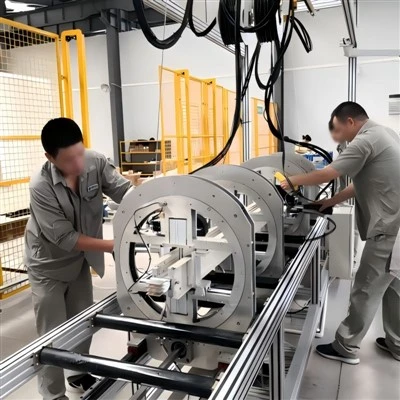
If you’re looking for a machine that’s built with those guards, or if you have questions about retrofitting your current machine with the right ones, reach out. I’m here to make sure your shop stays safe and productive, no shortcuts taken.
Busbar Packing Machine References:
- OSHA. (2022). Machine Guarding Requirements for Manufacturing Equipment. U.S. Department of Labor.
- Electrical Safety Foundation International. (2021). Safety Guidelines for Busbar Handling and Packaging.
- ISO 12100:2010. Safety of Machinery – General Principles for Design – Risk Assessment and Risk Reduction. International Organization for Standardization.
- National Institute for Occupational Safety and Health (NIOSH). (2020). Preventing Laceration and Crush Injuries in Metalworking Manufacturing. U.S. Centers for Disease Control and Prevention.
- Busbar Processing Machinery Safety Standards. (2019). Electrical and Equipment Manufacturers Association (EEMA) Technical Report.
Suzhou Kiande Electric Co., Ltd.
Suzhou Kiande Electric Co., Ltd. is one of the most professional busbar packing machine manufacturers and suppliers in China, also supports custom service and OEM&ODM service. Welcome to buy durable busbar packing machine made in China here and get quotation from our factory. Quality products and reasonable price are available.
Address: No.123, Suzhou Avenue East, Suzhou Industrial Park Suzhou, Jiangsu 215000 China
E-mail: saleswmkc@kiande.cn
WebSite: https://www.busbarcncmachine.com/
