If you’ve ever stood next to a centrifugal pump during a plant turnaround, a wastewater treatment test, or even a farm irrigation system startup, you’ve probably heard a low, thrumming hum under steady load. More often than not, that sound isn’t coming from the pump’s impeller or motor—it’s coming from the volute. As someone who’s been supplying centrifugal pumps to processing plants, municipal works, and agricultural operations for over 12 years, I’ve lost count of how many times a customer will ask me, “What’s that curved, snail-shaped part on the pump casing, and why does it matter?” It’s a question I get all the time, and more often than not, it’s tied to a problem they’re trying to solve: their pump is losing efficiency, or they’re seeing too much turbulence, or even damage to their impeller. Let’s break down what a centrifugal pump volute actually is, how it works, and why it’s one of the most critical (and most misunderstood) parts of the entire pump assembly. Centrifugal Pumps

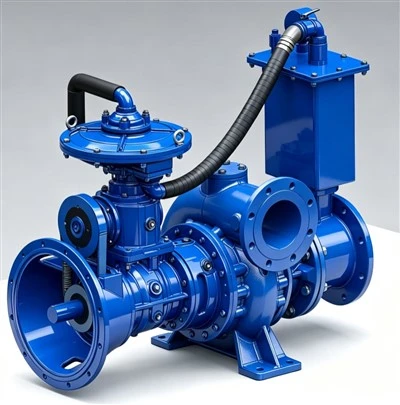
First, let’s ground this in the basics anyone who works with pumps can relate to. A centrifugal pump’s core job is to take low-pressure fluid entering the suction side, spin it fast with the impeller to build up velocity, and then convert that velocity into pressure that can push the fluid through pipes, tanks, or processing lines. If the volute wasn’t there, the high-velocity fluid would shoot out of the impeller’s outer edges in an uncontrolled, uneven stream—like water spraying out of a sprinkler head with no direction. That’s where the volute comes in. Simply put, a centrifugal pump volute is the curved, funnel-like casing section (not the entire pump casing, to be clear—many people mix these two up) that wraps around the impeller’s outer diameter, designed to collect the fluid as it exits the impeller and guide it smoothly to the pump’s discharge nozzle. It’s called a volute because its cross-section increases gradually from the impeller’s tip all the way to the discharge, which is that classic spiral shape that looks like a snail shell when you cut a pump casing in half.
Let’s get specific about how that shape works, because it’s not just a random curve here. When the impeller spins, it flings fluid outward to its tips, and that fluid exits the impeller at a very high velocity—often 10,000 to 15,000 feet per minute, depending on the pump size and application. If you tried to push that fast-moving, high-kinetic energy fluid through a narrow, straight pipe suddenly, you’d create massive turbulence, pressure losses, and even damaging shock waves in the pump. The volute’s job is to eliminate that waste by gradually increasing its cross-sectional area as it wraps around the impeller. This slow, controlled expansion of space means the fluid’s velocity decreases steadily, and almost all of that kinetic energy gets converted into pressure energy—exactly what we need to move the fluid against friction in pipes, elevation changes, or other system resistances.
Here’s a key detail that sets good volute design apart from mediocre ones: that gradual cross-sectional increase isn’t just a guess. It’s calculated to match the exact flow rate the pump is rated for at its best efficiency point (BEP). If you look at the volute’s cross-section as you move around the impeller, each segment is sized to handle the fluid exiting the adjacent section of the impeller. That’s why we always stress to customers that a pump’s BEP is non-negotiable for long-term performance—run a pump too far off its BEP, and the volute can’t do its job properly. Let me give you an example from a job I did last year: a food processing plant was using a general-purpose centrifugal pump to transfer fruit puree, and they were getting 12% lower efficiency than the manufacturer’s spec, plus constant vibration in the discharge pipe. When we inspected the pump, the operator said they were running it at 60% of its rated flow rate to avoid overloading their downstream line. The problem? Their volute was sized for full flow. At low flow, the cross-sectional area was too big for the small amount of fluid exiting the impeller, so the fluid was swirling around in the volute instead of moving smoothly to discharge. That caused the vibration, wasted energy, and even made the puree shear more than it should have—ruining some batches until we swapped in a volute matched for that lower operating flow, bringing efficiency back up to 91% within a week.
Now, let’s clarify the difference between the volute and another common pump part: the diffuser. A lot of new pump buyers mix these up, and that’s another source of confusion. A diffuser is a set of stationary vanes that sit around the impeller, used mostly in multi-stage centrifugal pumps or high-pressure pumps, to redirect flow. The volute, by contrast, is a single, smooth curved passage (no internal vanes) that wraps around the impeller, used in most single-stage pumps, low to moderate pressure applications, and nearly all end-suction pumps, which are the most common centrifugal pumps we supply. That’s not to say diffusers are bad—they have their place in high-pressure systems like boiler feed pumps—but for the vast majority of applications our customers run, a properly designed volute is the right choice, and it’s almost always cheaper to manufacture and maintain too.
Volutes come in different types, depending on the pump’s application, and that’s something I’ve seen make or break a system. The most common is the single-volute design, which has one spiral passage that wraps 360 degrees around the impeller. This is what you’ll find on most small end-suction pumps for irrigation, general transfer, or HVAC. It’s simple, durable, and works well for most applications, but it has one small downside: because it’s a single passage, it can create an uneven pressure load on the impeller, called radial thrust. If the pump runs too far off BEP, that radial thrust increases, which can cause the impeller to rub against the casing over time, leading to premature wear. For that reason, we often recommend a double-volute design for pumps that run frequently off their BEP, or for larger pumps handling high-viscosity fluids, or applications where low vibration is critical. A double-volute has two separate spiral passages, each 180 degrees apart, that balance the pressure load evenly around the impeller. I installed a double-volute pump for a municipal wastewater plant three years ago, and they’d been having impeller wear every 18 months from their old single-volute pump. With the double-volute, they haven’t had to replace an impeller in 36 months, saving them over $20,000 a year in maintenance and downtime costs. That’s the kind of real-world result that makes me emphasize volute design to every customer, not just the technical specs.
Another important point about volutes: their material and finish matter just as much as their shape. You can design the perfect spiral, but if the volute is made of the wrong material, or has a rough internal surface, you’re going to lose efficiency or have corrosion issues. For example, if you’re pumping corrosive chemicals, we’d use a volute made of 316 stainless steel or cast iron lined with polyethylene, with a polished internal surface to prevent fluid from sticking. If you’re pumping abrasive wastewater with sand or solids, we’d use a high-chrome cast iron volute, which is much more resistant to wear from those solid particles. I once worked with a mining customer who was pumping tailings with a standard carbon steel volute—they were getting 8% efficiency loss every month from volute erosion, and had to replace the volute every 6 months. Swapping to a high-chrome volute cut that replacement time to every 2.5 years, and efficiency stayed consistent year over year. That’s why we don’t just sell pumps—we match volute material, size, and design to the exact fluid, flow rate, and operating conditions of each customer’s system.
Let’s also bust a myth that I hear all the time: some people think the volute’s only job is to carry fluid to discharge. That’s only half the story. The volute also plays a key role in NPSH (Net Positive Suction Head) requirements, which is one of the most common issues pump operators face. NPSH is the amount of pressure needed at the pump suction to avoid cavitation—those tiny vapor bubbles that form in low pressure zones, then collapse and damage impellers and casings. A poorly designed volute can create low pressure zones as the fluid exits the impeller, raising the required NPSH and making cavitation more likely. We test every volute we supply in our in-house flow lab to make sure it minimizes those low pressure zones, so our customers don’t have to deal with cavitation-related failures. Last year, a petrochemical plant came to us with a cavitation issue that was destroying their pump impellers every 3 months. We tested their old pump’s volute and found it had a sharp transition at the discharge nozzle that created a low pressure pocket. We redesigned the volute with a smooth exit curve, and their impeller life jumped to 18 months, with no cavitation issues since.
Now, let’s talk about how volute design is evolving, too. In the last 5 years, we’ve started using computational fluid dynamics (CFD) to design our volutes, instead of the traditional empirical formulas that were used for decades. CFD lets us simulate exactly how fluid flows through the volute at every point, so we can tweak the curve to reduce turbulence, improve efficiency, and balance thrust even more than before. For example, we recently designed a volute for a high-flow irrigation pump that’s 3% more efficient than our previous models, which might not sound like a lot, but for a pump running 24/7 during irrigation season, that’s thousands of dollars in energy savings every year. We also work with customers to customize volutes for specific applications, like low-flow beer transfer for breweries, where shear is a concern—we’ll make the volute’s internal surface smooth and the curve slightly wider to keep the beer’s texture intact, no foam.
At the end of the day, the centrifugal pump volute is one of those parts that’s easy to overlook until it causes a problem. It’s not the flashy impeller or the big motor that draws attention, but it’s the reason the pump works as efficiently and reliably as it does. Whether you’re a plant manager dealing with maintenance downtime, a farmer looking to cut energy costs on irrigation, or a process engineer trying to avoid product damage, paying attention to your pump’s volute design, material, and matching it to your system is one of the fastest ways to improve performance. We’ve been refining our centrifugal pump line for over two decades, and the biggest feedback we get from customers is that our focus on matching every component—including the volute— to their exact needs is what sets us apart from other suppliers.
If you’re dealing with pump inefficiencies, premature wear, vibration, or cavitation issues, or you’re putting in a new system and want to make sure you’re getting the right volute design for your application, we’re here to help. We don’t just sell standard pumps off a shelf; we work with you to analyze your fluid, flow rates, operating conditions, and goals, then design a centrifugal pump with the perfect volute to meet your needs, no matter how unique your application is. Reach out to our team to discuss your requirements and get a customized solution.
Agricultural Pump References:
Karassik, I. J., Messina, J. P., Cooper, P., & Heald, C. C. (2007). Pump Handbook (4th ed.). McGraw-Hill.
Guildner, L. A. (1986). Centrifugal Pump Design and Application. Fluid Engineering Handbook Series.
Hydraulic Institute. (2019). Centrifugal Pumps: Application Guide (2nd ed.). Hydraulic Institute.
Ocean Pump Co., Ltd.
Ocean Pump Co., Ltd. is one of the leading centrifugal pumps manufacturers and suppliers in China. We warmly welcome you to wholesale high-grade centrifugal pumps made in China here from our factory. All our products are with high quality and competitive price.
Address: No. 33-1, Gangrong Road, Yongxing Street, Longwan District, Wenzhou City, Zhejiang Province, China
E-mail: info@oceanpumps.com
WebSite: https://www.oceanpumps.com/
