When I first started working as a Car AC System Tools supplier, I used to think that handling car AC refrigerant was just about grabbing a can and filling it in. That was before I realized how dangerous, and how precise, the process actually is. Now, after years on the floor, answering calls from mechanics every day, I can tell you that the right tools aren’t just helpful—they’re non-negotiable for anyone working with automotive AC systems. Let’s break down what actually gets used, why each tool matters, and how knowing this makes all the difference for both safety and job quality. Car AC System Tools
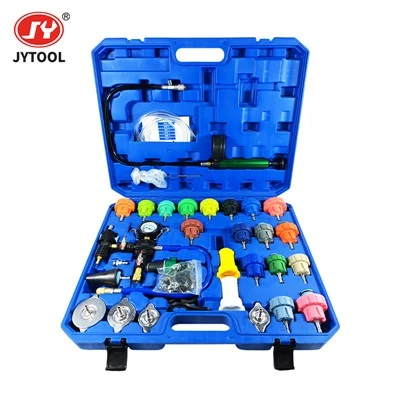
First, let’s start with the basics: what even is car AC refrigerant? It’s the fluid that cycles through your AC system, absorbing heat inside the car and releasing it outside. Most modern cars use R-134a, and newer models are shifting to R-1234yf because it’s better for the environment. But here’s the thing—both are pressurized chemicals. One wrong move, like using a tool that can’t handle that pressure, or mixing up the type of refrigerant, and you’re looking at leaks, system damage, or even personal injury. That’s why every tool in the AC service bay has a specific job, and skipping any step (or any tool) is a risk no mechanic should take.
Let’s talk about the first tool you reach for before even touching refrigerant: the AC manifold gauge set. This is the backbone of any AC job, and I’ve seen too many new mechanics try to cut corners with cheap, uncalibrated sets. A good manifold gauge set has two pressure gauges: a low-side gauge (usually blue, marked with “L”) and a high-side gauge (red, marked with “H”). The low side connects to the AC’s low-pressure port, which is the larger, covered line usually near the firewall, and measures the pressure when the system is running. The high side connects to the smaller, metal line near the engine, measuring the higher pressure during operation. But it’s not just two gauges—modern sets also come with sight glasses, which let you see if refrigerant is contaminated, and valve handles to control flow. Old mechanics will tell you that a set that’s calibrated wrong can make you think the system is fine when it’s not, or cause you to add too much refrigerant, which ruins the compressor. That’s why as a supplier, we make sure all our manifold sets come with calibration checks, and we always tell customers to get them calibrated once a year—no exceptions.
Next up, refrigerant recovery machines. For years, mechanics just vented old refrigerant into the atmosphere, but thanks to environmental regulations (like the Clean Air Act in the U.S.), that’s illegal now. Every shop has to recover, recycle, or reclaim refrigerant instead of releasing it. A recovery machine does three main things: it pulls the refrigerant out of the car’s AC system, separates it from any oil or moisture that’s in the lines, and stores it in a dedicated tank for reuse. Some of the newer machines are automated, too—they can test the refrigerant’s purity right there on the spot, so you know if it’s good to put back in another car, or if it has to be disposed of properly. I remember a customer who tried to use a cheap, old recovery machine from a flea market—his shop got a $10,000 fine for releasing a tiny bit of R-134a because the machine had a leaky seal. That’s the kind of mistake we work hard to help our customers avoid, which is why we stock heavy-duty recovery machines made specifically for automotive use, with durable seals and built-in leak detectors.
Then there are vacuum pumps. Once you’ve recovered old refrigerant, you can’t just add new stuff right away. The AC system has to be completely free of air and moisture, because air causes corrosion and moisture mixes with refrigerant to form acid that eats away at the compressor. That’s where a vacuum pump comes in. It pulls a deep vacuum (usually around 29 inches of mercury) on the system, which removes all that air and moisture. How do you know when the vacuum is good enough? You use an evacuation gauge, which pairs with the vacuum pump to measure the pressure. I’ve had mechanics tell me they skipped the vacuum step because they thought it was a waste of time, only to have a compressor burn out two months later because of trapped moisture. A good vacuum pump isn’t just a pump—it’s built to handle the pressure of automotive AC lines, which can get pretty tight. Our vacuum pumps come in different sizes, too—for small shops, a 2 CFM (cubic feet per minute) pump works for most cars, and for busy shops with lots of service bays, a 5 CFM pump saves time on every job.
Now, if you’re working with the newer R-1234yf refrigerant, there are specialized tools you can’t skip. R-1234yf is highly flammable, which means the connectors for your manifold gauge set can’t be the same as R-134a connectors—they’re designed to prevent cross-connection, which would be a disaster if you mix the two. We call these “self-sealing quick-connect couplers,” and they only fit the correct port for the refrigerant type. I’ve seen guys try to force an R-134a coupler onto an R-1234yf port, and that’s a surefire way to cause a leak. Also, R-1234yf requires recovery machines that are labeled specifically for that refrigerant—they have different components that can handle the flammability, so using an R-134a machine for R-1234yf is not just wrong, it’s dangerous. A lot of our customers come to us because they upgraded their fleet cars to R-1234yf and didn’t know they needed new tools, so we make sure to walk them through exactly what they need based on the vehicles they work on.
Don’t forget about refrigerant scales, either. You might think, “I can just add a can of refrigerant until it feels right,” but that’s a recipe for overcharging or undercharging the system. Every car has a specific refrigerant capacity, written on a label under the hood, and using a scale ensures you add exactly the right amount. Overcharging makes the AC work harder, leading to higher fuel use and shorter compressor life. Undercharging means the AC won’t cool as well, and it can cause the compressor to run too much, wearing it out faster. Digital refrigerant scales are the most common now, and they’re accurate to within a few grams—way more precise than guessing. We sell scales that are designed to hold standard refrigerant cans, with an automatic shutoff so you don’t have to stand there watching it the whole time. That’s a small tool, but it saves mechanics so much time and prevents costly mistakes.
Then there are the safety tools, which are just as important as the refrigerant-specific ones. AC refrigerant is under high pressure, and if a line breaks, it can spray out at hundreds of pounds per square inch. That’s why every mechanic needs a pair of pressure-rated safety goggles—regular work goggles don’t stand up to refrigerant sprays. I’ve had a customer tell me a can of refrigerant burst in his hand, and he missed work for a week because he didn’t wear goggles. Also, nitrile gloves—regular latex gloves don’t hold up to refrigerant, which can irritate or burn skin. Some shops even use face shields for jobs where there’s a higher risk of a line failure. Another big one: leak detectors. Even after you fix a leak, you need to make sure it’s completely sealed. Electronic leak detectors are better than old soapy water solutions because they can find tiny leaks that soapy water would miss, saving you from coming back to the same car a week later. We stock both handheld electronic detectors and ultraviolet leak detection kits, which use a fluorescent dye that you add to the system—you shine a UV light later and see exactly where the leak is.
Wait, what about oil injectors? When you recover refrigerant, some of the compressor oil comes out with it, so you have to add the right amount back in when you recharge the system. Too little oil ruins the compressor, too much makes the AC cool worse. Oil injectors let you add the exact amount of oil specified for your car’s make and model. They’re usually manual or electric—manual ones are good for small shops, electric ones are faster for busy bays. A lot of people overlook this step, but I had a customer once who skipped adding oil and had to replace a $1,200 compressor a month later. That’s why we always remind our customers that oil injectors aren’t an optional tool—they’re part of the proper AC service process.
Now, let’s talk about common mistakes I see from mechanics and shop owners, especially when they’re new to the business. The first is buying cheap tools to save money. Yeah, a $50 manifold gauge set sounds like a steal compared to a $200 one, but those cheap sets don’t calibrate correctly, have flimsy valves that break, and can even leak refrigerant into the shop. We had a customer who bought a cheap recovery machine online, and it didn’t separate oil from refrigerant, so he had to dispose of a whole tank of refrigerant for no reason. In the long run, investing in quality tools saves you money on fines, repairs, and replacement costs. The second mistake is not updating tools when cars change. Ten years ago, every car used R-134a, but now half the new cars coming off the lot use R-1234yf. If your shop still only has R-134a tools, you can’t service those new cars—so you’re missing out on half the market. That’s a big reason we have a full line of tools for both refrigerants, and we work with shops to help them upgrade as their fleets change.
Another thing: storage tools. Refrigerant tanks are pressurized, so you need a proper storage rack to keep them upright and secure, especially in a busy shop. We sell heavy-duty refrigerant tank racks that fit multiple tanks, with safety chains to keep them from tipping over. Also, hoses—AC hoses wear out over time, especially from being twisted and exposed to heat. We make replacement hoses that are compatible with all our manifold sets and recovery machines, and we tell customers to replace their hoses every two years, even if they look fine. A cracked hose can leak refrigerant, which is bad for the environment and costs you money in wasted product.
Let me tell you a story that sticks with me. A small repair shop owner came to me last spring, panicking because his AC department was losing money. He was using old, uncalibrated gauges, a 10-year-old recovery machine, and guessing how much refrigerant to add. His customers were complaining that their AC didn’t cool, and he was having to replace compressors every other week. We helped him switch to our calibrated manifold sets, a modern recovery machine, and a digital refrigerant scale. Three months later, he called me to say his AC repair costs went down 30%, and his customers were leaving better reviews. That’s the difference the right tools make—not just for safety, but for your bottom line.
At the end of the day, handling car AC refrigerant isn’t hard, but it requires attention to detail and the right gear. Every tool has a purpose, and skipping any one of them leads to problems. As a Car AC System Tools supplier, our job isn’t just to sell tools—it’s to make sure our customers have everything they need to do the job safely, legally, and well. Whether you’re a one-man shop just starting out, or a large fleet with multiple bays, we’ve got tools tailored to your needs, and we’re always here to answer questions if you’re not sure what you need.
If you’re a shop owner, mechanic, or someone in the automotive industry looking to upgrade your AC tools, reach out to our team to discuss your specific needs and get a quote. We can help you pick the right tools for the vehicles you service, your shop size, and your budget, so you don’t waste money on gear that won’t work for you.
Compression Tester References
Automotive Service Excellence (ASE) Certification Study Guide: Heating and Air-Conditioning Systems, 2022
Environmental Protection Agency (EPA) Regulations on Automotive Refrigerant Recovery, 2021
Mobile Air Conditioning Society (MACS) Industry Guidelines for R-1234yf Service, 2023
Zhuji Jinyue Hardware Tools Co., Ltd.
Zhuji Jinyue Hardware Tools Co., Ltd. is one of the most professional car ac system tools manufacturers and suppliers in China, featured by quality products and good service. Please rest assured to wholesale durable car ac system tools for sale here and get quotation from our factory. We also accept customized orders.
Address: Yangmeiqiao Industrial Zone, Diankou Town, Zhuji City, Zhejiang Province, China
E-mail: carl@jytool.cn
WebSite: https://www.jyautotool.com/
