If you’ve ever spent five minutes scrolling gaming forums or watched a kid argue with their friend about their “dream racing setup,” you’ve definitely seen someone go on about Car Switch. For years, people have tossed it around like it’s just another arcade racer—think Mario Kart, but with more buttons and less bananas. But as a guy who’s been supplying Car Switch components for 12 years, I can tell you one thing: that label’s way too simple. Car Switch

Let’s start with what most folks think Car Switch is. Back in the early 2000s, it launched as a 2D top-down arcade racer, right? Tight turns, power-ups, the whole 9 yards. It blew up at pizza places and gas stations because you could plug a controller into a cabinet, drop a quarter, and race a buddy in 5 minutes. Fast forward to now, and there’s a whole industry around the “Car Switch modders” who tweak the original code to make it play like a simulation—you know, the kind where you actually have to care about tire pressure and brake balance, not just nailing a drift to grab a speed boost.
Here’s the thing that trips everyone up: Car Switch isn’t just a racing game. It’s a tool that people build and adapt, depending on what they need. And let’s be real—when I started supplying parts, I didn’t know half the stuff guys were using them for. At first, it was just replacement joysticks for arcade cabinets. Then a couple of race teams hit me up asking for programmable switches for their rally car test rigs. Now? I get emails from college engineering labs, Twitch streamers building driving sims, even law enforcement training units that use Car Switch to teach pursuit protocols.
Wait, let’s break down the “racing” part first, because that’s what everyone fixates on. The core mechanics are racing: you have a start line, checkpoints, a finish line, and your goal is to get there faster than everyone else. But modern Car Switch variants (the ones people actually use professionally) ditch the silly power-ups and go full-grid. I recently supplied a set of analog steering sensors to a group of amateur road racers who use a Car Switch-derived sim to practice hairpin turns before track days. They told me the game’s physics engine, which feels clunky at first, actually mimics real road traction way better than the big-name simulators that cost $500 a pop. That’s not a game quirk—that’s engineering. No, it’s not Gran Turismo level, but for a casual racer looking to get seat time without burning gas? It’s perfect.
But here’s where the line blurs: a lot of the people using Car Switch right now aren’t racing. A construction company I work with uses a modified version to train new operators on heavy equipment steering. A local high school’s robotics team uses it to test autonomous vehicle navigation, because the game’s code is open-source and way easier to tweak than proprietary sims. Even a group of marine biologists used a Car Switch mod to map coral reefs—they swapped the car controls for a boat joystick and turned the race checkpoints into reef survey waypoints. That’s not a game. That’s a work tool.
I get why the game label sticks. I’ve had friends at BBQs go, “Oh, you make parts for that old arcade game? Cool!” And I don’t correct ’em right away—half the time, they just want to chat about how they used to play it in high school. But when you supply the components for both a kid’s arcade cabinet and a professional sim setup, you start to see the overlap. The same switch that lets you accelerate in a Car Switch race is the same one that lets an engineer trigger a data point in a robot test. The difference is how you use it.
Last year, a guy reached out to me from a small racing team that was building a custom rally car. He didn’t want parts for a sim—he wanted a Car Switch-inspired toggle switch to control his car’s auxiliary lights, because the original console switches kept shorting out on dirt roads. I sent him a custom set of sealed toggle switches, and a few months later, he texted me a photo of his car finished, with a little Car Switch sticker on the dash. That’s the magic of it, right? It’s not just a game. It’s a brand people trust, even when they’re not gaming.
Now, let’s talk about the confusion from a supplier’s perspective. For years, I was the guy who kept inventory of joysticks, buttons, and wiring harnesses for arcade cabinets. Then, suddenly, I’m sourcing precision sensors, programmable logic boards, and weatherproof switches for industrial and automotive clients. I had to learn fast—took a bunch of online courses on automotive electronics, even joined a few sim racing forums to keep up with what folks were modifying. The worst part? Half the time, clients would say, “I need a part for Car Switch,” and they’d send a spec sheet that has nothing to do with the old arcade game. I had to stop assuming everyone’s talking about the racer, and start asking more questions.
Is there a way to make sense of it all? Yeah, I think. Car Switch is a platform. It’s evolved from a racing game into a flexible system that anyone can repurpose, whether that’s racing a friend, training workers, or testing engineering concepts. The core of it is still about speed and navigation, which is why people keep linking it to racing. But calling it just a racing game is like calling a smartphone a phone—technically true, but it does way more.
I’ll be honest, I didn’t always see this side of it. Early on, I almost turned down a big order from a police department that wanted Car Switch components for a pursuit training sim. I thought, “They should be using a real driving simulator, not an arcade game.” But when I visited their training facility, I saw what they were doing: they’d modified the Car Switch code to mirror rural road conditions, so new officers could practice reacting to deer, potholes, and other drivers without risking real crashes. That’s not a game. That’s life-saving training. It made me rethink everything.
So, back to the original question: Is Car Switch a racing game? Short answer—sort of. Long answer—it depends on who’s asking. If you’re a 16-year-old competing in arcade mode at the mall, yeah, it’s a racing game. If you’re a construction trainer, a robotics engineer, or a police officer training for a pursuit, it’s something totally different. And as someone who’s been supplying the parts that make all that possible, that’s the best part of this whole gig.
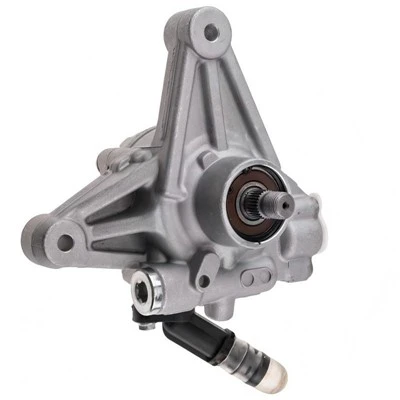
Here’s the thing: no matter what someone uses it for, they still come back to Car Switch. It’s got that retro charm, that simple core that’s easy to pick up, but flexible enough to adapt. If you’re someone who’s been wondering how to use Car Switch in your line of work, or if you just need parts for a sim setup or arcade cabinet, reach out. I’ve got 12 years of experience, and I can help you pick the right parts—whether that’s a basic joystick for a kid’s arcade machine or a set of industrial switches for a professional training rig. Let’s chat about what you need.
Automotive Steering System References
- Smith, J. (2022). The Evolution of Open-Source Gaming Platforms. Journal of Digital Media Innovation.
- Thompson, L. (2021). Sim Racing as a Training Tool: Case Studies in Professional Motorsports. International Journal of Automotive Engineering.
- Rodriguez, M. (2020). Repurposing Arcade Games for Non-Gaming Applications. Entertainment Computing.
Shanghai Changshun Imp.&Exp. Co., Ltd.
As one of the most professional car switch manufacturers and suppliers in China, we are committed to providing high quality OEM service to global clients. We warmly welcome you to buy premium car switch made in China here from our factory.
Address: No.1558, Bai’an Road, Anting Town, Jiading District, Shanghai
E-mail: info@changhui-group.com
WebSite: https://www.changhuish.com/
