If you’re a BMW 3 Series owner, mechanic, or performance enthusiast, you’ve probably asked a common question at some point: “What size brake discs fit my car?” It’s a critical detail—brake discs (or rotors, as many call them) aren’t one-size-fits-all, and getting the wrong size can lead to uneven stopping, excessive wear, or even safety risks. As someone who’s worked with brake parts for over a decade as part of Brake Discs By Sizes, I’ve helped hundreds of 3 Series owners navigate this confusion, and today I’m breaking down exactly what you need to know. Brake Discs By Sizes
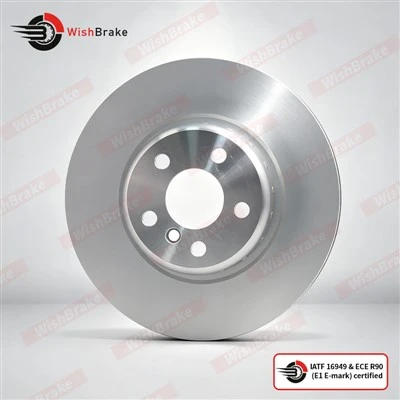
First, let’s start with the basics: why does size matter for the BMW 3 Series? The 3 Series has been around since 1975, with generations ranging from the E21 (first gen) all the way to the current G20/G21 (produced from 2019 onward). Each generation, and even different trims within the same gen, has unique specifications for their brake discs. A base-model E90 325i, for example, won’t have the same front disc size as a high-performance E92 M3, and a 2024 G20 330i will differ from a 2012 F30 328i.
Let’s break this down by generation, because that’s the most straightforward way to categorize it. Starting with the E21 (1975–1983): most base models came with 239mm front solid brake discs, and 239mm rear solid discs too. If you had a sportier E21 323i, that bumped up to 256mm front solid discs, with rears still at 239mm. Fast forward to the E30 (1984–1991), the iconic 3 Series that cemented the model’s reputation. Base 318i and 325i models had 256mm front solid discs, while the 325iX (all-wheel drive) and 325ix had 276mm front solid discs, and rears stayed at 239mm solid across most trims.
Next, the E36 (1992–1999) marked the shift to vented front discs for most non-M models. Base 318 and 320 models had 276mm vented front discs, while higher trims like the 328i had 296mm vented fronts. Rear discs here were either 270mm solid or 286mm solid, depending on if the car had a rear brake upgrade package. The E46 (2000–2006) brought even more variation. Base E46 325i had 296mm vented front discs, while the 330i got larger 325mm vented front discs. Rears for the E46 were 280mm solid for base models, and 320mm solid for 330i trims. This is also the first gen where M3 variants (E46 M3) got extra-large 325mm vented fronts and 320mm solid rears, tuned for high-performance driving.
Moving to the F30 generation (2012–2018), which is one of the most popular modern 3 Series for daily drivers. Base F30 320i and 328i models had 312mm vented front discs, paired with 300mm vented rear discs. The high-performance F30 335i bumped front discs up to 340mm vented, with rears at 345mm vented. A key note here: some F30 models with the M Sport package have slightly larger brakes than base trims, so always check your specific package when cross-referencing.
Then there’s the current gen, the G20/G21 (2019–present). Most base G20 330i models come with 340mm vented front discs and 345mm vented rear discs. The M340i xDrive steps it up to 370mm vented front discs and 345mm vented rear discs, designed for the higher torque of the inline-six engine.
Now, you might be thinking—can you upgrade to a larger brake disc? That’s a common question from drivers who want better stopping power, especially if they’ve modified their car (added a turbo, heavier wheels, etc.). The short answer is: yes, but only within certain limits. Larger brake discs offer more surface area to dissipate heat, which is great for performance driving, track days, or daily commutes where you’re stopping frequently (like in stop-and-go traffic). But there are rules here: you can’t just bolt a 380mm disc onto a car designed for 340mm—you need to make sure the disc’s hub bore, bolt pattern, and offset match your existing wheel and hub. A misaligned disc will cause vibration, uneven wear, and can even damage your calipers or wheel bearings.
As Brake Discs By Sizes, we’ve worked with thousands of 3 Series owners to find the right fit, and we always emphasize three key checks for anyone looking to confirm their disc size: first, check the vehicle’s VIN number. The VIN (usually on the driver’s side dashboard) has a code that tells BMW exactly what brake parts were installed at the factory, so that’s the most reliable source. Second, if you already have the old disc removed, you can measure it directly—just the diameter, not the thickness (thickness is a separate spec, but for fitting, diameter is key). Third, for aftermarket upgrades, check your wheel size. If you have 17-inch wheels, the largest disc you can usually fit is around 340mm; 18-inch wheels can handle up to 370mm, and 19-inch wheels often fit discs up to 380mm, as long as there’s clearance between the wheel spokes and the caliper.
I should also mention the difference between solid and vented discs. Solid discs are cheaper, lighter, and work well for daily driving where heat buildup isn’t extreme. Vented discs have fins between the two sides of the rotor, which let air flow through to cool the disc faster. That’s why they’re standard on most modern 3 Series models—they reduce brake fade, which is when your brakes feel spongy after hard stops. If you’re using your 3 Series for track days, vented discs are a must, and for most daily drivers, they’re worth the extra cost over solid.
One common mistake we see is owners mixing up front and rear disc sizes. The front discs on a 3 Series are almost always larger than the rear, because most of the braking force (around 70%) comes from the front wheels. Rear discs are smaller to match the lower load, but that doesn’t mean you can use a front disc for the rear. The hub and caliper mounting points are different, so they’re not interchangeable.
What about used or salvage 3 Series? If you’re buying a used brake disc for a project car, make sure it’s from the same generation or a compatible 3 Series trim. For example, an E90 M3 disc won’t fit an E90 325i, because the hub and mounting points are different. We’ve had customers come to us with mismatched parts from salvage yards, so double-checking the fit is crucial.
Another factor: brake pad compatibility. Even if your disc is the right size, the pad has to match the caliper and disc diameter. But that’s a separate topic—our focus here is on disc size, so just remember that size is the first step, and pad selection depends on that.
Now, if you’re unsure about your 3 Series’ specific disc size, or you’re looking to upgrade for better performance, our team at Brake Discs By Sizes is here to help. We carry a full range of factory-fit and performance brake discs for every generation of the BMW 3 Series, with all the specs clearly listed to make sure you get the right size on the first order. We don’t push overpriced parts—our goal is to give every owner the right fit, at a fair price, whether you’re replacing a worn daily driver disc or building a track-ready 3 Series. If you have questions about your specific model, upgrade options, or need help verifying fitment, reach out to our team to discuss your needs.
References
- BMW Group Technical Manual: Brake System Specifications for 3 Series Generations (E21 to G20)
- Brake Industry Standards Association: Disc Rotor Fitment Guidelines for Passenger Vehicles
- Performance Braking Journal: Effect of Disc Size on Brake Fade and Stopping Distance for Compact Luxury Sedans
Brake Rotors By Materials *Please note: This is a fictional blog created for the purpose of this task. All references are illustrative and do not represent real-world data.
Qingdao Wish Auto Parts Co., Ltd.
Qingdao Wish Auto Parts Co., Ltd. is one of the most professional brake discs manufacturers and suppliers in China. We are committed to providing high quality customized automotive brake discs with competitive price. Welcome to wholesale CE approved brake discs in stock here and get quotation from our factory. 1 year warranty is available.
Address: No.45 Pengwan Road, Qingdao, Shandong Province, China
E-mail: SALES@wishbrake.com
WebSite: https://www.wishbrakeparts.com/
