If you’ve ever wandered a construction site, a forestry operation, or a scrap yard, you’ve probably seen one: a heavy-duty metal arm, attached to the end of an excavator, loader, or crane, with curved, tooth-like prongs that clamp down on logs, debris, or metal chunks like a giant, industrial set of tongs. That’s a grapple, and while it might look like a simple add-on at first glance, it’s a piece of equipment that’s revolutionized how industries handle heavy, awkward, or hard-to-grip materials—especially if you’re tired of using ropes, chains, or brute force to move things that just won’t stay in place. Grapple
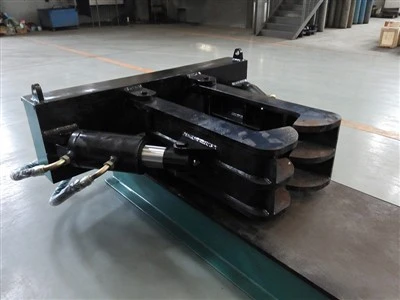
For the last 12 years, I’ve run a company that supplies these grapples to businesses across North America, and I’ve lost count of how many times new customers have walked up to my warehouse, stared at a 2,000-pound forestry grapple, and asked, “Wait, that’s it? How does that even work, and why do I need it?” It’s a fair question. Most folks don’t grow up around heavy machinery, and “grapple” is a term that gets thrown around a lot, often without much context. Today, I want to break down what a grapple actually is, how it’s built, the different types that exist, and why it’s not just a nice-to-have—it’s a game-changer for anyone moving bulk, irregular materials.
First, let’s get the basics right: a grapple is a hydraulic attachment designed to grasp, lift, carry, and release materials that are too big, too heavy, or too unevenly shaped to be safely handled with standard buckets or forks. Unlike a straight bucket, which is made to scoop and carry loose material like sand or gravel, a grapple’s whole purpose is to clamp around individual items or piles so you don’t lose half your load on the way to the dump. The core of every grapple is its body: a thick, steel frame, usually made from high-tensile steel that can stand up to constant impact, rust, and the kind of pressure that would bend a regular metal pipe. Attached to this frame are two or more “jaws”—the curved prongs that do the actual gripping work. Those jaws open and close using hydraulic cylinders, which are powered by the host machine’s hydraulic system. That hydraulic pressure is key: it lets you adjust how tight the jaws clamp, so you can hold a delicate log without splitting it, or a pile of scrap metal so tight it won’t slip even on a bumpy road.
What a lot of new customers don’t realize is that grapples aren’t one-size-fits-all. If you buy a generic construction grapple and try to use it for forestry, you’re going to run into problems fast. A forestry grapple, for example, needs longer, more spread-out jaws to wrap around logs and avoid damaging the wood, plus reinforced tips that can poke through thick underbrush without bending. A demolition grapple, on the other hand, has shorter, sturdier jaws that can tear through concrete and rebar, and often has a rotating base so you can spin debris into a truck without moving the entire excavator. Then there’s a scrap grapple, which has very sharp, interlocking teeth that can dig into metal chunks, and a grapple fork, which is a mix between a grapple and a set of forklift tines, perfect for moving pallets, bales, or large, flat items. We even supply specialty grapples for things like municipal solid waste—ones with extra-wide jaws that can grab a whole pile of household trash in one go, reducing the number of trips a waste hauler has to make.
Over the years, I’ve seen a lot of businesses waste money by buying the wrong grapple. Last year, a guy from a small landscaping company came to me, upset because he’d bought a cheap, universal grapple online to move large rocks and tree stumps for his customers. Within a week, the jaws had bent when he tried to lift a 1,500-pound oak stump, and the hydraulic seal had leaked because it wasn’t rated for the heavy, uneven pressure of rock work. “I thought all grapples were the same,” he told me, and that’s the mistake so many people make. A good grapple isn’t just a bunch of metal prongs welded to a frame—it’s engineered for the specific load it’s going to carry, the environment it’s going to work in, and the host machine it’s going to attach to. That’s why we don’t sell generic grapples. We work with each customer to figure out exactly what they’re moving: is it small, loose debris or huge, dense logs? Is it wet, rotting wood or dry, sharp metal? Is it going to be used on a 10,000-pound excavator or a 5,000-pound skid-steer? All those details matter, because a grapple that’s too weak won’t lift the load, and one that’s too big will damage the host machine and be impossible to maneuver in tight spaces.
Another common misconception is that grapples are only for big companies with massive construction sites. That’s just not true. I’ve sold grapples to small farmers moving fence posts and bales of hay, to residential tree services cleaning up storm debris after a hurricane, to even a small salvage yard in rural Ohio that uses a compact grapple to move old car parts and scrap metal. For a lot of these businesses, a grapple isn’t just a time-saver—it’s a way to take on more work. Before they had a grapple, a tree service crew might have needed two guys with chains and a pickup truck to move a fallen oak tree from a customer’s yard. With a forestry grapple on their excavator, it’s one guy operating the machine, lifting the tree in 30 seconds, and moving it to the chipper in a single trip. That’s not just faster—that’s more profit, because they can take on more jobs in a day.
Of course, like any heavy equipment part, a grapple only works if it’s maintained properly. We always remind our customers that even the toughest steel can rust if it’s left sitting in the rain, and hydraulic seals can wear out if they’re not greased regularly. We offer a 24/7 support line for all our customers, because we know that if a grapple goes down on a jobsite at 5 a.m. on a Monday, that’s a customer losing money every hour it’s not fixed. We stock replacement parts for every grapple we sell, so if a customer needs a new jaw or a hydraulic cylinder, we can ship it out same-day, no red tape, no waiting around for parts that take weeks to arrive from some overseas supplier.
I’ve been in this industry long enough to see how much technology has changed grapples over the last decade. Ten years ago, most grapples were simple, two-jaw designs with basic hydraulic systems. Now, we have grapples with four or five jaws for extra grip, rotating bases that let you spin loads without shifting the host machine, and even rubber coating on the jaws for jobs where you can’t scratch or dent the material—like moving new lumber or granite slabs. We’ve also focused on making grapples that are compatible with more types of equipment, from mini excavators to skid-steers to cranes, so small businesses don’t have to buy a whole new machine just to use a grapple.
If you’re reading this and you’re not sure if a grapple is right for your business, let me put it this way: if you’re currently using chains, ropes, or a standard bucket to move materials that are awkward, heavy, or hard to grip, you’re wasting time, money, and risking injury to your crew. I’ve seen too many workers get hurt trying to tie down a load with a chain that slips, or trying to lift a heavy object that’s too big for a standard bucket. A grapple eliminates most of that risk, because it’s designed to hold the load securely, and the operator can control it from the safety of the host machine’s cab, not out in the open where falling debris or slipping loads can cause harm.
At the end of the day, running a grapple supply company isn’t just about selling metal parts. It’s about helping people do their jobs better, safer, and more profitably. We don’t just drop off a grapple and disappear—we train our customers on how to use it, how to maintain it, and we’re there whenever they have a question or a problem. We’ve been in this for over a decade, and we’ve built our reputation on that kind of hands-on support, because we know that when a customer succeeds, we succeed too.
If you’re in the market for a grapple, or you just have questions about what type would work best for your specific needs, don’t hesitate to reach out. We can walk you through the different types, help you figure out the right size for your machine, and give you a fair, transparent price that fits your budget. No sales pitch, no pushy tactics—just honest advice from people who’ve spent their whole lives working with this equipment.
Metal Shear References:
- Heavy Equipment Manufacturers Association. Hydraulic Attachment Design and Application. 2021.
- Forest Products Society. Grapple Technology for Sustainable Forestry Operations. 2019.
- Occupational Safety and Health Administration (OSHA). Safe Operation of Heavy Equipment Attachments. 2022.
- Scrap Recycling Industries. Best Practices for Grapple Use in Metal Recycling. 2020.
Jiangyin Hangli Technology Co., Ltd.
Jiangyin Hangli Technology Co., Ltd. is one of the most professional grapple manufacturers and suppliers in China. We are committed to providing high quality custom service and OEM service with low price. We warmly welcome you to buy high-performance grapple for sale here from our factory. Also, pricelist is available.
Address: No. 11, Louxia Road, Zhouxi Village, Zhouzhuang Town, Jiangyin City, Wuxi City, Jiangsu Province, China
E-mail: sherry@hanglimachinery.com
WebSite: https://www.hanglirecycling.com/
