Hey there, if you’re in the electrical component game, you’ve probably brushed up on silver alloy contacts—they’re the workhorses for switches, relays, circuit breakers, all that stuff that keeps power flowing where it needs to go. But here’s the thing I get asked all the time: do silver alloy contacts need special handling? As a supplier of these materials, I’ve seen what happens when folks skip the small steps, and what works when you get it right. Let’s break this down like we’re chatting shop, no stuffy jargon overload. Silver Alloy Contact Materials
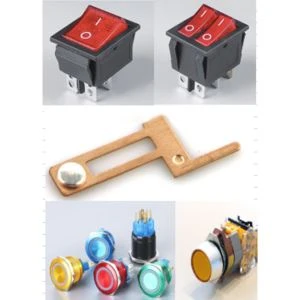
First off, let’s keep it real: silver itself is awesome for conductivity, but pure silver is soft, wears out fast, and can weld shut when there’s a surge. That’s why we mix it with other metals—like nickel, copper, tin, even rare earths depending on the application—making alloys that hit the sweet spot of conductivity, durability, and arc resistance. But that mix means they’re not just generic metal bits. So yeah, they do need a bit more care than, say, a chunk of steel. Let’s start with storage, because you’d be surprised how many people overlook this.
A lot of folks store contact materials in random garages or warehouses with no climate control. Here’s the deal: silver alloys are prone to tarnish, but not the ugly black tarnish you see on old silverware—wait, no, actually, that’s a problem too, but even worse, they can get a thin, resistive oxide layer if they’re exposed to high humidity or sulfur in the air. That layer might not seem like a big deal, but when you’re dealing with milliamp-level circuits, that tiny resistive film can cause voltage drops, or even make a relay fail to switch at all. I’ve had customers send us parts that came out of a dusty old cabinet, and the contact surfaces were so oxidized their device wouldn’t power on. So storage tip: keep ’em in a dry, low-sulfur environment—some airtight plastic bags with a desiccant packet aren’t overkill, trust me. And avoid touching the contact surfaces with your bare hands. Oil from your skin can leave a residue that etches the surface over time, or react with the alloy, messing up their performance later. Simple nitrile gloves, no fancy stuff, just use ’em when you’re handling raw contact blanks or finished contacts that haven’t been assembled yet.
Next up, machining and fabrication. If you’re cutting or shaping silver alloy contacts, you can’t just grab any old cutting tool and go. Wait, I’ve seen someone use a steel drill bit for a silver-nickel alloy part, and the result was a bunch of tiny steel shavings embedded in the contact surface. Those shavings are conductive, sure, but they’re foreign materials. When the contact switches on and off, that extra metal can cause uneven arcing, wear down the contact way faster than it should, or even create a short circuit. So use tools that are either non-conductive (like carbide-tipped tools, which are hard and don’t leave shavings that mix with the alloy) or make sure you’re doing a proper cleaning after machining. That means ultrasonic cleaning with a mild solvent, or even a quick wipe with a lint-free cloth and isopropyl alcohol—nothing harsh, because some silver alloys can be sensitive to strong acids. Another thing: don’t over-torque parts when assembling. Silver alloys are strong, but they’re not unbreakable. Cranking down on a contact mount too hard can crack the contact surface, or deform it so it doesn’t seat right, leading to poor electrical connection. We’ve had customers return parts that were damaged during assembly just because someone was in a hurry and tightened the bolt too much. Slow down, follow the torque specs, it saves a ton of hassle later.
Then there’s the big one: installation and in-service handling. Once the contacts are in your device, how you use it matters a lot. Silver alloy contacts handle normal loads great, but they hate being abused. Like, if you’re switching on a high surge current (think starting a motor, or a big HVAC unit) without proper arc suppression, that can eat away at the contact surface. But wait, that’s not really “handling” the contact itself, right? So let’s stick to handling practices for the parts themselves. If you’re replacing contacts, make sure you’re using the exact alloy for the job. I’ve seen someone swap a silver-tin contact for a silver-copper one in a relay that handled high voltage, and the new contact wore out in 3 months instead of 3 years. Each alloy is formulated for a specific use case—some for low-current, low-wear; some for high-voltage, arc-heavy environments. Don’t mix ’em up. Also, when replacing, don’t drag the old contact across the new one. Even tiny bits of melted metal from the worn contact can transfer, causing pitting on the new surface. Just seat the new contact gently, check that it’s aligned, and you’re good.
Wait, but let’s not make it sound like silver alloy contacts are delicate fragile things. They’re industrial materials, after all. For most standard applications, the handling is just common sense. The special stuff only comes into play if you’re dealing with high-performance alloys, like silver-cadmium oxide for heavy-duty relays, or silver-tungsten for high-voltage circuit breakers. Those need a bit more care because their particle structure is different—cadmium oxide particles are dispersed in the silver matrix, so rough handling can cause those particles to dislodge, which reduces the contact’s arc resistance. You don’t want those particles falling off mid-operation, trust me.
Another point: quality control. As a supplier, I tell every customer to check the contact surfaces when they arrive. No scratches, no dents, no discoloration. If there’s a patch of weird black spot, that’s probably oxidation from bad storage, and you should send it back. I’ve seen people use contacts with minor scratches, and those scratches become focal points for arcing, which grows over time until the contact fails. It’s a cheap fix to inspect them when they come in, way cheaper than replacing a whole device later.
Let me share a quick war story to make this real. A customer of ours, a small manufacturer of residential circuit breakers, was getting a bunch of returns because the breakers were tripping randomly after 6 months. They blamed the device design, tried changing parts, nothing worked. We asked for samples of their contacts, and when we looked under a microscope, we saw tiny oil residue spots all over the contact surface. Turns out their warehouse team was storing the contacts in open cardboard boxes near a loading dock where trucks were idling—high humidity, exhaust fumes with sulfur, and no gloves when handling. The oil from their hands mixed with the sulfur, creating a resistive layer that interfered with the breaker’s trip mechanism. Once they switched to airtight storage and simple gloves, the return rate dropped to almost zero. That’s the kind of thing that’s totally avoidable, no fancy tech needed.
So to wrap this up: do silver alloy contacts require special handling? Yeah, a little, but it’s not rocket science. It’s about storage (dry, low-sulfur, protect from oil/residue), fabrication (use the right tools, clean after machining), assembly (don’t over-torque, use the right alloy), and basic inspection. Skip those steps, and you’ll end up with poor performance, early failures, and wasted money. Get them right, and these contacts will outlast just about every other part in your device.

If you’re working on a project and need to make sure your silver alloy contacts are handled correctly, or you’re looking for the right alloy for your application, don’t overcomplicate it. Hit us up, we can walk you through the best practices for your specific use case, no sales pitch—just the shop tips we’ve picked up over years of working with these materials. Let’s make sure your contacts perform how they’re supposed to.
Silver Alloy Contact Materials References
- Graydon, W. A. (2004). Electrical Contact Materials: Properties and Applications. Institution of Engineering and Technology.
- Slade, P. G. (2014). Electrical Contacts: Principles and Applications (2nd ed.). CRC Press.
- Lindmayer, M., & Kurrer, R. (2001). Environmental Effects on Silver Alloy Contact Performance. IEEE Transactions on Components and Packaging Technologies.
Wenzhou Juyang Industry and Trade Co., Ltd.
As one of the most professional silver alloy contact materials manufacturers and suppliers in China, we have world-leading production equipment and strong manufacturing capabilities. Please feel free to wholesale advanced silver alloy contact materials at competitive price from our factory. Contact us for free sample.
Address: Ouhai Xianyan Wai’an Industrial Zone, Wenzhou, Zhejiang
E-mail: nick@electric-contact.com
WebSite: https://www.jy-electriccontact.com/
