Hey there, if you’re on the hunt for a foil slitting machine and trying to figure out just how much floor space you need to set one up, you’ve come to the right spot. I’ve spent the last 7 years working as a foil slitting machine supplier, so I’ve seen it all—from tiny 10x12ft setups in a garage workshop to sprawling 40ft wide production lines in a 10,000 sq ft factory. There’s no one-size-fits-all number, but I’ll break it down like we’re chatting over a coffee, no fancy jargon or confusing spreadsheets. Foil Slitting Machine
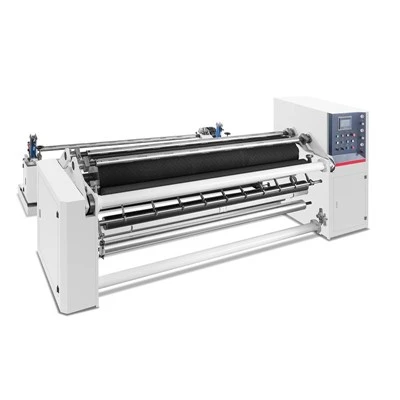
First off, let’s get the basics straight: foil slitting machines aren’t just a single box you plop down and plug in. There are 3 main types we sell, and each eats up a totally different amount of space. If you’re a small business just starting out or testing the waters with thin foils (like aluminum foil for packaging or household use), you’ll probably go for a semi-automatic tabletop or standalone entry-level machine. Those bad boys are compact—usually 6 to 8 feet long, 3 to 4 feet wide, and only 5 to 6 feet tall. I had a customer last year who squeezed one into a 10×15 ft corner of his existing packaging shop, right next to his label printer and heat sealer. He did have to move a few old storage bins out, but it worked perfectly. That’s for small runs, maybe 500 to 1,000 rolls a month. Nothing fancy, just enough to keep up with local cafes or small food brands.
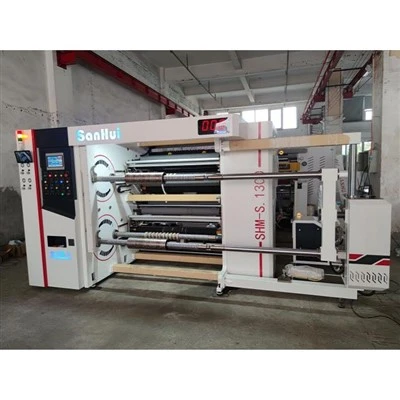
Now, if you’re scaling up—say you’re doing medium-volume production, 2,000 to 5,000 rolls a month, or you work with thicker foils like copper foil for electronics or aluminum foil for industrial wrapping—you’ll need an automatic standalone slitter. These are the workhorses. They’re longer, obviously—12 to 18 feet on average, because they have a bigger unwinder (the thing that holds the big master roll of foil) and a more complex rewinder (the part that cuts it into small rolls and winds them up neatly). They’re also a bit wider, 4 to 5 feet, and a touch taller, up to 7 feet. Here, space isn’t just about the machine itself—you need room to load those master rolls. A standard master roll is about 3 feet in diameter and weighs 500 lbs, right? You can’t hoist that thing over your head, so you need a 3 to 4 feet clearance on the unwinder side to set up a pallet jack or forklift to load it. I had another customer, a mid-sized packaging company, who thought they could plop one of these into a 20×20 ft area. Nope—they didn’t account for the forklift space, and they ended up cramming it so tight they couldn’t get the master roll in without taking the side panel off. Ended up moving it to a 25×25 ft spot, which worked. Also, leave a little extra room on the operator side—you need to move around to adjust blades, check slitting quality, and swap out rolls when they’re done. 2 feet of extra space is enough there, trust me.
Then there’s the big leagues: integrated production lines for high-volume manufacturers, like companies supplying foil to big beverage brands or electric car makers. These lines are massive. We’re talking 25 to 40 feet long, 6 to 8 feet wide, and up to 8 feet tall. They also have add-ons if you need them—like a tension control system, a core cutter, or a packaging station that wraps the finished rolls right after slitting. For these, you’re not just looking at the machine’s dimensions; you need to plan for material flow too. You don’t want a master roll sitting on one end, slitting happening in the middle, and finished rolls stacked so tight the operator can’t reach them. I had a client last year who makes copper foil for EV battery suppliers. His new line is 35 feet long, and he set it up in a 50×30 ft area—half that is the machine, the other half is for storing master rolls (10 big pallets, each 4×4 ft) and staging finished rolls for shipping. He said it’s tight, but he can add a second line later if he needs to, so it was worth skipping the bigger space he initially wanted.
Wait, let’s not forget the “hidden” space you need that’s not listed in the machine specs. First, clearance for utilities. Every foil slitting machine needs power (usually 220V or 480V, depending on size) and a way to vent if you’re working with thicker foils or using lubricants for slitting. You don’t want to run a 100-foot extension cord across the floor—tripping hazard, and the machine might not get enough power. So make sure there’s electrical access within 3 feet of where you’re placing it. Also, some machines make a little noise—about 70 to 85 decibels, same as a busy restaurant or lawnmower. If you’re putting it in a shared space, you need to check local noise ordinances, but also leave a tiny gap between the machine and walls to keep sound from bouncing around. A few inches is enough, don’t overthink it.
Another hidden thing: maintenance space. Blades need to be sharpened every few months, gears need to be lubricated, and if something breaks (rare, but it happens), you need to get parts in. That means leaving at least 3 feet of space on the back or side of the machine, away from the operator. I once had a small customer who put his entry-level slitter right against a wall. When the blade started tearing the foil because it was dull, he couldn’t pull the blade holder out from the back to sharpen it. He had to pay a handyman to move the machine, which cost him a whole day of production and $150. Lesson learned.
Let’s also talk about common mistakes people make, because I see them all the time. First, underestimating the size of the master roll. I can’t tell you how many times a customer measures the machine’s length and thinks “that’s enough,” but forgets that a 3ft diameter master roll sticks out a foot on either side of the unwinder. So if your machine’s unwinder is 3ft wide, add 2 more feet of space just for the roll hanging out. Second, not leaving space for material handling. If you’re using a pallet jack, you need at least 5 feet of clearance around the entire machine to turn it around. If you’re using a forklift, that’s more like 10 feet—forklifts need room to maneuver. Third, ignoring future growth. Even if you’re a small shop now, if you think you might scale up in 2 years, it’s worth picking a space that can fit a slightly bigger machine later, instead of moving the whole setup and causing downtime.
Let me give you a quick space cheat sheet to make this easy, no math required:
- Entry-level semi-automatic (small runs, thin household/food foil): Machine size = 6-8ft L x 3-4ft W. Total needed space: 10x15ft minimum.
- Automatic standalone (medium runs, thick copper/aluminum foil): Machine size =12-18ft L x4-5ft W. Total needed space: 25x25ft minimum.
- Integrated high-volume line (large runs, industrial/EV foil): Machine size=25-40ft L x6-8ft W. Total needed space: 50x30ft minimum.
Wait, but every shop is different. If you have low ceilings, some machines can be adjusted to sit lower—we can modify the rewinder height if your ceiling is only 7ft, instead of the standard 8ft. If you have a super narrow space but it’s long, we can configure the machine lengthwise to fit. Flexibility is key here, and that’s something most suppliers don’t tell you—we can tweak the machine setup to fit your space, not the other way around.
I had a customer in a tiny storefront a few months back who wanted a standalone automatic slitter, but only had a 18ft long space instead of the 12ft minimum he thought. We rearranged the unwinder and rewinder to sit side by side instead of end to end, so it was 18ft long and 5ft wide, and it fit perfectly. He even got two extra feet of storage space at the end for finished rolls. That’s the stuff we do that’s not in the spec sheet.
At the end of the day, the biggest factor in space isn’t the machine itself—it’s your production goals, how you handle materials, and how much you plan to grow. Don’t just grab the smallest spot you can find, because you’ll regret it when you need to move the machine in 6 months. Don’t rent a huge warehouse if you only need a 10x15ft spot, because that’s wasted money.
If you’re still stuck trying to figure out exactly how much space you need, just reach out. We can send a rep to your shop to measure, or walk you through all the adjustments we can make to fit your space. No pushy sales talk, just straight answers—after all, we’ve been helping foil slitting businesses set up for years, and we know space is one of the first big headaches when you buy a new machine. Don’t let bad space planning slow you down or cost you money.
Film Slitter Rewinder References:
- Industrial Slitting Machine Space Requirements, Manufacturing Today, 2022
- Foil Processing Facility Layout Best Practices, Packaging Digest, 2023
- Small Business Production Space Planning Guide, U.S. Small Business Administration, 2021
Wenzhou Sanhui Machinery Manufacturing Co., Ltd.
Wenzhou Sanhui Machinery Manufacturing Co., Ltd. is one of the most professional foil slitting machine manufacturers and suppliers in China. We have world-leading production equipment and strong manufacturing capabilities. Please feel free to wholesale advanced foil slitting machine made in China here from our factory. Customized orders are welcome.
Address: B17-8, Mechanical Industry Park, Wanquan Light Industry Production Base, Wanquan Town, Pingyang County, Wenzhou City, Zhejiang Province
E-mail: sanhui.slittingmachine@gmail.com
WebSite: https://www.sanhuislittingmachine.com/
