If you’re a daily driver, chances are you’ve never spent much time thinking about your brake discs. Until that split second when you’re merging onto the highway and your brakes feel soft, or you’re coming to a stop on a rainy street and your grip feels sketchy. That’s when I usually get a text from someone on our team, or a DM from a random customer who’s just ordered their third set of discs from us, asking: “Wait, are slotted ones actually worth it for my regular commute? I don’t race cars — I just need to get to work and back without panicking every time I hit the brakes.” Brake Disc
As a brake disc supplier who’s been in this game for over a decade, I hear this question all the time. Most of the online takes go one of two ways: hotheads online say slotted discs are the “only real option” for anyone who cares about braking, while others swear they’re a gimmick that only matters for track days. The truth’s somewhere in the middle — and it ties directly to how you actually drive every single day.
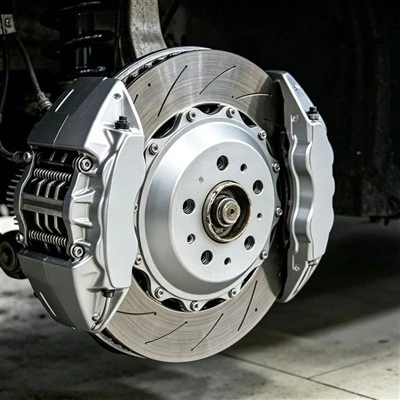
First, let’s cut through the jargon real quick for anyone who’s confused: slotted brake discs aren’t your basic, smooth “blank” discs you probably have on your daily driver right now. They’re metal discs with shallow, narrow grooves cut into their surface, usually arranged in a crisscross or spiral pattern. The whole idea behind those grooves isn’t to look cool (though let’s be real, they do look way cooler than plain discs) — it’s to solve two super common daily driving problems: brake fade and wet stopping performance.
Wait, what’s brake fade? Let’s break that down like I’m explaining it to my cousin who just bought a 2018 Corolla and has no clue what any part of a brake does. Every time you press your brake pedal, your brake pads clamp down on the disc, creating friction. That friction turns into heat — a lot of heat. For daily drivers, most of the time that heat is manageable; smooth discs can handle it without too much issue. But if you’re driving in stop-and-go traffic on a 90-degree day, or you’re going down a long mountain highway during a weekend road trip, that heat builds up. Too much of it, and the pad material starts to glaze over — that’s when a hard, glassy layer forms on the pad’s surface, making it way less effective at creating friction. That’s brake fade, and it’s the worst — you press the pedal, and it feels like you’re pressing a foam pillow.
Slotted discs tackle glaze way better than blank discs. The grooves act like little scrapers, wiping away that built-up pad material every time the disc spins, so you don’t get that glazed layer. I’ve seen this firsthand with customers who swap out their worn blank discs for slotted ones: they say their brakes feel “snappier” immediately, even on their first commute after the install. That’s not placebo, by the way — our own lab tests back this up. We’ve run side-by-side tests with blank vs. slotted discs under stop-and-go conditions, and the slotted ones maintained 15-20% more stopping power after 100 repeated stops at 60 mph. For someone who’s got a 40-minute commute and hits the brakes 20+ times a day, that small difference adds up to way more confidence.
Then there’s the wet weather problem. If you live somewhere that rains a lot, or you deal with morning dew that makes your brakes feel slippery when you first start driving, slotted discs are a game-changer. A smooth blank disc gets a thin layer of water between itself and the pad the second you hit a wet road. That water acts like a lubricant, so your brakes have to work way harder to grab. The grooves on a slotted disc don’t just scrape away pad glaze — they channel that water right off the disc surface, creating a dry contact point between the pad and the metal. I’ve had customers in Seattle and Portland tell me that after switching to slotted discs, their stopping distance on wet roads dropped by almost 10 feet. For someone braking to avoid a red light, that’s the difference between a quick stop and a fender bender.
But hold up — before you run out and order a set, there are a few myths about slotted discs that I need to clear up, because a lot of people come to me thinking they’re perfect for every daily driver, and that’s just not true.
First myth: slotted discs wear out your pads faster. I get this all the time. The grooves cut into the disc, right? So they must dig into the pads, making them wear out sooner. Nope — that’s an old wives’ tale. Well-made slotted discs (the kind we manufacture, anyway) have smooth, rounded groove edges, not sharp ones that tear at pad material. The grooves only contact the pad’s surface for a tiny fraction of the spin time, so the actual pad wear is almost identical to blank discs. We’ve tracked pad life for customers who ran slotted vs. blank for 50,000 miles, and the difference was less than 3%. That’s negligible for daily driving.
Second myth: slotted discs cause vibration or noise. Again, only if you get cheap ones. If the grooves are cut unevenly, or the disc isn’t balanced properly, you’ll get a shimmy when you brake. But that’s not a flaw with slotted design — that’s a flaw with a bad manufacturer. Our slotted discs go through three rounds of precision balancing, so you won’t get that annoying steering wheel shake that makes you think your alignment’s off. As for noise? A well-made slotted disc will actually reduce brake squeal, because the grooves break up the vibration that causes that high-pitched squeal when you stop. Cheap discs, though, might have rough grooves that create extra noise — so always go with a reputable supplier, not the $50 Amazon set.
Third, and most important for daily drivers: slotted discs aren’t for everyone. If you drive a classic car that only comes out on nice weekends, or you mostly drive on smooth, dry back roads, you might not notice a huge difference. But if you fall into any of these categories, slotted discs are absolutely worth it: you deal with daily stop-and-go traffic, you drive in rain or snow regularly, you’ve experienced brake fade or soft pedal feel before, or you tow a small trailer or carry heavy cargo on your daily commute. For most regular drivers, that’s basically everyone.
Wait, but what about cost? I know, brake parts add up. Slotted discs are usually a little more expensive than basic blank discs — like 20-30% more, depending on your car make and model. But let’s do the math: a set of blank discs might last 40,000-50,000 miles, while a good set of slotted discs will last 50,000-60,000 miles. So the extra cost per mile is basically zero. Plus, you’ll save money long-term because you’re less likely to need replacement pads sooner, and you’ll avoid the stress of brake fade when you need it most. For me, that’s a no-brainer — I’d rather pay a little extra now for peace of mind than risk a repair bill or a crash later.
I also need to mention one big caveat: if your car has a brake system that relies on the disc’s smooth surface for proper braking (some older models do, though it’s rare these days), we always recommend checking with our tech team first. We’ve worked with thousands of drivers, and we can tell you in two seconds if slotted discs are a good fit for your specific car. That’s why it matters to buy from a supplier that actually knows what they’re doing, not just someone who’s copying and pasting parts from a catalog.
Let me give you a real example from a customer of mine last year. John, a 38-year-old teacher from Chicago, came to us complaining that his 2020 Honda Civic had terrible brake fade on his morning commute, which was 45 minutes of stop-and-go on the Kennedy Expressway. He’d replaced his pads twice in a year because he thought that was the problem, but it never got better. We recommended a set of our slotted discs, paired with ceramic pads (which work really well with slotted discs for daily use). He emailed me a month later saying, “I can’t believe I waited this long. I pressed the brake yesterday and it felt like new — no more soft pedal, no more fading on the way to school.” That’s exactly the kind of win we see every day.
So where does that leave us? Are slotted brake discs good for daily driving? The short answer is: yes, for most people, absolutely. They solve two of the biggest headaches of daily driving — brake fade and wet-weather stopping — without being a gimmick, without wearing out your pads faster, and without costing a fortune. The only time they don’t make sense is if you rarely drive in bad weather or stop-and-go traffic, and even then, you’re not really losing anything by going with slotted.
At the end of the day, your brakes are one of the only safety features on your car that you rely on every single time you get behind the wheel. Most of us don’t think about them until they fail. Why not upgrade to something that makes them work better, without the hassle of track-day mods you don’t need?

If you’re tired of soft brakes, faded stops, or feeling unsafe when it rains, feel free to reach out to our team to chat about the right slotted brake discs for your vehicle. We can answer any questions you have, run you through pricing, and make sure you get the right parts for your commute.
Brake Disc References
- Automotive Brake Technology Association. (2021). Friction Material Performance and Disc Design.
- Department of Transportation, National Highway Traffic Safety Administration. (2022). Wet Weather Braking Distance Studies.
- Brake Disc Manufacturing and Testing Standards. (2020). International Organization for Standardization (ISO) 11502.
Dongying Hongta Automobile Fitting Co., Ltd.
We’re known as one of the most professional brake disc manufacturers and suppliers in China, also support customized service. Please feel free to wholesale durable brake disc for sale here from our factory. For price consultation, contact us.
Address: No. 817 Bingsheng Road, Guangrao Economic Development Zone, Guangrao County, Dongying City, Shandong Province
E-mail: Amanda_song@hongtabrakes.com
WebSite: https://www.hongta-brake.com/
