As an engineered quartz supplier, I get asked this question almost every day by contractors, interior designers, and homeowners who are weighing materials for kitchen and bathroom renovations. Most of the time, the concern comes from a mix of misinformation about engineered stone and old assumptions that backsplashes need porous, traditional materials like marble or travertine. Let me break this down clearly: yes, engineered quartz absolutely can be used for backsplashes—and in many cases, it’s a better choice than almost any alternative on the market today. Engineered Quartz

I’ve been in the engineered quartz industry for 12 years, and I’ve watched as the material has evolved from a budget kitchen countertop option to a versatile, design-driven product that works in every corner of a home. Backsplashes are one of the most underrated spaces in a renovation: they’re the first line of defense against splatters, steam, and daily wear, but they also set the tone for a whole room. Too often, people treat them as an afterthought, picking whatever leftover material matches their counters or the cheapest option at the supply yard. But that approach ignores the functional and aesthetic benefits engineered quartz brings to a backsplash.
Let’s start with the science, because when we sell quartz, we don’t just sell pretty slabs—we sell a material that’s engineered to solve real problems. Engineered quartz is made of 90-95% natural quartz crystals, bound together with a small amount of resin and pigment. That mix is the key to its durability. Unlike natural stone, which has pores that can trap food, oil, or cleaning chemicals, engineered quartz is non-porous. That means you never have to seal a quartz backsplash. Sealing natural stone backsplashes is a weekly (or sometimes daily) chore, depending on how busy a kitchen is. Spills from tomato sauce, coffee, or even wine just wipe right off quartz without staining, no extra step required. For a busy family kitchen or a commercial space like a café or restaurant, that’s a game-changer. I recently worked with a café owner in downtown Chicago who switched from marble to quartz for their backsplash after a year of replacing stained marble tiles every six months. He told me the cost of the quartz installation paid for itself in less than a year in saved maintenance.
Another big win for backsplashes is quartz’s resistance to heat and scratches. Wait—you may have heard myths that quartz can burn or scratch easily, and that’s true for low-quality quartz products. But high-grade engineered quartz, like what we supply, has a resin matrix that’s engineered to handle temperatures up to 300 degrees Fahrenheit. That means a hot pasta pot set on the edge of a quartz backsplash won’t leave a mark, and steam from a shower won’t warp or discolor it. For scratches, the quartz crystals themselves are among the hardest natural materials on Earth—only diamond is harder. Even a knife or a metal pot dragged across the surface won’t leave a permanent scratch, which is way more than you can say for ceramic tile or laminate. Ceramic tile chips easily if you drop a glass on it, and laminate scratches if you look at it wrong. Quartz holds up to the kind of daily wear that makes backsplashes look old and tired within a few years.
Now, what about design? A lot of people think quartz only comes in plain white or gray, but that’s a decades-old stereotype. Today’s engineered quartz is available in every color imaginable, from matte earthy terracotta to bold marble-look patterns that are almost indistinguishable from the real thing. For backsplashes, that versatility is huge. If you’re doing a seamless kitchen design, you can install quartz from countertop to backsplash without a seam between the two surfaces—no grout lines, no transition strip, just a smooth, continuous surface that makes a small kitchen feel bigger and more open. I’ve seen projects where a small 10×12 kitchen went from feeling cramped and choppy with tile to bright and modern with a full-height quartz backsplash. For bathrooms, quartz works just as well: we carry matte finishes that are perfect for a spa-like master bath, or glitter-infused options for a guest bath that needs a little extra sparkle. The best part is that these patterns are consistent across every slab, so if you’re using quartz for a backsplash, you can match it exactly to your countertops, vanity tops, or even your shower walls—no hunting for a tile that happens to line up in color.
I know what some of you are thinking: grout lines. Traditional tile backsplashes require grout, and grout is a magnet for dirt and mold. Even if you seal your grout, it will still get discolored over time, especially in bathrooms where moisture is constant. A quartz backsplash—whether it’s a full slab or individual tiles—can be installed with a very thin, color-matched joint, or even no joint at all. Full slab quartz backsplashes eliminate grout entirely, which means you never have to scrub mold out of grout lines again. For renters or anyone who hates cleaning, that’s a massive relief. Last quarter, I worked with a designer in Austin who specified quartz tiles for a high-rise condo project. She told me her clients specifically asked for no-grout options because they didn’t want to deal with the upkeep. It’s a small detail, but it makes a huge difference in long-term satisfaction.
Of course, there are some considerations to keep in mind if you’re thinking about quartz for a backsplash. First, installation. A full quartz slab for a backsplash needs to be measured and cut precisely, which means you want an experienced installer who knows how to handle stone material. If the slab isn’t cut correctly, you could get a small gap or a seam that doesn’t line up—though with modern fabrication tools, that’s rare if you work with a reputable supplier. Second, thickness. Most quartz countertops are 2 centimeters or 3 centimeters thick, which works for backsplashes, but if you want a more substantial, high-end look, we also carry 4-centimeter slabs that give a thicker, more luxurious edge. Third, cost. Quartz is often more expensive than ceramic tile or laminate, but when you factor in the lack of maintenance, longer lifespan, and consistent design, it’s actually a cost-effective investment over time. A ceramic tile backsplash might cost $5-$10 per square foot installed, but you’ll likely have to replace it in 10-15 years. A quartz backsplash is $30-$60 per square foot installed, but it can last 20+ years with almost no upkeep. For many clients, the peace of mind is worth the extra upfront cost.
I also think it’s important to address the elephant in the room: the engineered quartz safety concerns that have been in the news a few years ago. Back then, some low-quality quartz products used respirable crystalline silica in their composition, which can be dangerous when cut without proper ventilation. But that’s not true for modern, high-grade engineered quartz like what we supply. Our quartz is engineered with silica bound tightly in the resin matrix, so when it’s cut, it releases almost no silica dust. We follow OSHA guidelines for all fabrication and installation, and our products are tested regularly to ensure they meet all safety standards. I always tell clients to ask their supplier for test results if they’re worried about safety—any reputable company should have those on hand.
Another advantage I’ve seen firsthand is how quartz works in commercial spaces. We supply quartz for restaurants, retail stores, and office break rooms all the time, and the backsplashes in those spaces see way more wear than a home kitchen. In a café where baristas are constantly splashing milk, coffee, and syrup on the backsplash, quartz doesn’t stain, doesn’t etch from acidic drinks, and doesn’t scratch if a coffee mug is set down too hard. I had a client in Houston who ran a chain of breakfast cafes, and they switched from tile to quartz for all their locations five years ago. He told me they haven’t had to replace a single backsplash in that time, whereas before they were replacing two or three every year due to stains and chips. That kind of reliability is hard to beat.
Let’s talk about some common mistakes people make when using quartz for backsplashes. The first is choosing a quartz pattern that’s too busy. If you have a very bold, veined quartz for your countertops, a backsplash made of the same material can be overwhelming in a small space. I usually advise clients to either go with a matte, solid color for the backsplash to balance a busy counter, or to use a subtle marble-look quartz for both so the veining complements rather than competes. The second mistake is not accounting for the weight of the quartz. Full slabs of quartz are heavy, so your wall needs to be sturdy enough to support them. In older homes with drywall that’s not reinforced, an installer might need to add backing or use a different installation method to make sure the slab doesn’t fall. The third is picking a cheap quartz product from a discount supplier. Low-quality quartz has less quartz crystal and more resin, which makes it more prone to scratching, discoloring, and even bending over time. When you invest in a backsplash, you want it to last, so it’s worth paying a little more for a quality product from a trusted supplier.
I’ve installed (and supplied) so many quartz backsplashes over the years that I can spot a good one from a mile away. The best ones are the ones that you almost don’t notice at first—they blend seamlessly with the counters, they’re easy to clean, and they don’t show wear after years of use. I had a customer last month who renovated her kitchen and chose a warm beige quartz for her countertops and a matching textured quartz for her backsplash. She sent me a photo a week later with her toddler’s handprint in ketchup on the backsplash—and she wiped it off with a paper towel, no scrubbing, no stain left. That’s the kind of result that makes my job worth it.
So, to circle back to the original question: Can engineered quartz be used for backsplashes? Absolutely. It’s durable, low-maintenance, versatile, and modern, and it solves almost all the problems that come with traditional backsplash materials. Whether you’re a homeowner doing a kitchen remodel, a designer working on a commercial project, or a contractor looking for a material that will stand the test of time, quartz is a solid choice.
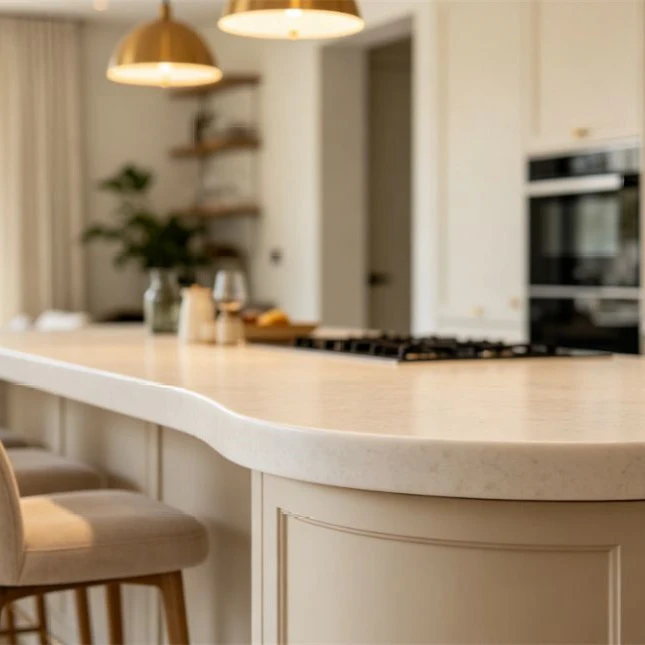
If you’re ready to explore options for your next project, or you have questions about sizing, installation, or pricing, I’m here to help. Don’t hesitate to reach out to discuss your specific needs.
Quartz Slab Sizes References
- Marble Institute of America. (2022). Engineered Stone: Properties, Applications, and Installation Best Practices.
- National Kitchen and Bath Association. (2023). Material Guide for Kitchen Backsplashes: Durability and Maintenance.
- Occupational Safety and Health Administration. (2021). Silica Exposure Guidelines for Stone Fabrication and Installation.
- Tile Council of North America. (2022). Comparison of Backsplash Materials: Quartz, Ceramic, and Natural Stone.
Wuhu Junde New Material Technology Co., Ltd.
As one of the most experienced engineered quartz manufacturers and suppliers in China since 1998, we warmly welcome you to wholesale top-quality engineered quartz made in China here from our factory. If you have any enquiry about cooperation, please feel free to email us.
Address: No.8 Yulin Road, Xinwu Economic Development Zone, Anhui Province, China
E-mail: 1127319898@qq.com
WebSite: https://www.jundequartz.com/
