Hey there, if you’ve ever walked down the pharmacy aisle, you know those crinkly, hard-to-open pill packs that feel like they’re designed for spies, not adults. You’ve probably wondered: “Can blister packaging machines even make those kid-proof ones?” As someone who’s been selling medical blister packaging machines for years, I get this question all the time—mostly from pharmacy owners, startup med device teams, and even nurses who’ve fought to open a new inhaler mid-storm. Let’s break this down straight, no jargon, no fancy sales fluff. Medical Blister Packaging Machine
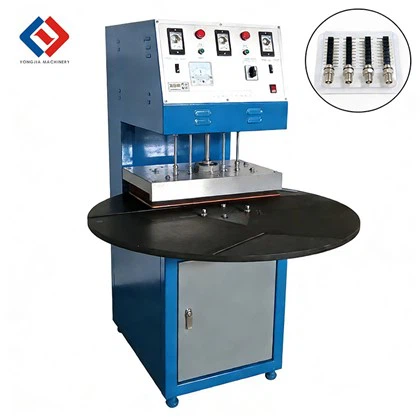
First, let’s set the basics: Child-resistant (CR) packaging isn’t just a gimmick—it’s a legal requirement for tons of stuff, right? Think prescription meds, over-the-counter painkillers, even topical creams or nicotine pouches. The whole point is to keep little hands (say, under 5) from getting into something dangerous, but still let adults open it without a full-on heist. Blister packs themselves are those little plastic bubbles sealed to a paper or foil back, and yeah—modern blister machines absolutely can churn out CR packs. It’s not a “special, secret machine” thing; it’s about how you tweak the setup.
Wait, let’s talk old school vs. what we do now. A decade ago, basic blister machines made those flat, easy-peel packs that a toddler could yank open. But CR packs need specific little design tricks, and a good medical blister machine can pull that off. Let’s name the key features that matter for CR here. First, the seal strength. Not too weak (so it doesn’t pop open on its own in a bag) and not too strong (so a parent can pry it with one thumb). Our machines let you adjust the heating and pressure for that exact sweet spot—no guesswork. I’ve had clients test a batch, tweak the seal for 10 minutes, and boom, it works. That’s the kind of flexibility you can’t get with off-the-shelf machines.
Then there’s the packaging geometry. CR packs aren’t just circular bubbles—they have notches, tabs, or raised edges that make ’em hard for tiny hands to grip. For example, a lot of CR blisters have a “push-pull” design: you press the bubble in one direction and pull the backing in the other. Our machines come with custom tooling (that’s the part that molds the plastic and cuts the seals) that lets us make those exact shapes. Wait, tooling is a big deal—cheap machines use generic, one-size-fits-all tooling, but for CR, you need precision. If the tooling’s off by even a millimeter, a kid might get it open or an adult might break a nail trying. I’ve seen that mistake before: a startup bought a no-name machine, their first CR batch had lousy tooling, 30% of adults couldn’t open it, and they had to scrap $5k worth of meds. Ouch.
Another thing: Material choice. Blister packs use plastic (usually PVC, PVDC, or cold-form foil) and a lidding material (foil, paper, or plastic). For CR, you can’t use flimsy plastic—you need something rigid that a kid can’t puncture with a toothpick, but still soft enough for an adult to press through. Our machines handle both hot-form (where you heat the plastic and suck it into a mold) and cold-form (which is harder, used for stuff that’s moisture-sensitive, like pills or vaccines) materials. Cold-form is actually a common pick for CR because it’s super tough, but it takes a sturdier machine to work with it without warping. We design ours specifically for that—no warping, no messed-up seals.
Wait, let’s get real about compliance. CR packaging has to pass actual tests, right? Like the ASTM D3475 standard (that’s the official one for child-resistant packaging) and the Poison Prevention Packaging Act (PPPA) in the US. A lot of vendors will say their machine makes CR packs, but if it doesn’t pass those tests, it’s useless. We make sure all our machines are calibrated to produce packs that hit those marks. I send every client a copy of a test report from our latest batch—nothing hidden. Last month, a retail pharmacy rep told me their old machine made packs that failed the test; after switching to ours, they nailed it on the first try. That’s the kind of track record I care about, not just selling a machine that looks good on a website.
But here’s the catch: It’s not just the machine—it’s how you set it up. If you run a standard blister pack program and try to make CR packs, you’re gonna have problems. For example, if your lidding material is too thick, adults can’t open it. If the bubble is too big, a kid can pry the whole thing off. Our team doesn’t just drop a machine off and dip—we walk clients through every step: adjusting seal temp, tweaking tooling, testing a sample batch. I even do a 30-minute walkthrough call for new clients who are nervous about switching to CR. No one should have to figure that out alone.
Wait, let’s address a common myth: Some folks think CR packs are only for small pills. Nope, we’ve made CR blisters for inhalers, topical patches, even liquid-filled blisters (like those kids’ cough syrups that come in single doses). Our machines handle all sizes, from tiny 5mg pill blisters to big ones for insulin pens. The key is custom tooling—we can make whatever shape you need, as long as it fits the machine’s capabilities.
I should also mention maintenance, because that’s a big one for medical equipment. If your machine is dirty or parts are worn out, the seal strength will drop, and suddenly your CR packs aren’t CR anymore. Our machines come with a 12-month maintenance plan, and we do monthly check-ins for clients who are running 24/7 (which a lot of med teams do). No one wants a machine to break down mid-production, especially when you’re dealing with time-sensitive meds.
Let me give a recent example: A small biotech startup came to me last quarter. They had a new allergy pill that needed CR packaging because it was a new generic, and the FDA required CR. Their old machine was too basic, couldn’t handle cold-form foil, and their tooling was garbage. We swapped ’em out for one of our mid-range medical blister machines, made custom tooling for their pill size, calibrated the seals, and ran a test batch. They sent it to a testing lab, and it passed the ASTM D3475 test with flying colors. Now they’re running 50,000 packs a day with no issues. That’s the stuff that makes it worth it.
Wait, what about people who say CR packaging is bad for accessibility? I get it—elderly folks or people with arthritis might struggle with some CR packs. But good blister machines can adjust for that too. We can make “semi-CR” packs, which are still kid-proof but easier for adults with limited dexterity to open. It’s all about balance, and our machines let you adjust that balance on the fly. No need to buy a whole new machine if you need to switch up the accessibility feature.
So, circling back to the original question: Can blister packaging machines produce child-resistant packages? Absolutely. But it’s not about any machine—it’s about a machine that’s built for medical use, has flexible tooling, can adjust seal strength, and is calibrated to pass official CR tests. As someone who’s been in this game for years, I’ve seen the bad machines, the good machines, and the ones that save businesses (and maybe even keep kids safe).
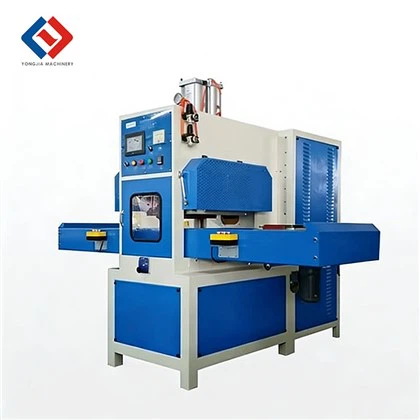
If you’re thinking about switching to CR packaging, or your current machine isn’t cutting it, we can walk you through your options. We’ll answer your questions, send over sample packs, and even help you test your first batch. No pushy sales stuff—just straight talk from someone who knows blister machines inside and out.
HF Welding Machine References:
ASTM International. (2020). Standard Specification for Child-Resistant Packaging (ASTM D3475-20).
U.S. Consumer Product Safety Commission. (2022). Poison Prevention Packaging Act Regulations (16 CFR Part 1700).
Medical Packaging and Processing Association. (2021). Guidelines for Child-Resistant Blister Packaging.
Dongguan Yongjia Machinery Equipment Co., Ltd.
We are one of the most reliable medical blister packaging machine manufacturers and suppliers in China, specialized in providing high quality customized service. Please feel free to wholesale advanced medical blister packaging machine at low price from our factory. For quotation, contact us now.
Address: No.240, Chashan South Road, Chashan Town, Dongguan City, Guangdong Province, China
E-mail: info@yjwelding.com
WebSite: https://www.yjhighfrequencymachine.com/
