What is the typical size of Optical Crystical PET Thermal Laminating Film?
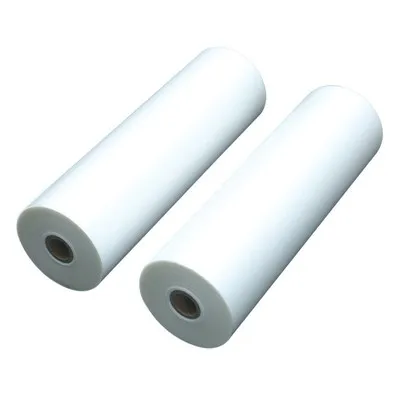
As a supplier of Optical Crystical PET Thermal Laminating Film, I’m often asked about the typical sizes of our product. Understanding the right sizes is crucial for customers in various industries, whether they are involved in printing, packaging, or display applications. In this blog, I’ll delve into the common sizes of Optical Crystical PET Thermal Laminating Film and why they matter. Optical Crystical PET Thermal Laminating Film
The Basics of Optical Crystical PET Thermal Laminating Film
Before we discuss the sizes, let’s briefly touch on what Optical Crystical PET Thermal Laminating Film is. This film is made from polyethylene terephthalate (PET), a thermoplastic polymer resin. It offers excellent clarity, high gloss, and good mechanical properties. When used in thermal lamination, it adheres to the surface of documents, prints, or other substrates, enhancing their durability, resistance to scratches, and overall appearance.
Typical Widths
The width of the laminating film is an important consideration, as it needs to match the width of the material being laminated. In the market, we commonly offer widths ranging from small to large dimensions.
- Small – Width Films: For applications such as photo lamination, pocket – sized cards, or small labels, we offer widths starting from around 80mm to 210mm. These narrow – width films are ideal for small – scale projects or when dealing with small objects. For example, in a photo studio, 80mm wide film can be used to laminate wallet – sized photos, providing them with a protective and aesthetically pleasing finish.
- Medium – Width Films: A popular range for medium – width films is from 210mm to 420mm. This size is suitable for a wide variety of applications, including A4 – sized documents, certificates, and brochures. In an office setting, A4 – sized laminating film (210mm x 297mm) is often used to protect important papers, making them more resistant to wear and tear. Many small – to – medium – sized print shops also rely on these medium – width films for laminating their printed materials.
- Large – Width Films: For larger projects, such as posters, banners, or large – format prints, we offer films with widths of 610mm, 914mm, or even wider. These wide – width films are essential for graphic design studios, advertising agencies, and companies that produce large – scale promotional materials. A poster measuring 600mm x 900mm, for instance, can be perfectly laminated with a 610mm wide film, providing a seamless protective layer.
Typical Lengths
The length of the laminating film is also a significant factor, especially when it comes to cost – efficiency and the volume of work.
- Short – Length Rolls: Some customers may only need a small amount of laminating film for occasional projects. For these cases, we offer short – length rolls, typically ranging from 10m to 50m. These are convenient for home users or small businesses that don’t have a high volume of lamination jobs. A school teacher, for example, might purchase a 10m roll of laminating film to laminate student projects throughout the semester.
- Medium – Length Rolls: Medium – length rolls usually range from 100m to 300m. These are suitable for small – to – medium – sized print shops or offices with a regular need for lamination. A small printing company that produces brochures and business cards on a daily basis might opt for a 200m roll of laminating film to meet its production requirements.
- Long – Length Rolls: For large – scale industrial users, such as commercial printing houses or packaging manufacturers, we supply long – length rolls that can be up to 1000m or more. These long – length rolls reduce the frequency of roll changes during production, improving efficiency and productivity. A large – scale poster production facility, for instance, would benefit from using long – length rolls to continuously laminate large numbers of posters.
Thickness Considerations
In addition to width and length, the thickness of the Optical Crystical PET Thermal Laminating Film is also an important aspect. Thickness is usually measured in microns (μm).
- Thin Films (12 – 25μm): Thin films are often used for applications where minimal additional thickness is desired, such as laminating photos or delicate documents. They provide basic protection against scratches and fingerprints while maintaining the flexibility and original feel of the substrate.
- Medium – Thickness Films (25 – 50μm): These films offer a good balance between protection and stiffness. They are commonly used for laminating brochures, certificates, and ID cards. The additional thickness provides better durability and resistance to bending and tearing.
- Thick Films (50 – 100μm or more): Thick films are suitable for heavy – duty applications, such as laminating outdoor posters, banners, or industrial labels. They offer high – level protection against harsh environmental conditions, including UV rays, water, and abrasion.
Why Size Matters
The size of the Optical Crystical PET Thermal Laminating Film is closely related to the efficiency and effectiveness of the lamination process. Using the right size ensures a proper fit, reducing waste and improving the overall quality of the laminated product.
- Cost – Efficiency: Choosing the appropriate width and length can significantly reduce costs. Using a film that is too wide or too long for the job can result in material waste, while using a film that is too narrow may require multiple passes or splicing, increasing labor and material costs.
- Quality of Lamination: A well – matched film size ensures a smooth and seamless lamination process. If the film is not wide enough, there may be gaps or overlaps, affecting the appearance and durability of the laminated product. On the other hand, a film that is too long may cause wrinkles or uneven lamination.
- Productivity: The correct size of the film also impacts productivity. For large – scale production, using long – length rolls and appropriate widths can reduce downtime associated with roll changes and adjustments, allowing for continuous and efficient lamination.
Conclusion
In summary, the typical sizes of Optical Crystical PET Thermal Laminating Film vary widely to meet the diverse needs of different industries and applications. Whether you are a small – scale user or a large – scale industrial manufacturer, understanding the right width, length, and thickness is essential for achieving the best results in your lamination projects.
PET Thermal Lamination Film If you are interested in purchasing Optical Crystical PET Thermal Laminating Film or have any questions about the sizes or other aspects of our product, please feel free to contact us for a detailed discussion. We are committed to providing you with the highest – quality products and professional services to meet your specific requirements.
References
- "Plastics in Packaging: Technology and Property Considerations" by Ramesh Chandra and S. K. Bhattacharya
- "Handbook of Laminating and Coating Technology" by Edward Cohen and Edgar Gutoff
Yantai Hongqing Packing Material Co., Ltd.
Yantai Hongqing Packing Material Co., Ltd. is one of the most professional optical crystical pet thermal laminating film manufacturers and suppliers in China, also supports customized service. Welcome to wholesale advanced optical crystical pet thermal laminating film made in China here and get quotation from our factory. Quality products and reasonable price are available.
Address: Eastern Industrial Park, Taocun, Yantai, Shandong Province, China
E-mail: cindy@ythongguang.cn
WebSite: https://www.hqingnewmat.com/
