If you’ve ever walked through a warehouse or a distribution center, you’ve probably seen a forklift zipping around, moving pallets of goods like they weigh nothing. But if you’re switching from gas-powered forklifts to electric ones (or just looking to upgrade your fleet), one of the first questions that pops up is: “How much space do I actually need for an electric forklift?” As a supplier of electric forklifts, I get this question every single week. It’s not a one-size-fits-all answer, either. It depends on a bunch of things—like the type of forklift, how you’re using it, and the layout of your facility. Let’s break it down so you can figure out exactly what works for you. Electric Forklift

First, let’s talk about the basics: electric forklifts are way different from their gas counterparts in terms of size and maneuverability. Gas forklifts have exhaust systems, larger engines, and bigger turning radii because they’re built for outdoor use most of the time. Electric ones? They run on batteries, so their body is smaller, their weight distribution is tighter, and they can turn sharper. That’s a huge win for facilities that are crammed—like small warehouses, retail backrooms, or loading docks that don’t have a ton of extra space.
But let’s get specific about space needs. The biggest measurement everyone cares about is aisle width. If your forklift is going to be moving up and down aisles, you need to make sure the aisle is wide enough for it to turn without bumping into shelves, pallets, or other equipment. For a standard counterbalance electric forklift (the most common type people use), the minimum aisle width is usually around 10 feet. Wait, let me clarify— that’s for regular pallet moves, where you’re carrying a load that’s not super tall. But if you’re using a reach forklift, which is designed to pull pallets from high shelves, the minimum aisle width shrinks to like 6 feet. That’s a big difference! Reach forklifts are great for narrow-aisle storage, which is perfect if you’re trying to maximize your storage space without expanding your facility.
Then there’s the space needed for the forklift itself, not just aisles. You need room for the operator to get in and out, right? Most standard electric forklifts are 3 to 4 feet wide, so you need at least a couple feet on each side of the cab so someone can climb in and out without squeezing too hard. Also, don’t forget about the battery. Wait—electric forklift batteries are heavy, and if you need to swap them out (instead of charging them in a dedicated spot), you need extra space near the charging station. Some facilities use on-board chargers now, which means you don’t have to move the battery at all— that saves a ton of space. If you’re going that route, just make sure there’s a flat, well-ventilated spot near your power outlets. No one wants a battery overheating because it’s crammed in a corner with no airflow.
Let’s talk about real-world examples, because numbers are great, but actual use cases help more. I recently worked with a small e-commerce company that has a 10,000 sq ft warehouse—they were using gas forklifts before, and their aisles were 12 feet wide. When they switched to electric reach forklifts, they narrowed their aisles to 6 feet. That freed up enough space to add 10 more storage racks, which meant they could store 500 more pallets without renting extra space. That’s a game-changer for small businesses that are on a tight budget. Another client is a grocery store chain with a backroom that’s only 80 feet long and 40 feet wide. They use stand-up electric forklifts (also called order pickers) because they’re super compact. The aisle in their backroom is only 7 feet wide, and it works perfectly for restocking coolers and moving pallets of produce.
Wait, but there are factors that can change these numbers. Let’s say you’re lifting really heavy loads—like 5,000 pounds or more. Does that affect the space? A little bit. Counterbalance electric forklifts that handle heavy loads are slightly bigger than ones for lighter pallets, so their aisle width might need to go up to 11 or 11.5 feet. Also, if you’re moving loads outdoors (even if it’s just a loading dock), electric forklifts that are built for outdoor use have slightly bigger tires and a wider body, so you might need an extra foot or two of space.
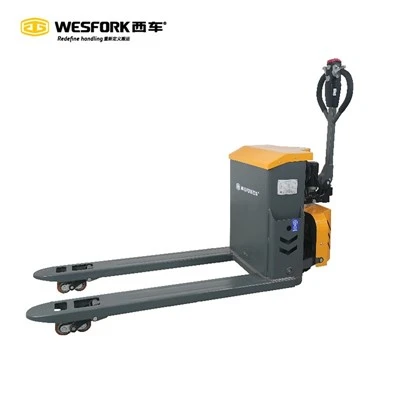
Another thing a lot of people overlook: maneuverability around corners. Even if your aisles are the right width, if you have sharp turns at the end of each aisle, you need to make sure the forklift can turn without hitting the shelf ends. Electric forklifts have a smaller turning radius than gas ones—most standard models have a turning radius of around 5 feet, compared to 7 or 8 feet for gas. That means you don’t need to widen the aisle at the corners, which is a big plus. But if you have very tight corner spaces, you might want to go with a very compact electric forklift, like a pallet jack with a lift (called a walkie stacker). Those are even smaller—some have a turning radius of 3 feet, so they can fit in spaces that a regular forklift would never touch.
Now, why does this space matter for you? Let’s be real—most businesses don’t have unlimited space. If you’re using a forklift that’s too big for your aisles, you’re wasting time. Your drivers will have to go slower, they’ll be more likely to damage shelves or pallets, and you might even have to pause operations while you fix mistakes. On the flip side, if you get a forklift that fits your space perfectly, you’ll see productivity go up. One of my customers told me that after switching to the right-size electric forklift, their daily pallet moves went up by 15% because they didn’t have to wait for their driver to navigate narrow aisles. Also, electric forklifts are cheaper to operate than gas ones, so getting the right size means you’re not wasting money on a bigger machine than you need.
Wait, let’s address a common myth: some people think electric forklifts are all the same size, so they can just pick any one. No way. There are mini electric forklifts for tiny spaces, standard counterbalance for medium facilities, reach forklifts for narrow aisles, and even turret trucks that can work in aisles as small as 5 feet. Turret trucks are pretty wild—they can actually rotate their forks 180 degrees, so they don’t need to turn the whole machine around in the aisle. That’s perfect for high-rise storage where every inch counts. I’ve sold a bunch of turret trucks to 3PL companies that have super tall warehouses and minimal aisle space.
So how do you calculate the minimum space for your electric forklift? Let’s make a quick checklist:
- Measure your current aisles (if you have existing equipment) or the space you plan to use. Write down the width of the narrowest aisle, and how sharp your turns are.
- Think about what you’re lifting: are you moving standard pallets (48×40 inches) or bigger, irregular loads? What’s the maximum weight you need to handle?
- Decide if you need to lift high: if you’re storing pallets 20 feet up, you’ll need a reach or turret truck, which affects aisle width. If you’re just moving pallets around on the floor, a standard counterbalance is fine.
- Don’t forget charging space: even if you use on-board chargers, you need a spot to park the forklift when it’s charging. If you need to swap batteries, add 2 extra feet of space near the charging station for the battery cart.
A lot of our customers come to us saying they think they need to rearrange their whole facility to fit an electric forklift, but that’s almost never true. We’ve had customers with as little as 500 sq ft of floor space that use compact walkie stackers to move pallets around. The key is matching the forklift type to your space, not the other way around.
Now, let’s talk about what happens if you get the space calculation wrong. I had a client a couple years ago who ordered a standard counterbalance electric forklift without measuring their aisles. Their aisles were 9 feet wide, and the forklift needed 10 feet. They ended up having to return it, which cost them a week of operations and extra shipping fees. That’s why we always tell customers: measure twice, buy once. If you’re not sure, just reach out to us. We don’t push big forklifts—we help you find the one that fits your space exactly.
Another thing: regulations. Are you in a facility that has OSHA rules? OSHA has guidelines for forklift space, and electric forklifts follow the same general rules as other types, but their smaller size makes it easier to comply. No need to widen aisles beyond what’s necessary, which keeps your costs down.
Let’s wrap this up. The minimum space for an electric forklift isn’t a random number—it depends on the type of forklift, your load size, how high you’re lifting, and your facility’s layout. For most small to medium businesses, standard counterbalance electric forklifts need a minimum of 10-foot aisles. For narrow-aisle storage, reach forklifts can work in 6-foot aisles, and turret trucks go even smaller. Compact options like walkie stackers fit in spaces you never thought possible.
If you’re not sure what size you need, don’t guess. We can help you measure your space, walk through your workflow, and recommend the right electric forklift that fits perfectly. No pressure, no fancy sales pitches—just real advice from people who work with these machines every day. If you’re ready to find the right electric forklift for your space, get in touch to talk through your needs.
Reach Truck References
- Material Handling Industry Association. (2022). “Narrow-Aisle Forklift Space Requirements and Efficiency Guidelines.”
- Occupational Safety and Health Administration (OSHA). (2021). “Forklift Operation and Facility Space Recommendations.”
- Electric Power Research Institute (EPRI). (2020). “Electric Forklift Design and Space Optimization for Warehouse Applications.”
- Warehouse Education and Research Council (WERC). (2023). “Small Facility Forklift Space Planning Report.”
WESFORK Industries (Zhejiang) Co., Ltd.
As one of the most professional electric forklift manufacturers and suppliers in China, we also support customized service. Please feel free to wholesale high quality electric forklift for sale here from our factory. For price consultation, contact us.
Address: 277#Yinhu Road,Yinhu Street,Fuyang District,Hangzhou City,Zhejiang Privince,China
E-mail: sulin@wesfork.com
WebSite: https://www.wesforkintl.com/
