If you’ve ever stood in a mechanic’s bay mid-repair, watching a worn brake hose being pulled away from a caliper like a limp, rusted noodle, you’ve probably heard a casual offhand comment: “That’s why your brakes feel funny.” But as a brake hose supplier who’s spent the last 12 years handing custom-reinforced hoses to fleets, independent shops, and even weekend racers, I’m here to tell you that “funny” braking rarely happens by accident. Uneven braking—when your car pulls sharply left or right when you hit the pedal, when one wheel locks up a full second before the others, or when you have to push twice as hard on one side to slow down—is one of the most common, and most misleading, signs of a bad brake hose. Most drivers and even some technicians will blame worn brake pads, warped rotors, or misaligned calipers first, and while those issues do cause uneven stopping, the quiet villain hiding behind those metal lines is almost always the humble brake hose: flexible, small, and easy to ignore—until it fails to do its job. Brake Hose
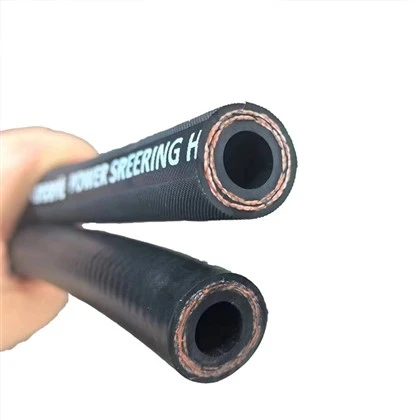
Let’s start with how a good brake hose is supposed to work, because if you don’t understand what a healthy hose does, you can’t spot when it’s broken. Brake systems are hydraulics, right? That’s the whole point. When you press the brake pedal, you push fluid (glycol-ether based, specifically, with a high boiling point so it doesn’t turn to steam under extreme heat) from the master cylinder, through hard steel lines running along your frame, then through flexible rubber hoses to the brake calipers or wheel cylinders at each wheel. The flexible part is non-negotiable: the front wheels turn, and the rear axle moves up and down with suspension travel, so those steel lines would snap if they were rigid here. A quality brake hose is reinforced with multiple layers of high-tensile steel braid wrapped around synthetic rubber, designed to hold pressure up to 1,500 psi (more than 100 times the pressure in a garden hose) without swelling. Swelling is the key word here—if that braid is damaged, or the rubber is cracked, or there’s a blockage forming inside, the hose will “balloon” when you press the brake. That ballooning isn’t just a minor loss of pressure; it’s an uneven loss of pressure, specifically at the wheel tied to that faulty hose.
I can’t tell you how many times I’ve got a panicked call from a local shop at 2 a.m. on a Saturday: “We replaced the front left pads, bled the lines, and the truck still pulls right. What gives?” Every single time, I’ve asked them to check the brake hose for that wheel, and 9 times out of 10, it’s the culprit. Let’s walk through a real example from last month: a 2018 Ford F-150 came into a shop in Des Moines, Iowa, with a complaint that it veered left hard every time the driver hit the brakes. The mechanic swapped both front pads, turned the rotors, bled the system, and the pull was still there. He replaced the caliper on the left side, still nothing. Finally, he called me, and I walked him through a quick test I learned from an old industrial hydraulic engineer I worked with early in my career: with the truck jacked up, pull the wheel off, disconnect the brake line fitting at the caliper, plug the end of the hard line, and press the brake pedal slowly. Watch how much the hose moves. On the good right side, the hose barely twitches. On the left, it swells out an extra half-inch, like a overinflated balloon. That swelling means when the driver presses the brake, most of the fluid pressure is lost to stretching the faulty hose instead of pushing the caliper piston outward. The right caliper gets full pressure, the left gets less—and so the truck pulls left. That’s uneven braking 101, and it’s 100% caused by a bad hose.
But ballooning isn’t the only way a faulty brake hose messes with even braking. Another common issue is internal degradation, and this one is tricky because you can’t see it. Over time, the inner rubber lining of a brake hose breaks down, especially if you’re driving in areas with lots of road salt, or if you live in a place where temperatures swing wildly between freezing winter days and 90°F summer afternoons. Those temperature fluctuations make the rubber expand and contract, and salt and grime can work their way through tiny cracks in the outer braid to eat away at the inner lining. Eventually, the lining can flake off, or it can form a partial blockage. What does that do? It restricts fluid flow to one wheel, so when you hit the brake, the fluid can’t reach the caliper fast enough, or in full volume. Again, that wheel doesn’t engage as much as the others, leading to uneven braking. I had a customer in Minneapolis last year who drove a 2020 Honda Civic that kept pulling right when braking at highway speeds. He’d had his alignment checked three times, replaced his brake pads twice, and even bought new tires because he thought the tread was uneven. When he finally brought the Civic to me, I cut open the old brake hose on the left front wheel. The inner lining was caked with tiny, brittle flakes of rubber that had completely blocked 70% of the hose’s inner diameter. When fluid tried to flow through it, it couldn’t keep up with the right side, so the left wheel slowed down way faster than the right—pulling the car right. No fancy scans, no expensive part swaps, just a blocked hose causing all the trouble.
There’s also the case of a hose that’s split or has a small external leak, but not a total rupture. A lot of drivers see a small puddle of brake fluid under their car and panic, but a slow leak from a hose is another silent cause of uneven braking. Brake fluid is toxic and corrosive, so a tiny crack in the hose can leak fluid over time, dropping the pressure in that wheel’s line just enough to make it engage less than the others. I once worked with a delivery company that had a fleet of 12 cargo vans. Every month, two or three of them would come in with uneven braking, and the shop would swap pads and rotors, which would fix it for a week, then it would come back. The problem? The drivers were stopping and starting hundreds of times a day, and the hoses on the rear wheels were rubbing against the frame of the vans, causing tiny, almost invisible cracks. Fluid would leak out slowly, pressure would drop, and the vans would pull to one side. It took us adding a protective nylon sleeve to the hoses to stop the rubbing, and the uneven braking vanished. No more pad swaps every week—just fixing the root cause, which was the bad hose.
Now, let’s get to the part that surprises a lot of people: even a hose that looks totally fine can cause uneven braking. I know, I know—you’ve picked up a hose and it looks like it’s in perfect shape, no cracks, no swelling, no leaks. But there’s a problem called “collapsed hose,” and it’s almost impossible to spot until you do a pressure test. When brake hoses are routed incorrectly during installation (either at the factory or during a repair), or when they’re crushed by road debris, or even when they’re aged and the inner lining sticks to itself, the inside of the hose can collapse just enough to block fluid flow when the brake is pressed. When you release the brake, the fluid flows back, so the collapse isn’t noticeable. But when you press the brake, the pressure pushes against the collapsed section, and flow is restricted. Again, that’s a wheel that doesn’t get full pressure, leading to uneven stopping. I’ve seen this happen so many times: a technician replaces a brake hose, routes it wrong, and the car has uneven braking. They swear they routed it correctly, and it looks fine, but a quick pressure test with a hydraulic gauge shows that one side is getting 800 psi and the other is getting 1,400 psi. The problem was never the brake pads or the rotors—it was the crushed hose.
Wait, you might be thinking, “What about ABS systems? Shouldn’t that fix uneven braking?” Great question, because a lot of newer cars have anti-lock brake systems, and some drivers assume that tech will override any hose issues. But ABS is designed to prevent wheel lockup, not to fix uneven pressure from a faulty hose. If one hose is delivering less pressure, the ABS will sense that the wheel is slowing too fast, but it can’t increase the pressure to that wheel—it can only decrease it for the others. So you still get uneven braking; you just get weird pulsing in the pedal from the ABS trying to compensate. I had a customer with a 2022 Subaru Outback that had ABS activating randomly when braking gently. The dealership spent three days scanning the computer, replacing wheel speed sensors, and even reflashing the ABS module, and couldn’t fix it. When they called me, I asked them to test the pressure at each wheel, and sure enough, the rear left hose was only delivering half the pressure of the right. Swapping the hose fixed the pulsing and the uneven braking, no more ABS errors. The system works as intended—it just can’t make up for a bad hose.
So now that we’ve covered all the ways a bad brake hose causes uneven braking, the next logical question is: how do you prevent this? As someone who sells brake hoses, I’m not just here to sell parts—I’m here to help people understand how to keep their brakes safe. The easiest way is to inspect your brake hoses every time you get a tire rotation or a brake service. Don’t just look for leaks; look for cracks in the outer rubber, bulges in the braid, or signs that the hose is rubbing against a frame or suspension part. If you live in a cold, salty area, or you drive on a lot of dirt or gravel roads, you should check them more often, maybe every 6 months. If you notice your car pulling to one side when braking, if the brake pedal feels spongy or only goes down on one side, or if you have to push harder on the pedal than usual to stop, don’t just assume it’s pads or rotors. Pick up a cheap brake pressure tester (most auto parts stores sell them for under $50) and test the pressure at each wheel. If one is way lower, or if the hose swells when you apply pressure, it’s time to replace it.
When you do replace a brake hose, don’t go for the cheapest one you can find. I’ve seen too many mechanics use generic hoses that don’t have the proper steel braid reinforcement, and those will balloon or collapse way faster than a quality hose. As a brake hose supplier, we use aerospace-grade steel braid and EPDM rubber linings that are resistant to salt, heat, and road grime, and we test every hose to make sure it can handle up to 2,000 psi (well above the 1,500 psi your brake system ever reaches). Cutting corners on a brake hose isn’t just a money-saver in the short term—it’s a safety risk in the long run. A bad brake hose can lead to uneven braking that causes a crash, or even a total brake failure.
At the end of the day, uneven braking isn’t just an inconvenience. It’s a warning sign that something is wrong with your brake system, and more often than not, that something is the brake hose. It’s small, it’s easy to miss, and it works quietly in the background until it doesn’t. I’ve been in this industry long enough to know that most people don’t think about their brake hoses until they’re stranded on the side of the road, or worse, until they’re in an accident. That’s why I’m always talking to mechanics, driving instructors, and regular drivers about this: don’t ignore the small parts. The ones that look like they’re just lines holding fluid are the ones that keep you stopped when you need to.
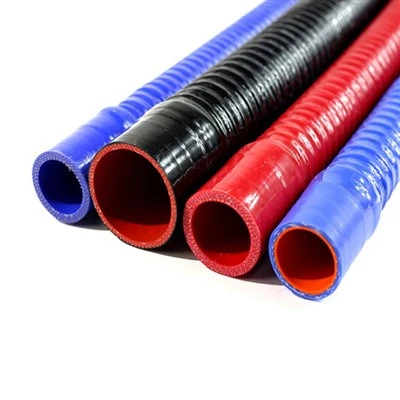
If you’re noticing uneven braking, or if you’re a mechanic needing high-quality brake hoses for your shop, I’m here to help. We work with fleets, independent shops, and individual drivers to provide custom-fit, tested brake hoses that fit every make and model, and we’re always happy to walk you through troubleshooting any brake issue, whether it’s a bad hose or something else.
180 Degree Silicone Hose References
Vehicle Dynamics: Stability and Control, Gillespie, T.D.
Automotive Brake Systems, Blundell, M., Harty, D.
Hydraulic Brake System Design and Maintenance, National Highway Traffic Safety Administration
Ningbo Haidu Auto Parts Co., Ltd.
As one of the most professional brake hose manufacturers and suppliers in China, we’re featured by cheap products and good service. Please rest assured to buy durable brake hose at competitive price from our factory. Also, OEM service is available.
Address: No21 zhoujialupeng,Zhushan Village,Lizhousub-district Yuyao City.Ningbo City,Zhejiang Province
E-mail: sale6@cnsiliconehose.com
WebSite: https://www.cnsiliconehose.com/
