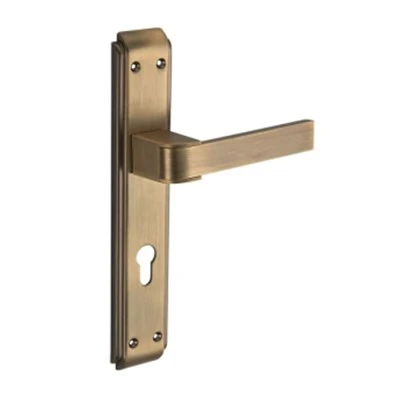
Hey there! I’m a supplier of mortise lock bodies, and I’ve been in the business for quite a while. One question that often pops up is, "What are the differences between a European and an American mortise lock body?" Well, let’s dive right in and break it down. Mortise Lock Body
Design and Structure
First off, let’s talk about the design. European mortise lock bodies usually have a more streamlined and compact design. They’re often made to fit into thinner doors, which are more common in Europe. The internal components are also arranged in a way that maximizes the use of limited space. For example, the locking mechanism is designed to be as efficient as possible, with fewer moving parts in some cases. This not only makes the lock lighter but also reduces the chances of mechanical failure.
On the other hand, American mortise lock bodies are generally larger and more robust. American doors tend to be thicker, and the lock bodies are built to match. They have a more substantial feel to them, with a larger deadbolt and more heavy – duty internal components. The design often focuses on durability and security, with multiple locking points and a stronger overall structure. You can really feel the difference when you hold them in your hands – the American lock is just chunkier.
Standard Sizes
Another big difference lies in the standard sizes. In Europe, there are well – established standard sizes for mortise lock bodies. These standards ensure that the locks are compatible with a wide range of doors across the continent. The most common size, for instance, is designed to fit into a door prepared with a specific mortise (a recess cut into the door to hold the lock). This standardization makes it easier for installers to work with the locks and for consumers to find replacement parts.
In America, while there are also some common sizes, the variations are more significant. Different regions may have slightly different preferences for door thickness and lock dimensions. This means that when you’re dealing with American mortise lock bodies, you need to be more careful about making sure the lock fits the door correctly. You can’t just assume that a "standard" lock will work in every situation. It’s like a bit of a puzzle, and you have to find the right pieces to make it all fit together.
Keyways and Locking Mechanisms
The keyways and locking mechanisms are also distinct. European mortise lock bodies often use a variety of keyway designs, with some being more prevalent than others. Many European locks feature cylinder locks with a specific key profile that offers a good level of security. Some locks also use advanced locking mechanisms that are resistant to picking and bumping. For example, there are locks with side – bar mechanisms that add an extra layer of protection.
American mortise lock bodies, on the other hand, typically have a more defined set of keyway standards. The most common keyways are designed to be compatible with a wide range of American – made locks. The locking mechanisms often rely on deadbolts and latches that are well – known for their strength. American locks are also more likely to have anti – drill features, which are important in areas where break – ins are a concern.
Security Features
Security is a major concern for both European and American consumers, but the approaches can be different. European locks often focus on a combination of anti – picking and anti – bumping features. They are designed to meet strict European security standards, which are constantly evolving to keep up with new threats. For example, some European mortise lock bodies are tested to withstand a certain number of picking attempts and are rated based on their security level.
American locks, in addition to anti – picking and anti – bumping measures, also emphasize resistance to physical attacks. They are built to be tough against drilling, prying, and other forms of forced entry. American security standards are also very strict, especially for commercial applications. When you’re looking at an American mortise lock body, you’re often getting a lock that can take a real beating and still keep your property safe.
Installation Requirements
Installation is where these two types of locks really show their differences. European mortise lock bodies, because of their standardized sizes and more compact design, are generally easier to install. The mortise dimensions are well – defined, and most installers are familiar with the process. You can usually find detailed installation guides that make the job straightforward.
American mortise lock bodies, however, can be a bit more challenging to install. The larger size and variable dimensions mean that more precise measurements and cutting are required. You may also need to use different tools to fit the lock correctly. It’s not that it’s impossible, but it definitely requires a bit more skill and patience.
Aesthetics
Let’s not forget about aesthetics. European mortise lock bodies often have a more contemporary and minimalist look. They are designed to blend in with modern – style doors and interiors. The finishes are usually sleek and sophisticated, with options like chrome, satin nickel, and black. These locks can add a touch of elegance to any door.
American mortise lock bodies, on the other hand, can have a more traditional and rugged appearance. They are often available in finishes like brass and bronze, which give them a classic look. This makes them a great choice for older – style homes or buildings that want to maintain a certain aesthetic.
Pricing
Pricing is also affected by these differences. European mortise lock bodies, due to their more standardized production and sometimes smaller size, can often be more budget – friendly. They are mass – produced to a certain set of standards, which helps keep the costs down. However, high – end European locks with advanced security features can still be quite expensive.
American mortise lock bodies, because of their larger size, heavier construction, and often more robust security features, tend to be priced a bit higher on average. The cost of materials and the more complex manufacturing process contribute to the higher price tag. But in many cases, you’re getting a lock that offers long – term durability and high – level security.
Door Closer If you’re in the market for mortise lock bodies and aren’t sure whether a European or an American one is right for you, I’d be more than happy to help. As a supplier, I have a deep understanding of both types of locks and can offer you expert advice based on your specific needs. Whether you’re looking for a lock for a residential door or a commercial building, I’ve got the knowledge and the products to meet your requirements. So don’t hesitate to reach out and start a conversation about procurement. Let’s find the perfect mortise lock body for your project together!
References
- "Locksmithing Handbook." ABC Publishing.
- "Security Standards in the Lock Industry." XYZ Institute.
- "Mortise Lock Technology Trends." DEF Research Group.
Jiangsu Wenzhong Lock Industry Co., Ltd.
As one of the most experienced mortise lock body manufacturers and suppliers in China, we also support customized service. We warmly welcome you to wholesale bulk cheap mortise lock body in stock here from our factory. If you have any enquiry about pricelist, please feel free to email us.
Address: Xiaoliang Industrial Park, Danyang City, Jiangsu Province
E-mail: Rongoo7@163.com
WebSite: https://www.wenzhonglocks.com/
