If you’ve ever stood in a plant control room, watched a pipeline startup, or waited for a valve to stop a leak from spreading across a worksite, you know how much rides on the right component. As a threaded valve supplier, I get more questions than I can count about why one threaded valve works for water lines and another for high-pressure chemical processing. Most people don’t realize that threaded valves aren’t just “valves with threads”—they’re a family of parts built for specific pressure ranges, media, and jobs, each with its own quirks that make it essential for a given task. Over 12 years in this space, I’ve seen installations go right because someone picked the right type, and go wrong because they grabbed a cheap substitute off a shelf. Today, I want to break down the core types of threaded valves, what makes each unique, and when to reach for each one. Threaded Valve
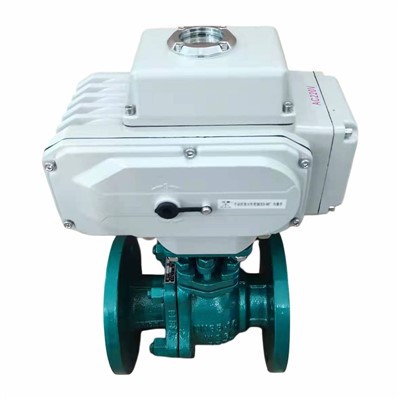
First, let’s get one basic point out of the way: threaded valves get their name from the external threads on their ends, which screw into matching female threads on pipes, fittings, or equipment. They don’t require welding, flanges, or special gaskets in most cases—their spiral threads create a tight, load-bearing seal when tightened properly. That’s why they’re go-tos for smaller lines, temporary installations, or locations where welding equipment isn’t easy to bring in. But not all threads are the same, and not all valves built with threads can handle the same stress. Let’s start with the most common type, the threaded gate valve.
Gate valves are probably the most widely used threaded valve I’ve seen on the job. Their design is dead simple: a flat or wedge-shaped disc (the “gate”) slides perpendicular to the flow path, lifting out of the way when the valve is open and dropping into the flow when it’s closed. When I worked with a municipal water department a few years back, they relied on threaded gate valves for all their 2-inch and 3-inch water line taps and branch lines. Why? Because they’re full-port, meaning the inner opening is the same size as the pipe, so there’s almost no pressure drop when they’re fully open. That makes them perfect for applications where you need unobstructed flow—like water distribution, raw wastewater lines, or slurries where partial obstructions would cause buildup.
But gate valves have a big catch: they’re not meant for regulating flow. If you twist the handle halfway open, the gate will vibrate, wear out quickly, and can even get stuck from turbulence. I once had a customer call about a gate valve that wouldn’t close on a heating line—they’d used it to adjust flow for a few weeks, and the gate had gouged the seat so bad it started leaking. The fix? Swap it out for a valve built for modulation. Gate valves are open-or-close only, so save them for when you need a full, steady flow or a complete shutoff. They also work best on low- to medium-pressure lines—usually up to around 150 PSI for standard threaded brass or cast iron models, though stainless steel threaded gate valves can handle higher pressures for industrial use.
Next up, the threaded ball valve. If gate valves are the workhorses, ball valves are the quick-switching workhorses. Their core is a hollow, perforated ball that rotates a quarter-turn (90 degrees) to open or close. Turn the handle 90 degrees, and the hole lines up with the flow path—open. Turn it another 90, and the ball blocks flow tight. I love these for their simplicity: they have few moving parts, they seal well even after years of use, and they handle both high pressure and a wide range of media. Most of the threaded ball valves I supply are made of brass, stainless steel, or PVC, and they come in sizes from ¼ inch up to around 4 inches. That makes them ideal for everything from residential plumbing (under-sink shutoff valves) to chemical processing lines and compressed air systems.
Wait, but not all ball valves are the same. There’s full-port and reduced-port, like gate valves, but there’s also vented and non-vented, and even fire-safe models for high-risk industries. A few years ago, a biotech client came to me needing threaded ball valves for lines carrying ethanol, which is flammable. They opted for vented ball valves, which have a small hole in the ball to release pressure buildup inside the valve in case of fire—preventing the valve from rupturing. That’s a detail you don’t see with gate valves, and it’s why matching the right ball valve type to the media is non-negotiable. Ball valves can also be used for partial flow control if you don’t mind a bit of wear, but they’re at their best when you need fast, reliable shutoff. Pressure-wise, threaded ball valves can hit up to 1000 PSI for brass models and even higher for stainless steel, which is why they’re so popular in industrial settings.
Now for the threaded globe valve. If gate valves are open-only and ball valves are quick, globe valves are the regulators of the group. Their design is a bit more complex: they have a movable disc that sits against a stationary seat, and the flow path is shaped like a “Z” that forces fluid to curve around the disc. That curve creates resistance, which is exactly what you want when you need to control flow rate, pressure, or temperature. I’ve supplied threaded globe valves for steam lines, HVAC systems, and even pharmaceutical mixing lines where precise flow adjustment is required. Unlike gate valves, you can leave a globe valve partially open for years without significant wear, as long as it’s sized right for the pressure.
But there’s a trade-off here: globe valves have pressure drop. Because of that curved flow path, they’re not full-port—so they’re not ideal for applications where you need unobstructed flow. I had a customer who tried to use a globe valve on a 2-inch water supply line for a manufacturing machine, and the pressure drop made the machine underperform. The fix? Swap it for a ball valve for the main shutoff and leave the globe valve as a fine-adjustment valve on a secondary branch. Globe valves also come in different disc types, like the plug disc for general use and the needle disc for very fine flow control. Threaded needle valves are a subset of globe valves, with a long, narrow disc that threads into the seat—perfect for small, precise lines like gauges or instrumentation where you need tiny, consistent flow adjustments. I often recommend threaded needle valves for labs and process control teams, since they can handle pressures up to 6000 PSI in some stainless steel models.
Up next, the threaded check valve, which is one of the most underrated threaded valve types. Most people don’t think much about backflow until it causes a problem—like dirty water flowing back into a clean water line, or process chemicals contaminating a potable supply. Check valves, also called non-return valves, are designed to let fluid flow in only one direction. They activate automatically, no handle needed: if flow moves forward, a disc or flapper lifts open; if flow tries to reverse, the disc slams shut, stopping backflow.
Threaded check valves come in two main types: swing check and lift check. Swing check valves have a hinged disc that swings open when flow moves forward, ideal for low-pressure, low-slurry applications like municipal water lines. I supplied swing check valves to a food processing plant last year, where they needed to keep cleaning solution from flowing back into their product lines—they’re easy to maintain, and their swing design doesn’t get clogged with small food particles. Lift check valves, on the other hand, use a spring-loaded disc that lifts off the seat with forward flow, better for high-pressure lines like steam or gas. They’re less prone to hammer (that loud, damaging bang you hear when flow reverses) than swing check valves in high-pressure applications. I always make sure to match the check valve type to the line’s pressure and media—for example, rubber-lined swing check valves work for slurries, while stainless steel lift check valves work for corrosive chemicals.
The last core type I want to cover is the threaded butterfly valve, even though some people don’t immediately associate it with threaded designs. Most butterfly valves are flanged, but there’s a whole line of small, threaded butterfly valves for lines up to around 6 inches that combine the quick-shutting ease of a ball valve with the compact size of a gate valve. Their design is a thin disc that rotates on a stem, just like a flanged butterfly valve, and they’re perfect for larger threaded lines where ball valves would be too bulky or expensive. I’ve used threaded butterfly valves for irrigation systems, large HVAC lines, and even fire sprinkler systems, where you need a reliable shutoff that doesn’t take up much space. They’re not ideal for very high pressure or precise flow control, but for medium-pressure, large-volume lines, they’re a great pick.
Now, a few key points I’ve learned in 12 years as a threaded valve supplier that make all the difference for installation. First, thread type matters. Most threaded valves use NPT (National Pipe Thread) threads, which are tapered to create a tight seal— but for high-pressure or corrosive media, you might need BSP (British Standard Pipe) threads or even metric threads, depending on where the line is located. Second, material is non-negotiable. Threaded valves come in brass, cast iron, stainless steel, PVC, CPVC, and even exotic alloys like Monel for saltwater applications. Using a brass valve on a line with 5% hydrochloric acid will end in leaks—period. Third, pressure rating isn’t just a number. A valve’s working pressure is the maximum it can handle at a given temperature; as temperature rises, pressure drops, so don’t just grab the highest-pressure valve you see—match it to your line’s operating temperature.
At the end of the day, picking the right threaded valve comes down to answering four simple questions: Do I need open-or-close only, or precise flow control? What’s the line pressure, temperature, and media? Do I need to prevent backflow? How big is the line? I’ve seen too many projects delayed or scrapped because someone guessed at the valve type, instead of asking these questions.
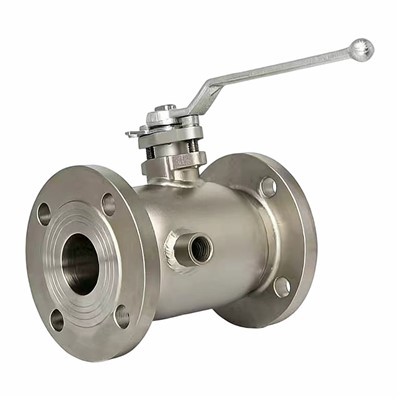
If you’re working on a project right now—whether it’s a residential plumbing job, a municipal line upgrade, or an industrial process line—and you’re not sure which threaded valve fits your needs, I’m here to help. I’ve got decades of hands-on experience matching valves to applications, so you won’t waste time or money on the wrong part.
T-type Filter References
Valve Engineering Society. (2021). “Standard Types of Threaded Valves for Industrial and Commercial Applications.” Journal of Valve Technology, 18(3), 45-62.
Municipal Water Works Association. (2019). Guideline for Selecting Valves for Potable Water Distribution Systems. American Water Works Association.
ASTM International. (2020). Standard Specification for Threaded Iron and Steel Valves for Pressure Service. ASTM A216/A216M-20.
Process Piping Institute. (2022). Selection and Maintenance of Check Valves for Industrial Piping Systems. PPI Technical Bulletin 12-07.
Xiongxiang Valve Group Co., Ltd.
As one of the most professional threaded valve manufacturers and suppliers in China, we’re featured by quality products and good price. Please rest assured to wholesale cheap threaded valve for sale here from our factory. Contact us for more details.
Address: Building 1, No.306, 12th Binhai Road, Jinkai District, Wenzhou City, Zhejiang Province, China
E-mail: info@xiongxiangvalve.com.cn
WebSite: https://www.steelvalvegroup.com/
