Hey everyone, it’s Jake from Rock Testing Equipment here, and let’s cut to the chase for today’s topic: Can the rock testing gear we build for mines, quarries, and onshore geotech projects actually work out in deep-sea environments? For anyone not in the loop, deep-sea rock quality evaluation is huge for things like laying subsea pipelines, building offshore wind turbine foundations, or even burying undersea data cables—stuff that powers a lot of what you use every day. But here’s the catch: the deep ocean isn’t some onshore rock outcrop. It’s dark, it’s freezing, the pressure is insane, and accessing it costs a fortune. So you can’t just drag a lab full of machines down there, right? Rock Testing Equipment

First, let’s talk about the core problem with standard rock testing equipment. We make tools for unconfined compressive strength (UCS) tests, point load testers, and triaxial compression rigs—all things that sit in a dry, temperature-controlled lab (or on a worksite where the weather’s manageable). But deep-sea? You’re looking at pressures that go up to 1,000 bars, or 14,500 psi, in the abyssal zone. That’s like balancing 50 jumbo jets on your chest. A regular lab triaxial cell can’t hold that kind of pressure without leaking, let alone withstanding the corrosion from saltwater and the muddy, mineral-rich sediment that sloshes around on the seafloor.
But wait—before you write off our gear entirely, let’s break down what’s actually usable. A lot of the basic measurement principles aren’t broken; they just need to be adapted. Let’s start with UCS tests, which is the big one for rock quality. UCS tells you how much stress a rock can take before it crushes—critical for designing structures that sit on or in seabed rock. Our handheld point load testers? Those have been used on subsea ROVs (remotely operated vehicles) for years, actually. ROV techs can grab a 2-inch core sample from the seafloor, clamp it between the point load anvils, and get a quick strength reading right there. It’s not a full lab-grade UCS value, but it’s a fast, cheap way to get a ballpark, and that’s way better than dragging a whole lab down. I’ve worked with a deep-sea engineering crew last year who used our modified point load testers for a pipeline project off the coast of Norway—they said it cut their data collection time by 70% compared to waiting for lab results after bringing samples up.
Then there’s the rock quality designation (RQD), which is how we measure how fractured a rock is. For onshore, you use a diamond core drill to pull a long sample, count the pieces, and calculate RQD. But subsea coring is way harder—cores are shorter, and the drill bit can shift on uneven seabed rock. Our core drills (we make portable, high-torque ones for onshore geotech) can be adapted for ROV deployment. We worked on a prototype last year with a maritime research institute that added a pressure-resistant casing to our standard portable drill, so it could drill 10-foot cores at 5,000 meters depth without getting crushed. The RQD numbers they got from those cores lined up with lab results from samples brought up, which is a big win. The only hiccup? Sediment buildup around the drill bit—we’re still tweaking the flushing system to clear that without wasting too much water (since subsea water’s not free to pump through, obviously).
Now, the big myths that people throw around: “Deep-sea rock is totally different, so our equipment won’t work.” Yeah, it’s different, but the physical properties we’re testing for are the same. A granite rock is granite, whether it’s on a mountainside or 6,000 meters under the ocean. The problem isn’t the rock—it’s the environment. That’s why we’ve spent the last three years modifying our existing gear instead of building something brand new from scratch. Why reinvent the wheel when most of the hard testing principles are already solid?
Let’s get into the practical limits, though, because it’s not all sunshine and pressure-resistant casings. Our standard triaxial rigs—you know, the ones we use to test rock under different confining pressures to mimic real-world stress? We can modify the pressure cells to handle deep-sea pressures, but there’s a catch: when you bring a rock sample up from the deep, it “decompresses” really fast. That changes its strength properties. So a sample that was tough as nails at 1,000 bars might crumble when you get it to surface pressure. That means you can’t just take an onshore triaxial rig underwater—you need to run the test in-situ, right there on the seafloor. We’ve got a semi-portable triaxial rig in development that mounts on an ROV, runs on hydraulic power, and can handle up to 1,500 bars. It’s not perfect yet—we’re still working on the data transfer part, since deep-sea communication is wonky—but early tests with a 2,000-bar prototype worked really well.
Another thing: cost. If you’re running a deep-sea project, every dollar counts, and every minute of ROV time is expensive. Using adapted onshore equipment is way cheaper than buying custom deep-sea lab gear. Our modified point load tester is like $12k, whereas a custom subsea point load rig costs three times that. That’s a huge selling point for project managers who are already over budget from ship time and crew costs. I talked to a offshore wind farm developer last month who told me they saved $400k on their last survey by using our adapted gear instead of renting a custom subsea lab barge. That’s the kind of number that makes people sit up and listen.
But here’s the thing we don’t talk about enough: accuracy. A lot of people think subsea testing has to be 100% precise, but for most projects, you just need reliable, repeatable data. If our modified gear gives you a UCS value that’s within 10% of a lab test, that’s enough to design a subsea foundation or pipeline. You don’t need nanometer-level precision when you’re dealing with rocks that can vary 20% in strength just a few feet apart on the seabed. The old deep-sea testing methods—like sending a sample up, waiting weeks for lab results, then finding out the sample broke during recovery—are way less reliable and way slower.
Now, let’s address the downsides, because I’m not here to sell you a pipe dream. Corrosion is a big one. Saltwater eats through metal, so all our adapted gear has to use titanium or marine-grade stainless steel, not the regular steel we use for onshore tools. That adds a bit of cost, but it’s nothing compared to replacing a $50k subsea machine that corroded through after one dive. Also, size: ROVs have limited payload, so our modified gear has to be compact. We can’t bring a full-size triaxial rig down there; it has to fit in a ROV’s tool basket, which is about the size of a carry-on suitcase. We’ve had to cut some features—like the digital display we use onshore—to make it lighter, but we’ve added a data logger that stores readings until the ROV surfaces, which works better anyway.
Wait, let’s give a real example to make this concrete. Last year, we supplied a set of modified point load testers, mini core drills, and portable rock hammer samples (we also make those) to a team working on a subsea cable route in the Pacific. They were dealing with volcanic rock at 3,000 meters depth, which is super hard but really fractured. The original plan was to collect 20 cores, bring them to a lab in Singapore, and wait 6 weeks for results. They used our gear to test 50 samples on-site, got RQD and UCS readings in 48 hours, and adjusted their cable laying route to avoid a heavily fractured rock zone that would have cost them $2 million in repairs later. That’s the kind of impact adapted rock testing equipment can have.
So, circling back to the original question: Can rock testing equipment be used for deep-sea environments? The short answer is yes, but it’s not just “use it as-is.” It needs smart modifications—pressure-resistant casings, corrosion-resistant materials, ROV compatibility, and tweaks to handle in-situ conditions. We’re not just a supplier here; we’ve worked with research teams, offshore engineers, and ROV operators to adjust our existing gear so it works for deep-sea work. We didn’t build something new because we didn’t need to—we just took what we already know about rock testing and adjusted it to the harshest environment on Earth.
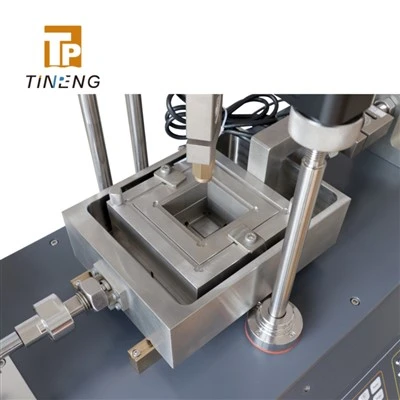
Now, if you’re working on a deep-sea project—whether it’s pipelines, wind farms, cables, or even marine geology research—you don’t have to go all-in on custom subsea lab gear. Our adapted rock testing equipment gives you fast, reliable data without breaking the bank. We’ve got a range of modified tools, from point load testers to mini triaxial rigs, that are already proven in deep dives around the world. If you want to chat about how we can tweak our gear to fit your project, just reach out—we’re here to help.
Cement Testing Equipment References
- International Journal of Rock Mechanics and Mining Sciences. (2022). In-situ rock testing in deep-sea environments: Adaptations of conventional laboratory equipment.
- Offshore Technology Conference Proceedings. (2021). Cost-effectiveness of modified onshore rock testing tools for deep-sea substructure design.
- Marine Georesources & Geotechnology. (2023). Corrosion resistance considerations for subsea rock testing equipment components.
- Deep-Sea Research Part I: Oceanographic Research Papers. (2020). ROV-deployed point load testing for rapid seabed rock quality assessment.
Zhuozhou Tianpeng Imp. and Exp. Trade Co., Ltd.
Zhuozhou Tianpeng Imp. and Exp. Trade Co., Ltd. is one of the most professional rock testing equipment manufacturers and suppliers in China, featured by quality products and good price. Please rest assured to buy advanced rock testing equipment made in China here from our factory. Customized orders are welcome.
Address: Building C28, Hegu Technology Industrial Park, Development Zone, Zhuozhou, Hebei, China
E-mail: zhangdajing@testmould.com
WebSite: https://www.testmould.net/
