Hey there! If you’ve ever walked into a backyard party, a small-town music festival, or even a local corporate event and thought, “Wait, how’d that whole stage show set up so fast?” chances are a mobile stage truck was the secret behind it. As someone who’s been in the mobile stage truck supply game for over a decade, I get that one question pops up more than any other from first-time buyers—especially small event planners, DIY festival organizers, and even church groups: Are these things actually easy to operate? I’m not gonna sugarcoat it—for folks who’ve never touched one, they might look like a giant, clunky monster that’s gonna take a crew of 10 and a engineering degree to run. But trust me, that’s the old myth, and I’m here to break it down straight, no fancy jargon, no hidden fees (literally, no fine print here). Mobile Stage Truck
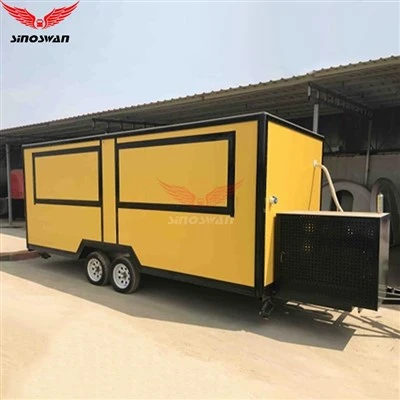
Let’s start with the basics—what even is a mobile stage truck these days? It’s not your dad’s rickety flatbed with a plywood stage tossed on top. The good ones (the kind we supply, obviously) are purpose-built from the ground up. Think: a heavy-duty chassis, a hydraulic lift that unfurls the stage in like 5 minutes, integrated power panels, pre-wired lights and speakers, and even a fold-down ramp for gear or performers. When I first got into this, a lot of people would ask, “Do you need a CDL to drive it?” Wait, hold up—most of our models are Class B, which is way more attainable than a full Class A license, especially for event planners who already have standard driver’s licenses with a clean record. Yeah, there are some bigger, custom-built ones that need a special license, but 90% of the trucks we sell are daily-driver friendly. You don’t need to be a long-haul trucker to pilot one, that’s for sure.
Now, the big one: how easy is it to operate the stage itself? Let’s talk set-up. I’ve seen people freeze up when they see a bunch of buttons on a control panel, but here’s the thing—we design every control panel to be idiot-proof. No tiny, hard-to-read labels, no confusing combinations of switches. It’s literally color-coded: red buttons stop everything, green starts, blue is stage lift, yellow is ramp. We train every single buyer (for free, by the way) on how to run it, and most people get the hang of set-up in 10 minutes flat. Last month, we sold one to a youth pastor in rural Ohio who texted me an hour after delivery saying, “I had my 16-year-old intern set the stage up for our revival this weekend—he did it by himself while I unloaded the sound gear.” That’s not an isolated incident, that’s the norm. The hydraulic lift does all the heavy work—no lifting 500-pound platforms, no hammering together rickety scaffolding. The whole stage unfurls in 3 steps: lower the outriggers (those are the stabilizer legs on the sides, another hydraulic function), hit the “lift stage” button, and fold down the safety railings if you need ’em. Done. No crew, no tools, no stress.
But wait, what if something goes wrong? I know, I know—mechanical stuff always feels scary. Let’s be real, even a car can break down if you don’t maintain it. But modern mobile stage trucks are built with built-in diagnostics. The control panel has a little screen that pops up an error message if something’s off—like “outrigger pressure low” or “stage lift blocked by debris”—instead of just dying on you. And we keep it simple: most issues are user mistakes, not mechanical failures. Like, if you forget to turn off the parking brake before lifting the stage, the screen will yell at you, so you fix it before anything bad happens. We also give every buyer a 24/7 support line, no matter how big or small their order. Last year, a music festival planner in Texas called us at 2 a.m. because his stage wouldn’t lift 2 hours before gates opened. Our tech guy walked him through checking a loose wire over the phone, and he had it fixed in 10 minutes. No need to wait for a tow truck or a specialized mechanic—we’ve got your back.
Now, let’s talk about the small stuff that makes a huge difference for ease of use. Storage? You don’t need a 10-acre lot to park one. Most of our models fit in a standard parking spot at a grocery store or a church’s parking lot. They’re way shorter and narrower than a semi, so you can maneuver them down small back roads or into a community center parking lot without scraping the sides. Power is another big one—we install integrated generators on all our trucks, so you don’t need to rent a separate power source for lights, speakers, or even the stage outlets. No hauling a 10,000-watt generator behind you, no messing with extension cords that drag across parking lots and trip people. The power is built right in, with outlets right on the stage deck, so performers can plug in mics, guitars, or even a coffee maker for the band during soundcheck.
But let’s not ignore the elephant in the room—what if you have zero technical experience? Let’s say you’re a local event coordinator who plans 3 or 4 shows a year, and your only background is booking bands, not machinery. Is this still for you? Absolutely. We don’t sell these to big corporations only—we sell to PTA groups, county fairs, even small theatre troupes. A lot of our buyers come to us and say, “I can barely change a tire, let alone operate a giant stage.” And we prove ’em wrong every time. For example, we had a woman in Illinois who runs a small summer concert series—she told me she’d never operated any kind of hydraulic equipment before. She did the full set-up by herself on her first run, and she texted me a video of it later, laughing like she’d just won a prize. The key is that we build these trucks to be user-first, not engineer-first. We take all the complicated parts and hide them so you don’t have to deal with ’em.
Now, let’s bust a myth that’s been around for years: “These things are only for big, professional events.” No way. Our smallest model is 24 feet long, has a 16×12 stage deck, and fits in a standard parking spot. It’s perfect for backyard weddings, small birthday parties, or local farmers’ markets where you just need a little space for a band or a speaker. We also have mid-sized models for festivals up to 5,000 people, and bigger ones for county fairs that draw 20,000+. No matter your size, you don’t need a team of people to run it. Just you, maybe one friend to help with gear, and you’re good to go.
Wait, but what about maintenance? That’s another thing people worry about. Do you need to do weekly deep dives to keep it working? Nope. We give every buyer a super simple maintenance checklist—like checking the fluid levels once a month, keeping the outriggers free of dirt and debris, and testing the controls before every big event. It takes less than 10 minutes a week, and most of it is just common sense, like checking your car’s oil. We also do a free annual tune-up for all our buyers, so you don’t have to hunt around for a specialized mechanic. Most regular truck mechanics can work on our stage trucks, since we use standard parts for the chassis and hydraulics. No weird, hard-to-find parts that cost a fortune to replace.
Let me tell you a quick story that sums this all up. A couple years back, we sold a 28-foot mobile stage truck to a non-profit that puts on free concerts for low-income neighborhoods in Detroit. The group had a $15,000 budget total, and we worked with them to customize a used model (wait, we sell new and used, fyi—we don’t want anyone to think these are just out of reach) that fit their needs. The woman who runs the program, Maria, told me she was terrified when she picked it up. She said, “I thought I’d have to learn a whole new skill set, and I only have $500 left for training.” We gave her a free 2-hour training session (on top of the free delivery) and walked her through every single function. Three months later, she sent me a photo of her team setting up the stage for a concert with 2,000 people, and her 12-year-old daughter was standing on the stage, laughing. She texted, “Your truck’s the easiest thing I’ve ever used. I didn’t need a crew, I didn’t need a fancy license—just me and two volunteers. We had the stage up in 7 minutes.” That’s the kind of success we live for.
But let’s be real—nothing’s 100% easy. If you neglect the maintenance, if you try to lift the stage while something’s under it, or if you ignore the error messages, you’re gonna run into issues. But that’s true for any tool, right? A lawnmower can break if you don’t change the oil, a bike can get a flat if you ride over glass. These mobile stage trucks aren’t magic, but they’re designed to be forgiving for people who aren’t professional operators. We build them to be user-friendly, not to intimidate.
So, if you’re on the fence about getting a mobile stage truck because you think it’s too complicated, too big, or too hard to run—let me be clear: that’s outdated thinking. Modern mobile stage trucks are like a fancy car: easy to drive, intuitive controls, and built to get the job done without all the hassle. You don’t need a CDL for most models, you don’t need a engineering degree to operate the stage, and we’re here to support you every step of the way, from training to maintenance to fixing a problem at 2 a.m. before a big event.
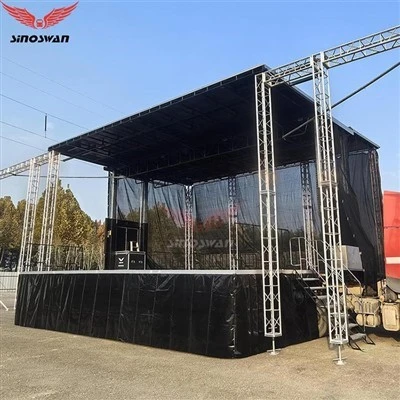
If you’re ready to stop renting stages for every show (let’s be honest, those rentals add up fast—$1,000 a pop for a weekend, right?) and take control of your events, we’d love to chat. Whether you’re a small event planner, a church group, a non-profit, or a festival organizer, we’ve got models that fit your needs and your budget. We can walk you through the different sizes, explain the controls, answer all your questions about operation, and even arrange a test drive if you’re local. Stop worrying about whether it’s too hard to run—let’s talk about how easy it can be to take your events to the next level. Get in touch to connect, and we’ll help you find the right mobile stage truck for you.
Outdoor Mobile Stage Trailer References:
- Event Industry News, 2023. Mobile Stage Equipment Usability Report: Operator Ease of Use for Small to Mid-Sized Events.
- National Association of Music Festival Organizers, 2022. Small Event Logistics: Simplifying Stage Set-Up for Under 10,000 Attendees.
- Truck and Equipment Manufacturers Association, 2021. Hydraulic Mobility Solutions for Event Applications: Operator Training and Safety Guidelines.
- U.S. Department of Transportation, 2023. Commercial Driver’s License (CDL) Exemptions for Recreational and Event Vehicles.
Zhengzhou Sinoswan Tech Co., Ltd.
Zhengzhou Sinoswan Tech Co., Ltd. is one of the most professional mobile stage truck manufacturers and suppliers in China. We are committed to providing high quality customized products for global clients. We warmly welcome you to wholesale durable mobile stage truck for sale here from our factory. Also, quotation is available.
Address: No.21 Shangdu Road, Zhengzhou, Henan Province, China
E-mail: info@sinoswan.com
WebSite: https://www.electiontruck.com/
