If you’ve ever stood next to a power substation or stared at the big metal cabinets in a commercial building’s basement, you’ve probably wondered what all those different boxes are for. I’ve been selling medium voltage switchgear for over 10 years, and the question I get more than any other is: what’s the real difference between low voltage and medium voltage switchgear? It’s not just a number on a spec sheet—this stuff actually keeps lights on, factories running, and houses safe every single day. Let me break this down like I would for a new guy on the job, no boring jargon (well, a little, but I’ll explain it). Medium Voltage Switchgear
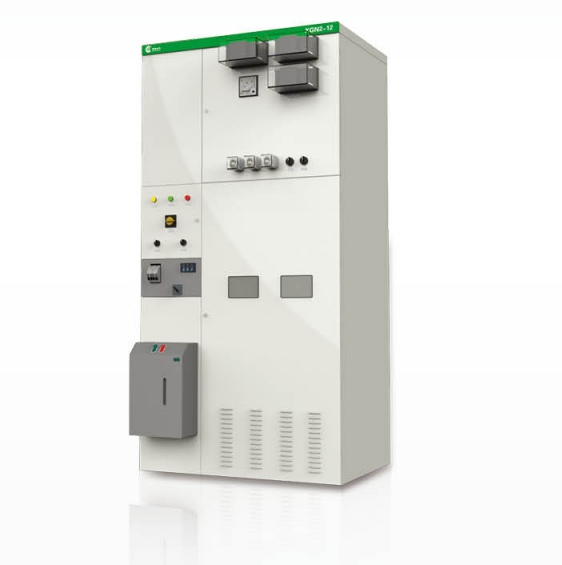
First, let’s get the basic voltage numbers out of the way because that’s where the confusion starts. Most people think “low” and “medium” are just arbitrary labels, but they’re actually set by international standards, and they matter a lot for how the gear works. Low voltage (LV) is anything under 1,000 volts, right? Wait, no—wait, some regions say up to 1,500 volts DC, but for almost all of our customers, that’s the stuff that powers your office outlets, the light switches in your house, and the little circuit breakers in a store’s back closet. Medium voltage (MV) is anything from 1,000 volts up to 35,000 volts, or sometimes 36,000 depending on the standard. That’s the stuff that runs between the power plant and your neighborhood substation.
Here’s the thing most folks don’t realize: voltage itself isn’t the dangerous part—current is, but high voltage (which is what MV is) lets you move way more power without a ton of current. Like, if you need to power a whole factory that runs 100 big CNC machines, trying to do that on LV would mean massive, super hot cables that are impossible to install. MV cuts the current way down, so you can run smaller, cooler wires that are way easier to work with. That’s why power companies use MV to move electricity long distances before stepping it down to LV for your home.
Now, what do these switchgears actually do? Switchgear is basically the control center for electrical systems—they’re the boxes that hold breakers, fuses, switches, and all the stuff that lets you turn power on and off safely, and shut it off fast if something goes wrong. LV switchgear is the smaller, more compact stuff. You’ve probably seen one before—they’re the grey cabinets in a building’s electrical room, maybe the size of a big refrigerator or a stack of them. They handle the final distribution of power to individual floors or units in an apartment building, or the power that goes to machinery in a warehouse. Their main job is to protect people and devices from overloads, short circuits, and other issues that pop up at low voltage levels. LV breakers trip fast, they’re designed to handle the high current surges that happen when, say, a microwave blows a circuit, but they don’t need to handle the same insulation challenges MV gear does.
MV switchgear is way bigger, way heavier, and way more carefully built. We’re talking cabinets that are 7 or 8 feet tall, often made of thick steel with tons of insulation inside. Why? Because at 10,000 volts, a tiny spark can jump between two parts that are even a little too close, and that spark can cause a huge explosion, a fire, or knock out power for an entire neighborhood. MV gear has to be insulated from every angle—air insulation, gas insulation (we use SF6 for a lot of our stuff, but I’ll get to that), even solid insulation materials that can handle that kind of voltage without breaking down. Also, MV switchgear isn’t just for power distribution—we sell a lot of it to solar farms, wind farms, and industrial facilities that need to connect their power to the grid. That connection point is almost always MV, so our gear has to handle switching power on and off for thousands of kilowatts, not just a few hundred like LV.
Another big difference is safety for the people working around it. LV gear is dangerous, don’t get me wrong—you can definitely get shocked and hurt if you stick your finger in an outlet, but at least the current stops when a breaker trips. MV is a whole different beast. If you get near live MV gear, the voltage can arc through the air and hit you even if you don’t touch the wires—like a lightning strike, just smaller. That’s why MV switchgear has all these safety features: interlocks that make sure you can’t open the cabinet when it’s live, remote operation so you don’t have to stand right next to it when you switch it on, and pressure relief vents that let hot, dangerous gas escape if there’s a fault, instead of blowing the cabinet up and sending shrapnel everywhere. LV gear doesn’t need half that stuff because the arc flash risk is way lower.
Let’s talk about applications, because that’s where I see customers mix this up all the time. If you’re a contractor putting up a 5-story apartment building, you’ll use LV switchgear in each unit’s electrical closet, and maybe a few medium voltage cabinets if you’re connecting the building to the local utility’s power line. If you’re a manufacturing plant with a big assembly line that runs on heavy motors, you’ll have MV switchgear to step down the grid power to a level that works for your big machines, then LV to distribute that power to the individual tools. Power utilities use MV switchgear in their substations to route power between different neighborhoods, and then step it down to LV for homes. Solar and wind farms? They use MV switchgear to connect their generated power to the transmission grid, because moving that power at high voltage is way more efficient than low.
Wait, let’s clear up a common myth: some people think MV is only for big power, but that’s not totally true. You can have small MV systems for things like mining operations or remote industrial sites that only need a few thousand kilowatts, but they still operate at 10kV or 15kV instead of low voltage. And LV isn’t just for small stuff—data centers use LV switchgear that can handle megawatts of power, but at 480 volts or 600 volts, which is under the LV limit. The key is the voltage level, not the total power. If you tried to put a 10MW load on LV, you’d need cables so thick they’d be almost a foot in diameter, which is impossible to install, way too heavy, and a fire hazard. That’s where MV comes in—it lets you move that same amount of power with much smaller cables.
Now, as an MV switchgear supplier, I see a lot of customers making the mistake of buying LV gear when they need MV, or vice versa. The biggest one is people trying to connect a new solar array to the grid with LV gear—grid companies almost never let you do that, because their lines are MV, and they need the connection to be rated for that voltage to keep the power flowing safely. Another mistake is using MV gear for small, low-power applications—it’s way more expensive, bulkier, and overkill, so you’re wasting money.
What about the maintenance side? LV switchgear is pretty easy to work on—you can open a panel, replace a breaker, check the wires, all without special training beyond basic electrical knowledge. MV gear? You have to have certified technicians, special tools, and follow super strict safety protocols. Every few years, you have to test the insulation, check the gas levels if you use SF6 (that’s the gas we put in a lot of MV cabinets to insulate the parts—way more effective than air, but it’s a greenhouse gas so we have to be careful not to leak it), and do full fault tests to make sure it still works when something goes wrong. LV maintenance is way simpler, usually just checking connections and making sure breakers aren’t worn out.
Let me give you a real example from a project we did last year. A food processing plant was expanding their production line, and they tried to use old LV gear to power the new equipment. Within a month, they had three power outages because the cables were overheating—they needed 800 amps of current, which on 480V LV meant cables that were way too heavy to run through their existing floor. We switched them to medium voltage switchgear rated for 12kV, which cut their current down to less than 400 amps, so they could use smaller, lighter cables that fit perfectly. It cost them a little more upfront, but they haven’t had an outage since, and they saved money on installation because the cables were easier to run. That’s the kind of difference we’re talking about.
Another thing: failure modes. If an LV switchgear has a fault, the breaker trips fast, and you might lose power to a small section, but it’s usually easy to reset. If an MV switchgear has a fault, it can cause an arc flash that’s way more powerful—like a bomb going off inside the cabinet, with temperatures up to 35,000 degrees Fahrenheit, which is hotter than the surface of the sun. That’s why MV gear is built with thicker steel, pressure relief panels, and arc-resistant design—so if something does go wrong, it directs that energy up and away from people, not out into the building or yard. LV gear doesn’t need that level of arc resistance, because the fault energy is way lower.
I get it, this stuff can feel overwhelming if you’re not an electrician. A lot of small business owners don’t know the difference until they have a problem. That’s why we don’t just sell switchgear—we work with customers to figure out exactly what they need, whether it’s LV for a new retail space or MV for a factory expansion. We’ve seen so many projects go wrong because someone bought the wrong gear, and we’re here to make sure that doesn’t happen.
Wait, let’s circle back to the original question, so it’s clear. The core differences, to sum it up, are:
- Voltage rating: Low voltage is under ~1,000V, medium is 1,000V to ~36,000V.
- Purpose: LV distributes power to end-use devices (outlets, small motors), MV moves power between systems (grid, large facilities, renewable energy).
- Design and safety: MV has heavy insulation, arc protection, interlocks, and requires certified maintenance, while LV is simpler and less hazardous.
- Use cases: LV for homes, small commercial, end-point distribution; MV for utilities, large industrial, renewables, grid connections.
It’s not that one is better than the other—they’re built for totally different jobs. Trying to use an LV switchgear for an MV application is like using a garden hose to put out a house fire: it just can’t handle the pressure. And using MV for an LV job is like using a sledgehammer to hang a picture: way too much, and you’re wasting money.
If you’re working on a project right now and aren’t sure which one you need, don’t guess. A lot of people try to Google it and get lost in technical specs, but the best thing is to talk to someone who actually works with this stuff every day. We’ve helped hundreds of customers navigate this, from small cafes putting in a new electrical system to huge wind farms connecting to the grid. We don’t just sell cabinets—we make sure your power works, safely and reliably, for years.

References
- International Electrotechnical Commission (IEC) 60038, Standard voltages
- Institute of Electrical and Electronics Engineers (IEEE) C37.20, Standard for Metal-Enclosed Switchgear
- National Electrical Manufacturers Association (NEMA) Standard SG-6, Switchgear Assemblies
Step Up Transformer If you’re looking to source reliable switchgear tailored to your project needs, feel free to reach out for a consultation to discuss your specific requirements.
Huachi Electric Co., Ltd.
We’re well-known as one of the leading medium voltage switchgear manufacturers in China, featured by quality products and good service. Please rest assured to buy customized medium voltage switchgear made in China here from our factory. Contact us for more details.
Address: Plastic Park, Tongyu Street, Luqiao District, Taizhou City, Zhejiang Province
E-mail: HCDQ2026@163.com
WebSite: https://www.huachi-electric.com/
