If you’re reading this, chances are you’ve either started looking into collaborative robots (cobots) for your manufacturing, warehousing, or small business operations, or you’re wondering what makes them so different from traditional industrial robots. As a cobot supplier who’s worked with dozens of companies over the past seven years, one question comes up almost every time someone reaches out: “What sensors do cobots actually have, and why do they matter?” Cobot
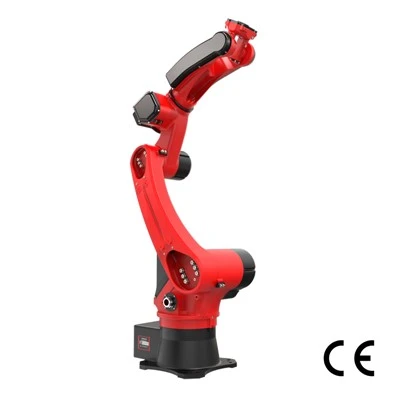
I get it—when you’re used to big, rigid industrial robots that work behind safety fences, sensors might feel like a small detail. But for cobots, those sensors aren’t just add-ons; they’re the reason these robots can work right next to your team without risk, adapt to changing tasks, and avoid costly mistakes. Let’s break down the key sensors we equip on every cobot we ship, why we choose them over alternatives, and how they make your robot more useful for your business.
First, let’s start with the most critical sensor for collaborative operation: force-torque sensors (FT sensors, for short). Unlike traditional robots, which rely solely on programmed movement and position, cobots need to “feel” what’s happening at their end effector. That’s exactly what FT sensors do—mounted at the wrist of the cobot (between the robot arm and the tool it uses, like a gripper or welding torch), these sensors measure force in three linear directions and torque in three rotational directions.
I’ll be honest with you: a few years ago, some cobot suppliers tried to cut costs by using simplified force sensing systems, like built-in motor current monitoring, which estimates force by measuring how much current the motors draw to move. The problem? That method is slow and inaccurate. If you’re a small business that’s packaging fragile glassware, a 10% error in force measurement might not sound like much, but it can mean broken products and lost revenue before you even realize there’s an issue. For our cobots, we use high-precision 6-axis FT sensors from trusted manufacturers because they deliver real-time, millisecond-level readings that let the robot adjust its grip or movement instantly.
For example, one of our clients in the craft bakery industry uses our cobot to place delicate cookie dough onto baking sheets. The FT sensor ensures the robot doesn’t press too hard and squish the dough, or too soft and leave it hanging out of place. Another client uses a cobot with an FT sensor for assembly work—when the robot’s gripper meets resistance while inserting a small plastic part, the sensor detects that force and tells the arm to adjust its angle slightly instead of pushing through, which would bend the part. That’s the kind of reliability only true FT sensors provide.
Next up, proximity and vision sensors. Vision is how cobots “see” their environment, and we integrate two types of vision tools depending on the application. The first is 2D machine vision cameras, which are great for basic tasks like detecting the position of a part on a conveyor belt, verifying that a label is correctly applied, or counting items in a bin. These cameras are compact, easy to calibrate, and can be mounted right on the cobot arm or fixed to a nearby shelf.
The second type is 3D vision sensors, which we recommend for more complex tasks—like picking parts from a bin where they’re stacked randomly, or working with irregularly shaped objects. A few months ago, a client in the custom furniture business reached out because their team was struggling to load uncut wood planks onto a saw. Traditional 2D cameras couldn’t tell the difference between a plank and a piece of sawdust, and the planks were in random positions. Our cobots with 3D vision sensors mapped the entire bin in seconds, identified each unique plank, and calculated the exact angle to grip it—cutting their loading time by 40% and reducing waste from misaligned cuts.
Proximity sensors, on the other hand, are the first line of safety for cobots. These sensors detect when a person or an object is too close to the robot arm, and trigger a slowdown or stop before a collision happens. We use both ultrasonic proximity sensors (which use sound waves to detect distance) and optical proximity sensors (which use light) for redundancy—so if one sensor fails, another will pick up the potential hazard. That’s non-negotiable for us; safety can’t be a single point of failure.
Then there are joint position and temperature sensors. Cobots have multiple joints (most have six, like a human arm) that move independently, and each joint needs to know exactly where it is at all times. Joint position sensors, typically encoders, track the angle of each joint with extreme precision—within thousandths of a degree. This is how the robot maintains its path, even when it’s working at different speeds or carrying different weights. Without accurate encoders, the cobot might drift over time, leading to misaligned workpieces or wasted materials.
Temperature sensors in each joint are just as important. When a robot runs for long shifts, its motors and gears heat up, and excessive heat can wear out components or cause performance issues. Our temperature sensors monitor each joint in real time, and if a joint gets too hot, the robot will automatically slow down or take a break to prevent damage. For our clients running cobots for 12-hour production shifts, this means less downtime for repairs and a longer lifespan for the robot.
I know what some of you might be thinking: “Do all cobots have these sensors?” The short answer is no. Some lower-cost cobot models cut corners here, using cheaper sensors that sacrifice accuracy or safety to keep the price tag low. But here’s the thing: a cobot is only as good as its sensors. If your cobot can’t sense force, it can’t handle fragile materials or avoid jamming parts. If it can’t see its environment, it can’t adapt to changing tasks. If its safety sensors are unreliable, you’re back to needing a safety fence, which defeats the whole purpose of using a collaborative robot in the first place.
Over the years, we’ve had clients tell us stories about switching from a cheaper cobot to ours. One small electronics manufacturer tried a basic cobot from a big-box tech supplier, only to have it jam circuit boards multiple times a day—because its force sensing was so inaccurate, it couldn’t tell when a board was stuck. They switched to our cobot with a proper FT sensor, and jams dropped to almost zero, saving them $15,000 a month in lost materials and rework. That’s the difference quality sensors make.
Now, you might be wondering how these sensors work together in a real-world setup. Let’s walk through an example: a small warehouse using our cobots to pack online orders. The process starts with a 2D vision camera on the cobot arm that identifies an empty box on the packing station. The gripper picks up the box, and a weight sensor (a small, integrated component in the gripper) confirms the box is securely in place. Next, the cobot moves to a conveyor belt, where another 2D vision camera scans the items to be packed—say, a coffee mug, a t-shirt, and a set of keys. The cobot uses the FT sensor on its wrist to adjust the grip on each item, making sure the mug’s handle doesn’t get caught. As the cobot places each item into the box, the proximity sensors around the packing station monitor for warehouse workers stepping into the space; if someone gets too close, the robot slows down so no one is at risk. Finally, a final vision check verifies all items are inside and the box is closed, ready for shipping. Every step relies on sensors working in sync—something we design into every cobot we build.
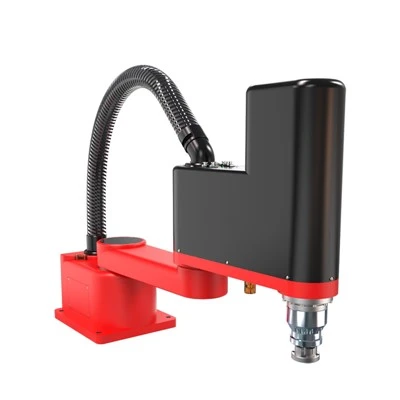
I also want to mention that these sensors aren’t static. We update the sensor software regularly to add new capabilities. Last year, we rolled out a software update that lets our cobots’ vision sensors recognize custom logos or barcodes, so they can sort products by brand instead of just size. Another update let the force sensors detect when a tool is worn out—so if a gripper’s pads are damaged and the grip force drops, the robot alerts your team to replace them before they start damaging products. That’s the kind of ongoing value you get from a cobot supplier that invests in its sensor technology, not just sells a one-size-fits-all robot.
Palletizing Robot At the end of the day, cobots are built to be flexible, safe, and easy to use for small and medium-sized businesses that can’t afford a team of specialized engineers. But none of that is possible without the right sensors. If you’re still unsure which sensors are right for your specific task—whether you’re packing fragile goods, assembling small parts, or moving materials around a warehouse—our team is here to help. We don’t believe in pushing a one-cobot-fits-all solution; we’ll walk through your workflow, explain how our sensors will work for you, and answer every question you have. If you’re ready to see how a cobot with reliable, purpose-built sensors can improve your operations, reach out to our team to schedule a free consultation and explore how we can customize a cobot for your business.
References
- Robotics Industries Association. (2022). Collaborative Robot Safety Standard R15.06-2022.
- International Organization for Standardization. (2019). Industrial Robots – Safety Requirements Part 1: Requirements for Robots.
- Schmidt, T., et al. (2021). Force-Torque Sensing in Collaborative Robotics: A Comparative Analysis of Commercial Systems. Journal of Manufacturing Systems, Vol. 58, pp. 217-228.
- Vision Systems Design. (2023). 3D Machine Vision for Bin Picking: Best Practices for Small Manufacturers.
- Cobot World Magazine. (2022). Sensor Integration for Collaborative Workcells: Reducing Downtime and Improving Accuracy.
Robotic Technology (GD) Co., Ltd.
Robotic Technology (GD) Co., Ltd. is one of the most experienced cobot manufacturers and suppliers in China, also supports custom service and one year warranty. Please feel free to wholesale CE approved cobot for sale here from our factory. Contact us for quotation.
Address: Room 102, No. 30,Hengfeng 2nd Road,Daguo, Changping Town, Dongguan City,Guangdong,China
E-mail: admin@iroboticplus.com
WebSite: https://www.rb-tic.com/
